
Back
Deconstruction
MURIWAI CLUSTER
Our Muriwai-inspired Logo in light of our Muriwai Project for 2025
Project Overview:
Muriwai’s homes were destroyed by Cyclone Gabrielle, but the community’s determination has never been more driven.
When we think of Muriwai, we automatically reflect on those times we would hear our parents say, “Let’s have a beach day at Muriwai”, and we would think that it was the best day of our lives. There was nothing like the long drives through nature’s native landscapes, popping our heads out the window, letting everything run free and then finally arriving to the sound of crashing waves and a warm sun-kissed breeze.
That’s until early January 2023 saw a community that once was, turn into an area filled with written-off cars and years of memories submerged in mountains of mud.
Cyclone Gabrielle raided with anger through Aotearoa leaving Muriwai with permanent scars of deadly landslides, destroyed roads and communities broken by the sight of 130 whare being red-stickered due to severe damages. There are more stickered homes in Muriwai than anywhere else in Auckland.
Trow Group is no stranger to the significant aftermath of Cyclone Gabrielle. As soon as it was safe to leave our homes, we joined with Auckland Civil Defence and cleared out general rubbish and affected furniture etc. from hundreds of affected South Auckland homes.
The methods and experiences we took from this, will play a huge role in our Deconstruction blueprint for Muriwai. Though our mission was to only clear rubbish from South Aucklander’s properties, we also took the initiative to get to know the homeowners, the stories of their homes, the memories of being brought up in that same home amongst many other significant ties to the land.
We are so ready to bring our deconstruction methodology to Muriwai in 2024, Actively contributing to the revitalization of Muriwai by putting sustainability, a circular economy and the love for the community at the heart of our processes.
We are committed to salvaging materials from our projects, and creating wealth to put back into the community. We can’t wait to take you all with us on this journey of rediscovering and regenerating that life, energy and piece of mind into place that once was everyone’s escape from reality.
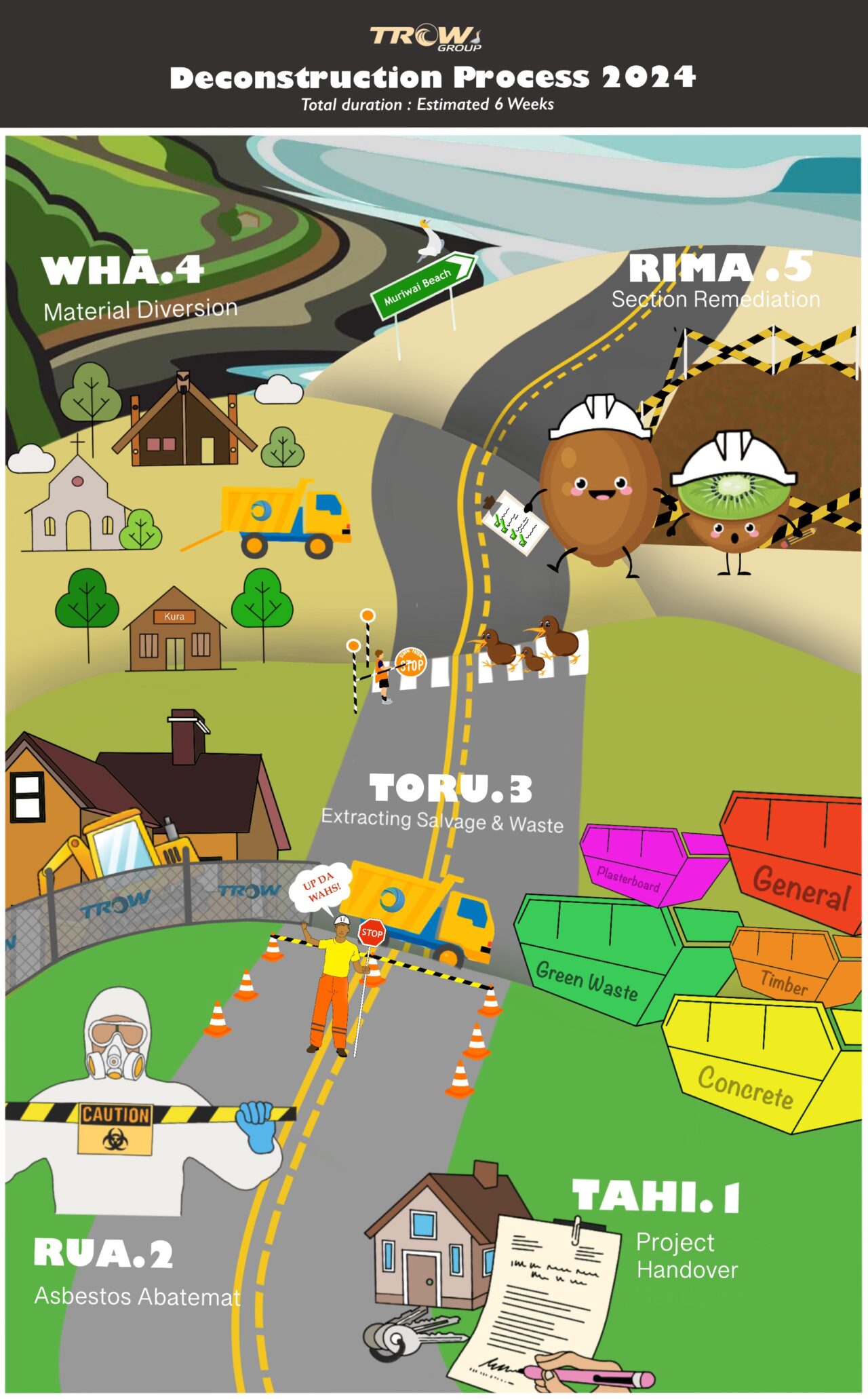
See our deconstruction process from beginning to end…
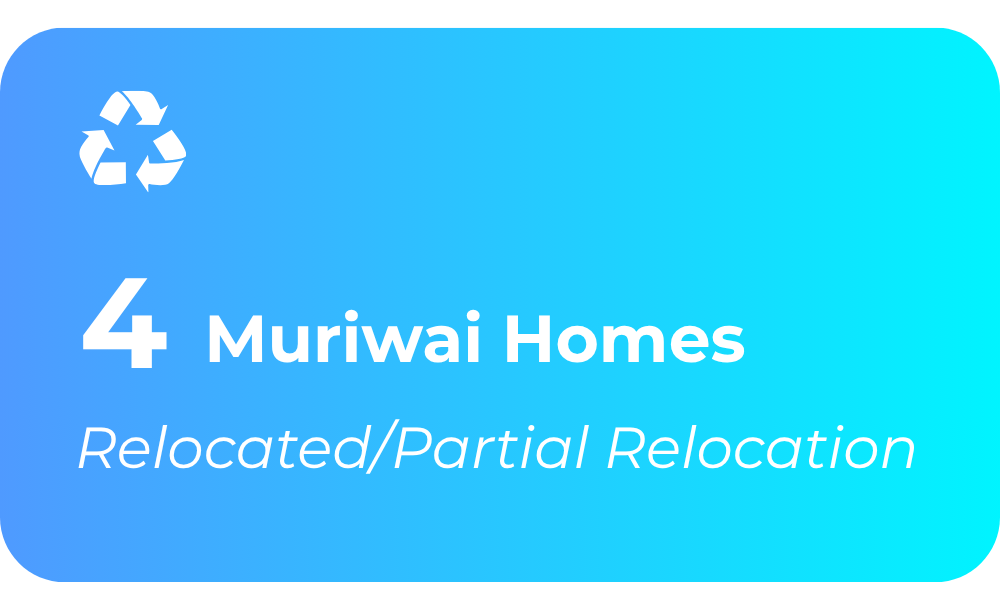
Some Positive Community Outcomes
Reconnecting former owners with memorabilia
During the works, TROW’s team came across a number of personal belongings, photographs, memorabilia and other items that could easily have been lost during the clearance process. While these items had little or no material value from a demolition or recovery perspective, they often held a much deeper significance for the people who had lived in or had a connection to the property. Where possible, the team took the time to identify items that appeared to have personal meaning and worked with former homeowners, whānau and other relevant people to help return them.
In some cases, this meant reconnecting former homeowners with belongings they had thought were gone for good. Items such as photographs, keepsakes, household objects and personal memorabilia provided a tangible connection to homes and memories that had been affected by the flood recovery process. For people who had already experienced the disruption and loss that came with the severe weather events, being able to recover something personal from their former home could be particularly meaningful.
This became an important part of the work for the TROW team. Some of the items found on site had little value as materials, but significant value to the people they belonged to. By remaining aware of this throughout the deconstruction process, the team was able to help preserve pieces of personal history that may otherwise have been cleared away and lost.
Community sculpture – MSRG Collaboration
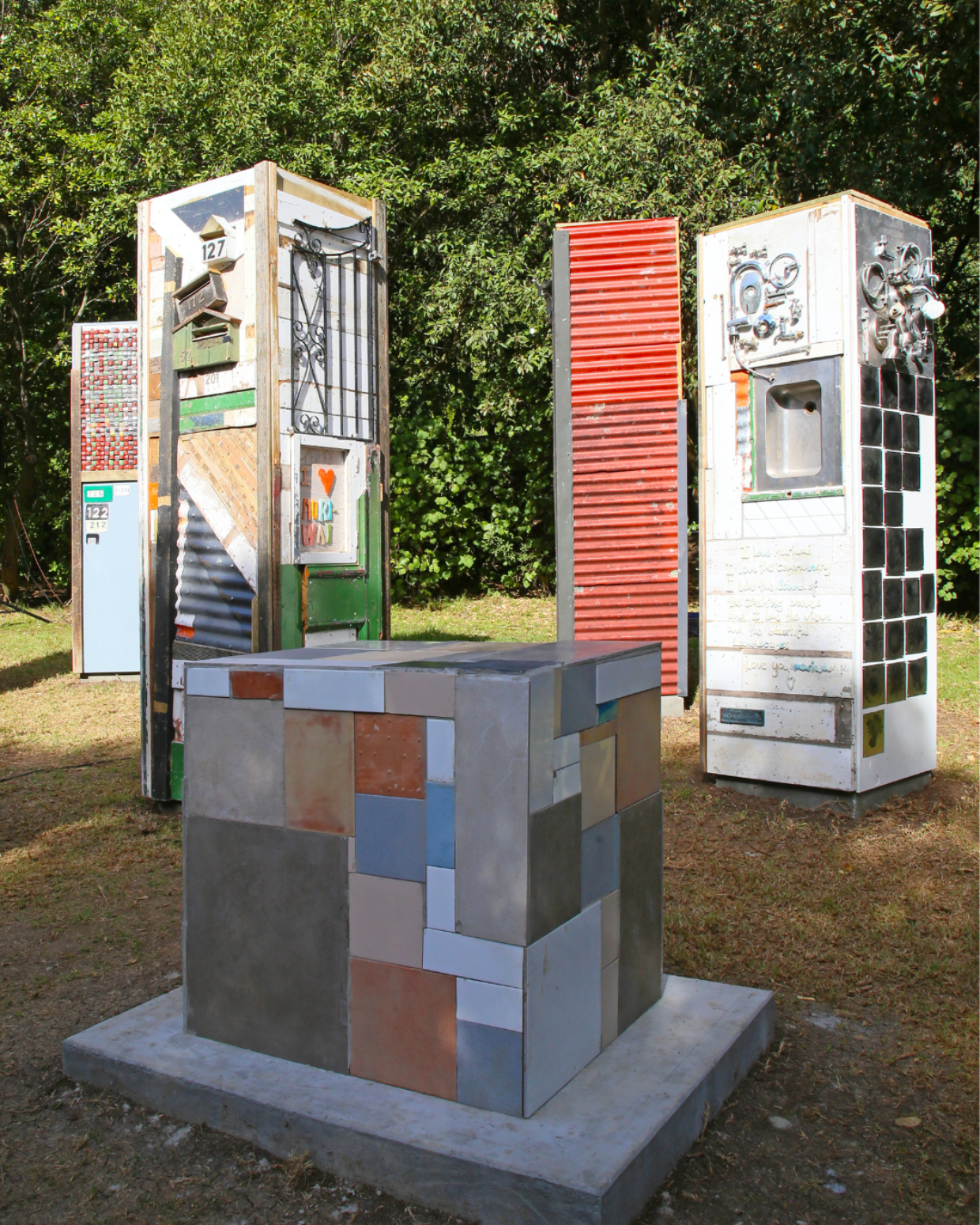
One of the most meaningful outcomes of TROW’s work in Muriwai was a collaboration with the Muriwai Red Stickered Group and local artist Jeff Thomson to give recovered materials from affected properties a new purpose.
Following Cyclone Gabrielle and the severe weather events that changed Muriwai, many homes were lost or significantly damaged, leaving behind more than just physical debris. For the people who lived there, those homes represented years of memories, family life and connection to the community.
As the recovery programme progressed, there was a strong desire to find a way to acknowledge what had been lost and preserve a connection to the community’s history.
This led to the idea of creating a community sculpture using suitable materials recovered through the deconstruction programme. TROW worked alongside the Muriwai Red Stickered Group and Jeff Thomson, supporting the identification and recovery of materials that could be incorporated into the artwork
Materials that had once been part of homes and properties affected by the severe weather events were carefully set aside and made available to Jeff, giving them a new life beyond the recovery process.
The process was emotional and, at times, confronting. For the TROW team, handling materials from properties where people had lived and built their lives brought the reality of the impact on the community into sharp focus. At the same time, there was something powerful about seeing those same materials being brought together to create something new.
On 23 March, the project came full circle. Members of the community and those involved in the project took part in a hikoi from the Muriwai Surf Club to the sculpture site, where the completed artwork was unveiled.
After months of planning, salvaging and preparation, materials that could have simply disappeared through the recovery process had become part of something permanent and visible for the community.
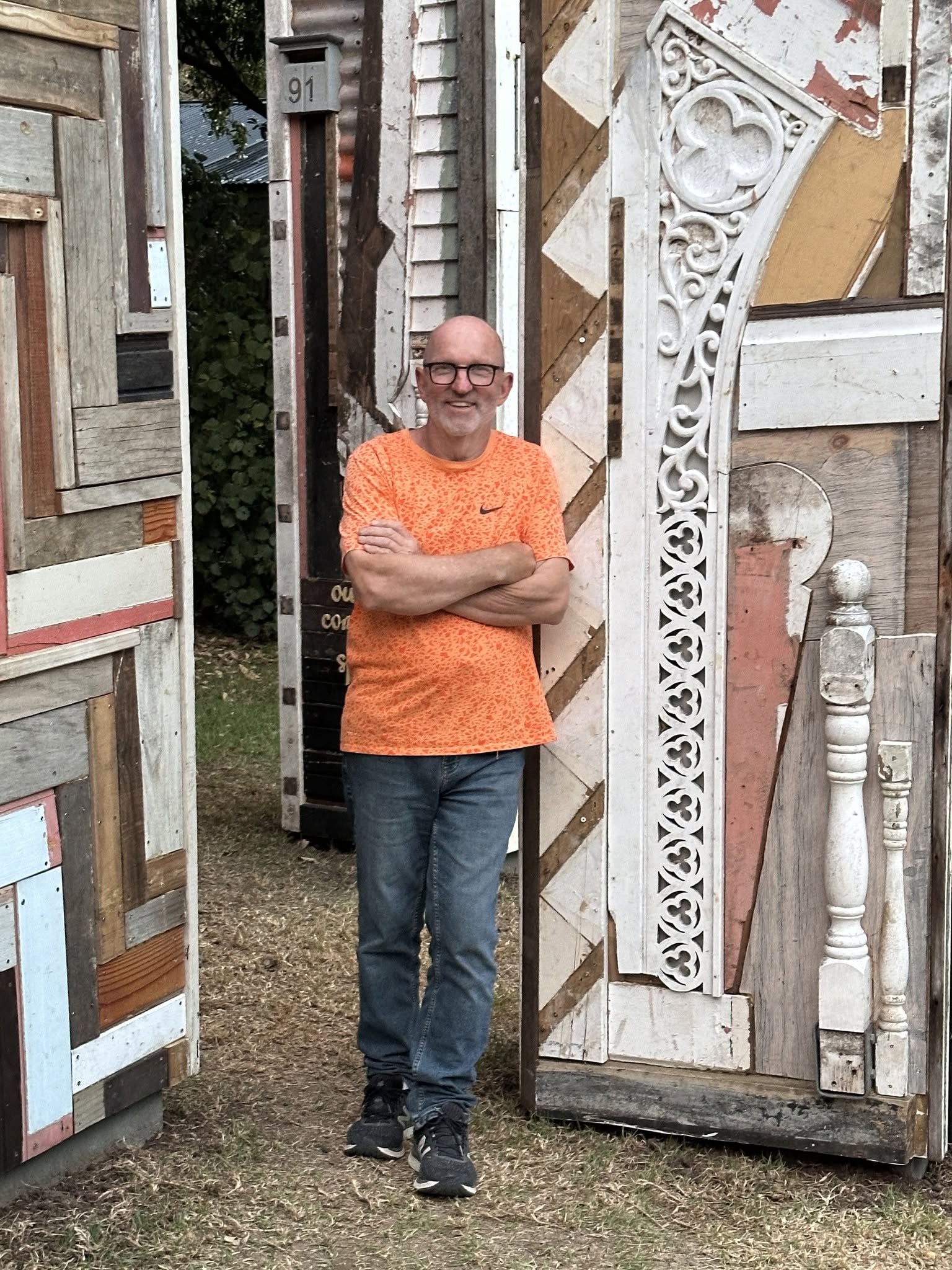
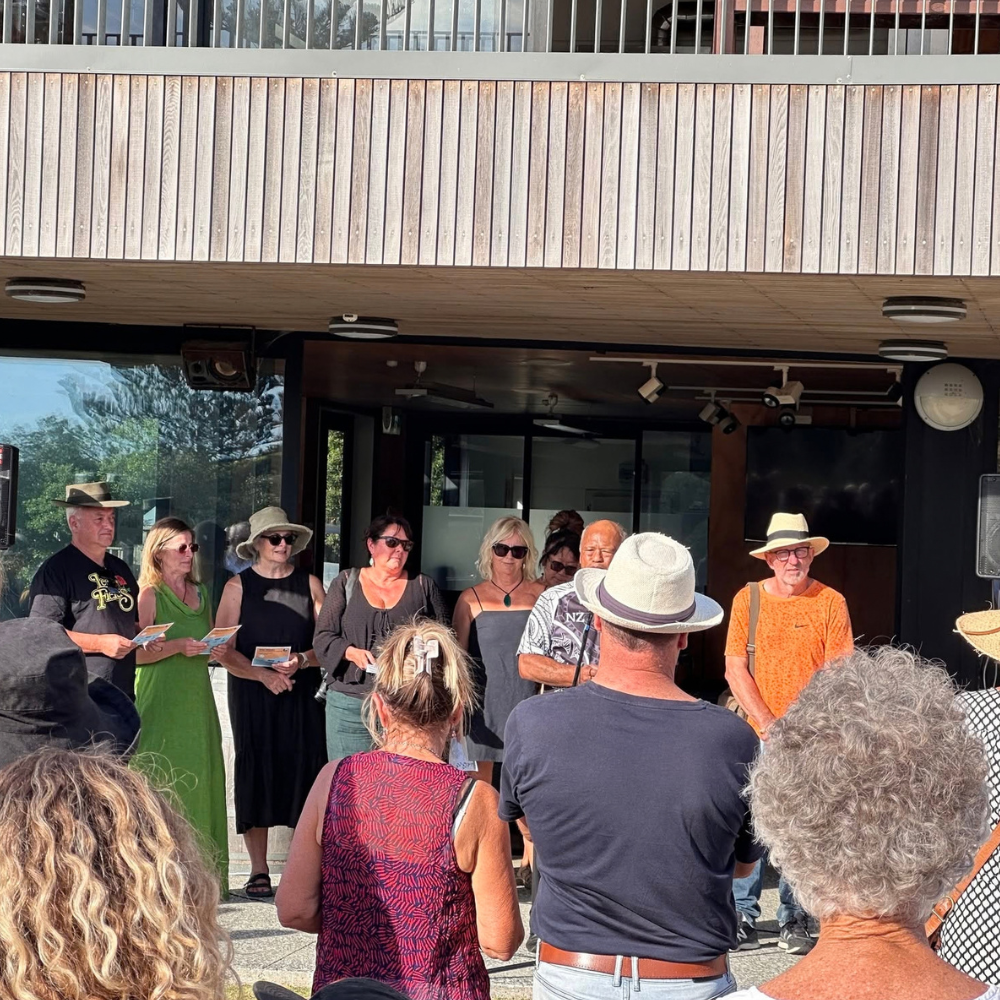
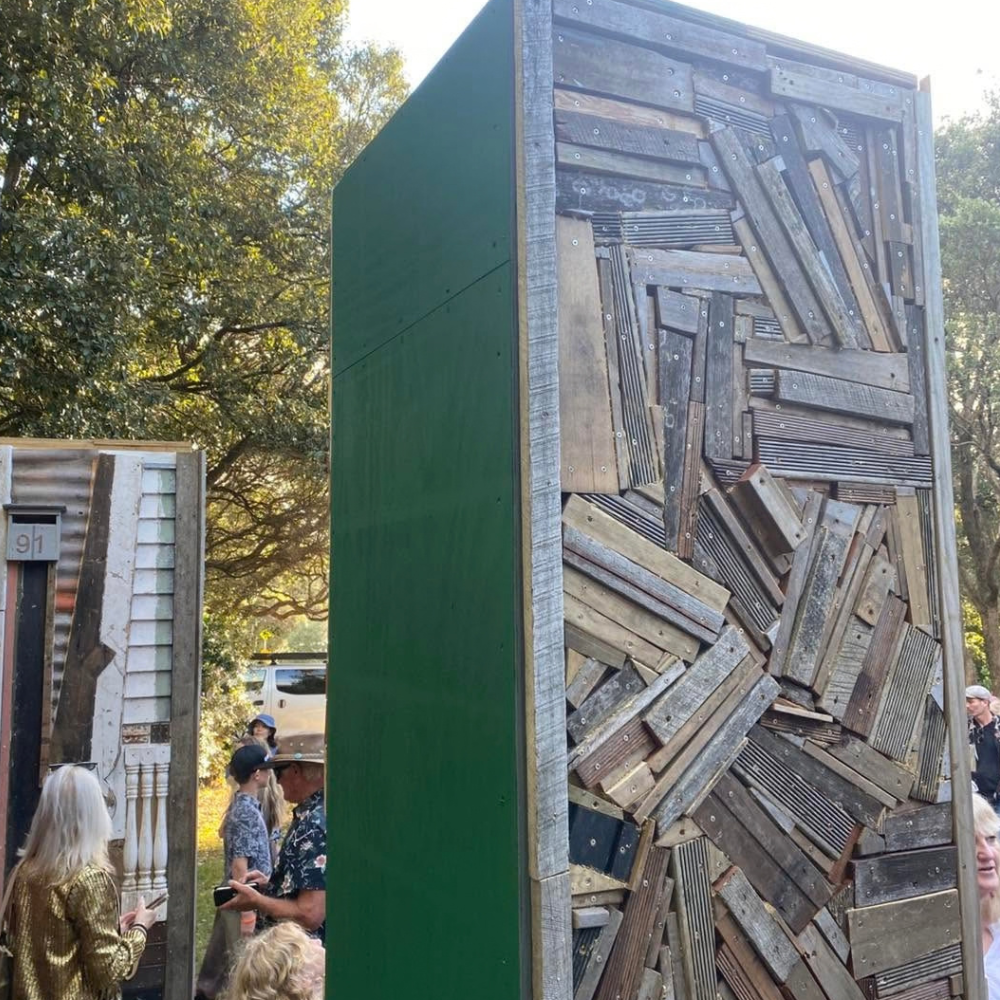
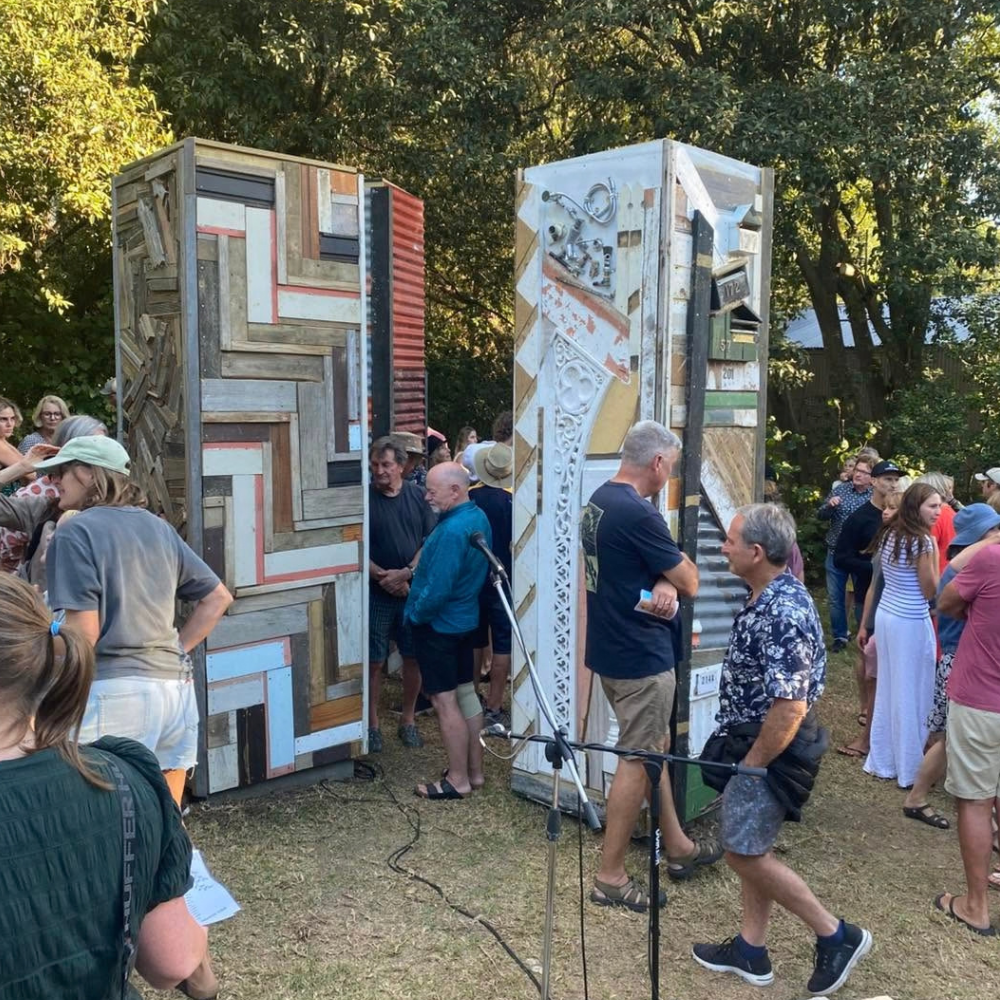
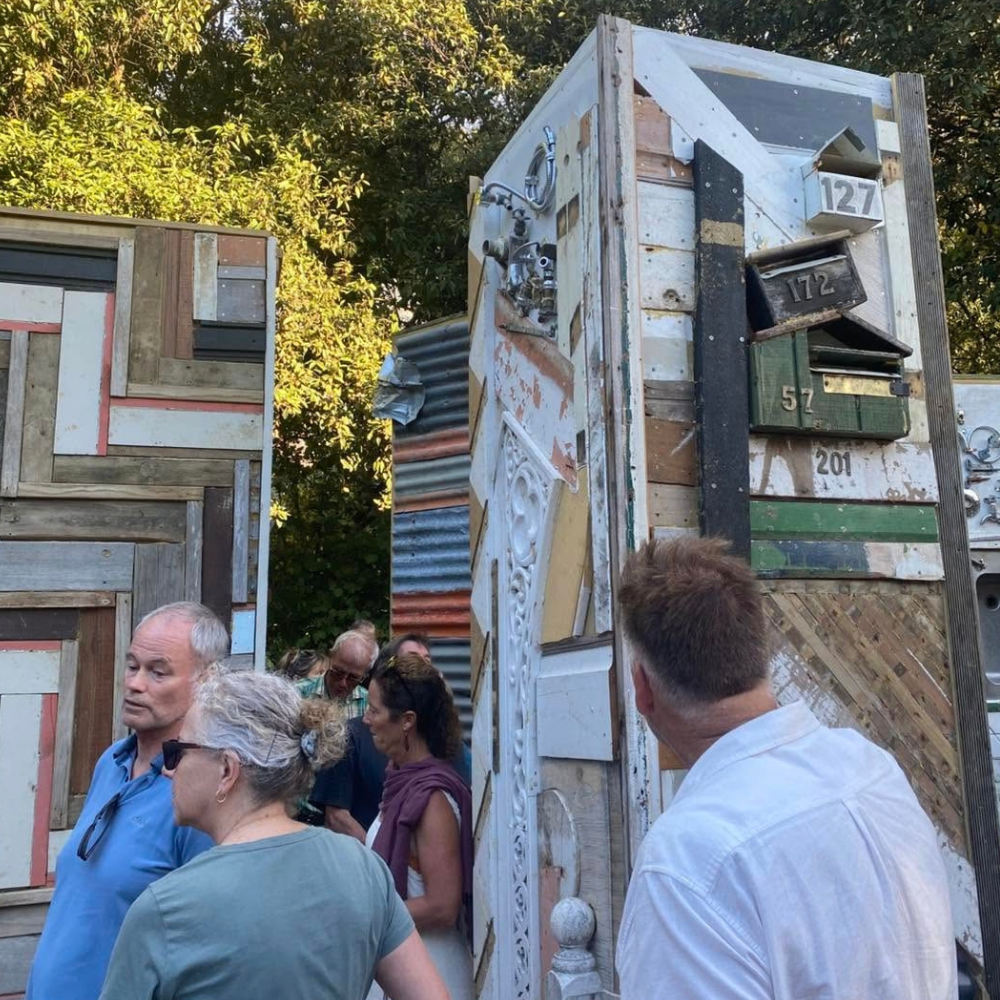
The sculpture represents more than the reuse of recovered materials. It provides a tangible connection to the homes, people and stories that form part of Muriwai’s history, while also creating something that can be enjoyed by the community for years to come. For those who experienced the loss of their homes, seeing materials from affected properties given a new purpose offered a different way to hold onto a piece of what had been there before.
For TROW, the project demonstrated the broader value of a circular approach to recovery. Not every material recovered from a property can be reused in its original form, but that does not mean its story has to end there. In this case, materials from affected homes were able to move from demolition and recovery into art, creating a lasting community outcome from something that could otherwise have been treated simply as waste.
The sculpture has become a tangible reminder of Muriwai’s experience, the people who were affected, and the community’s ability to create something meaningful from a difficult chapter. It is a reflection of what can happen when recovery is approached with care, and when materials are given the opportunity to carry their story forward in a different way.
Collaborating with Helensville Recycling Centre for all Muriwai Projects
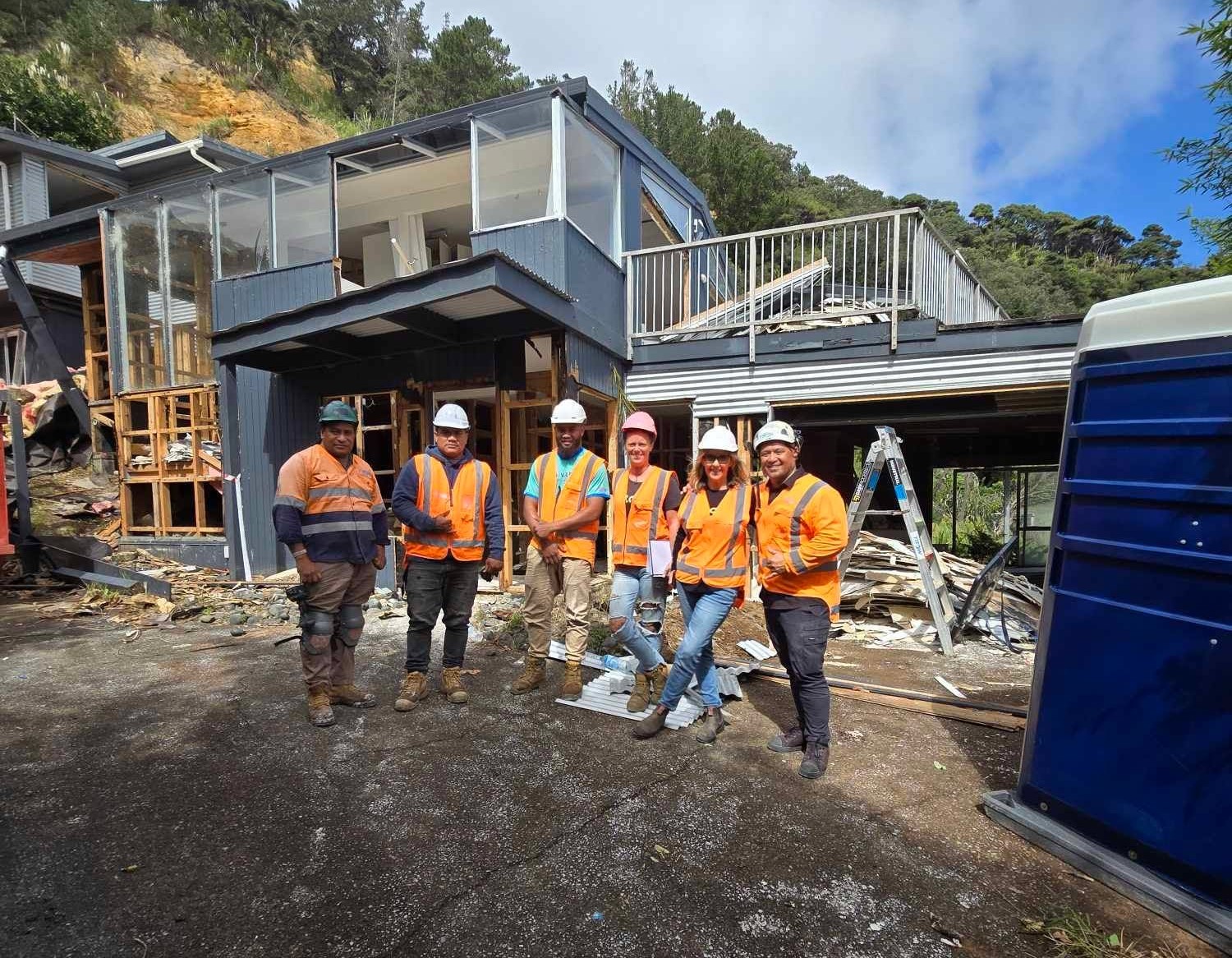
One of the key learnings from the Muriwai recovery programme was the value of keeping the recovery process as local as possible. As the work began in mid-2024, Auckland Council and TROW made a deliberate effort to source contractors, suppliers and end destinations within the local area where practical, helping ensure that the benefits of the recovery programme stayed connected to the communities it was serving.
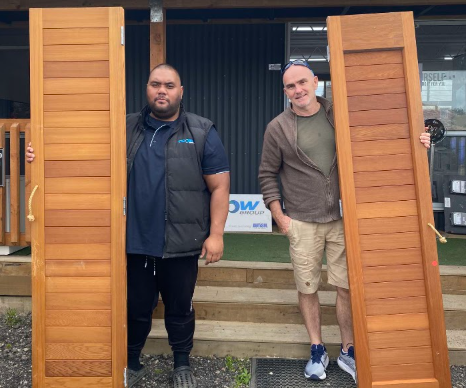
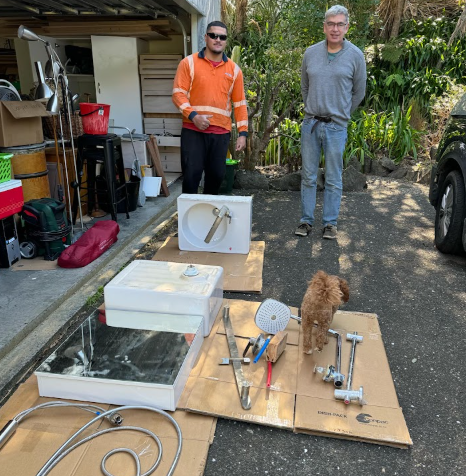
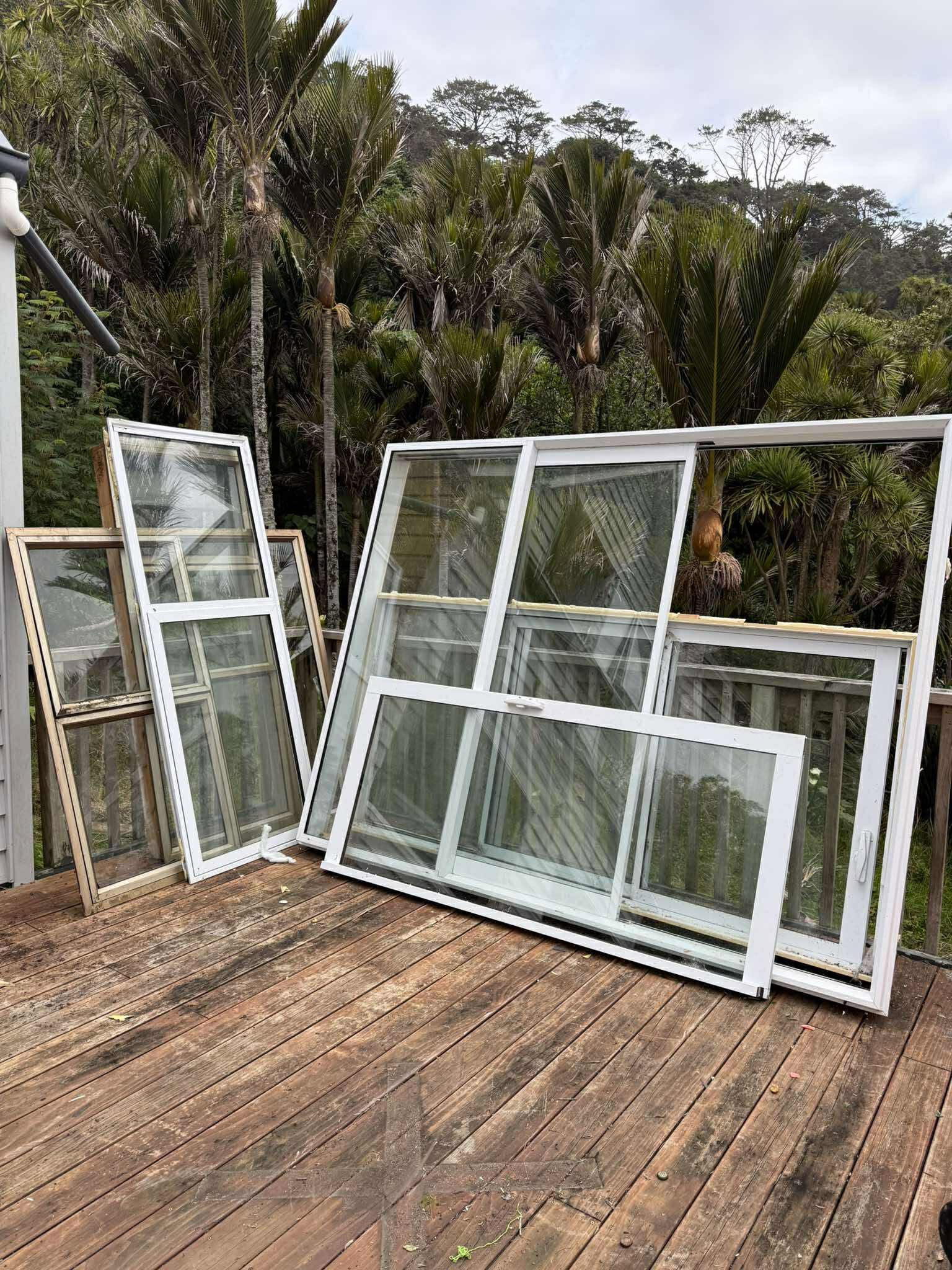
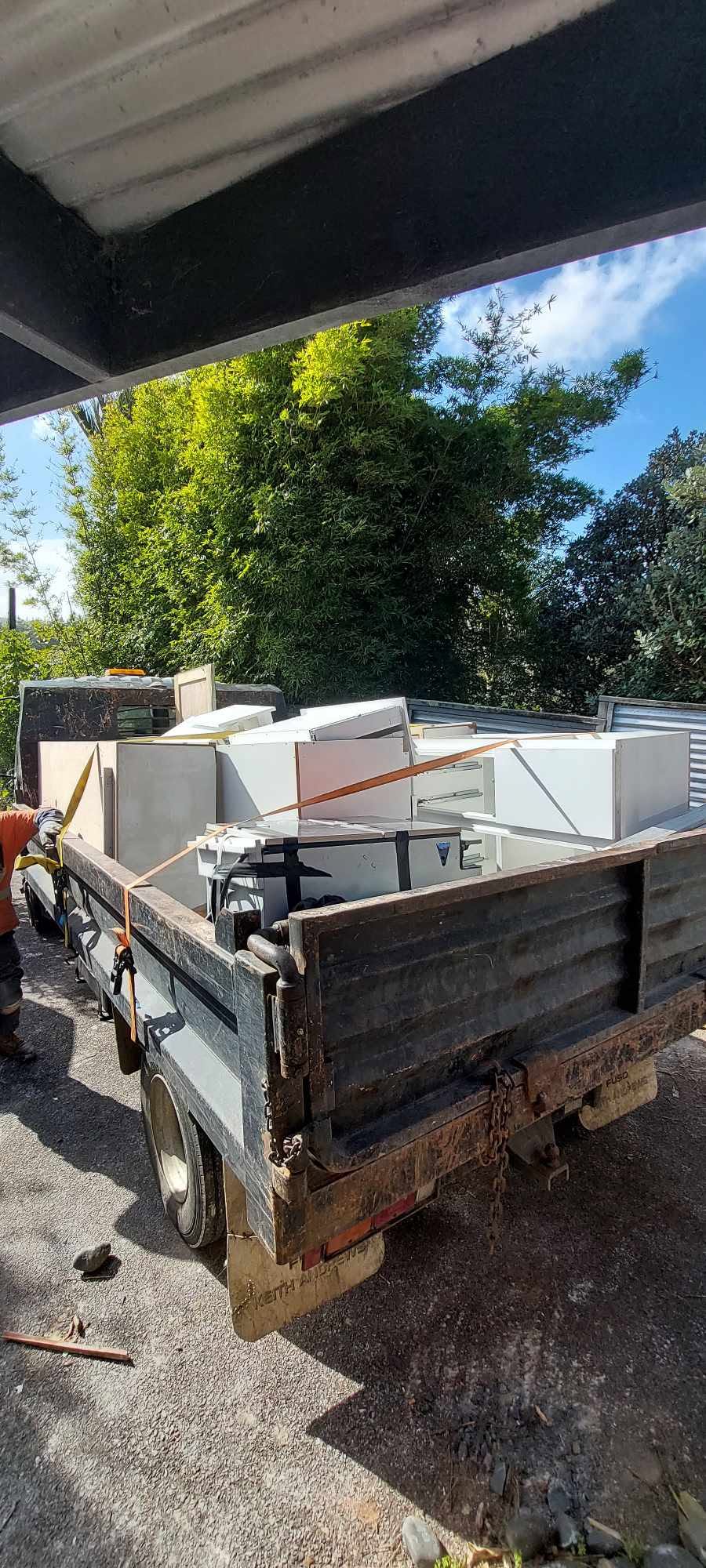
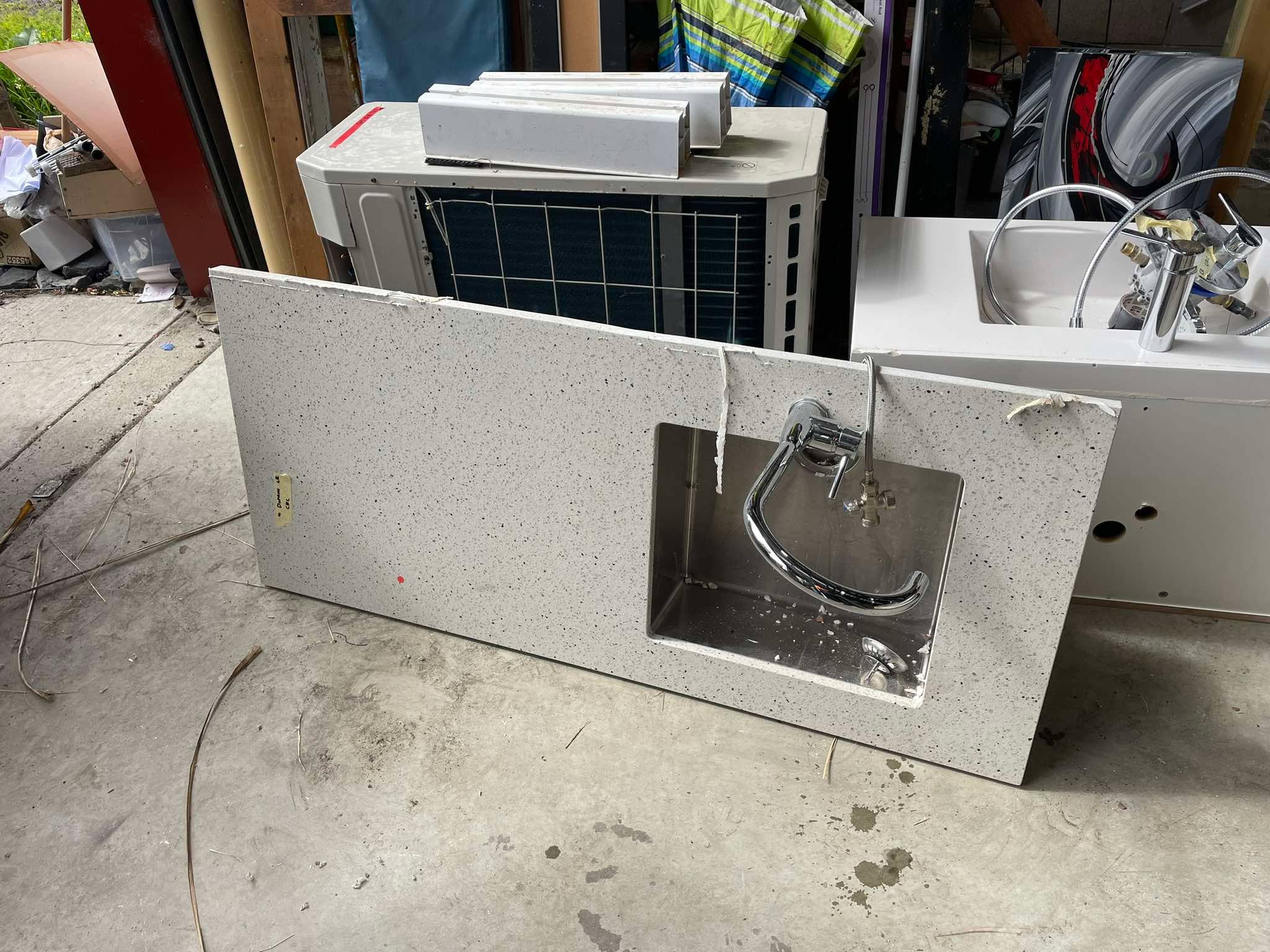
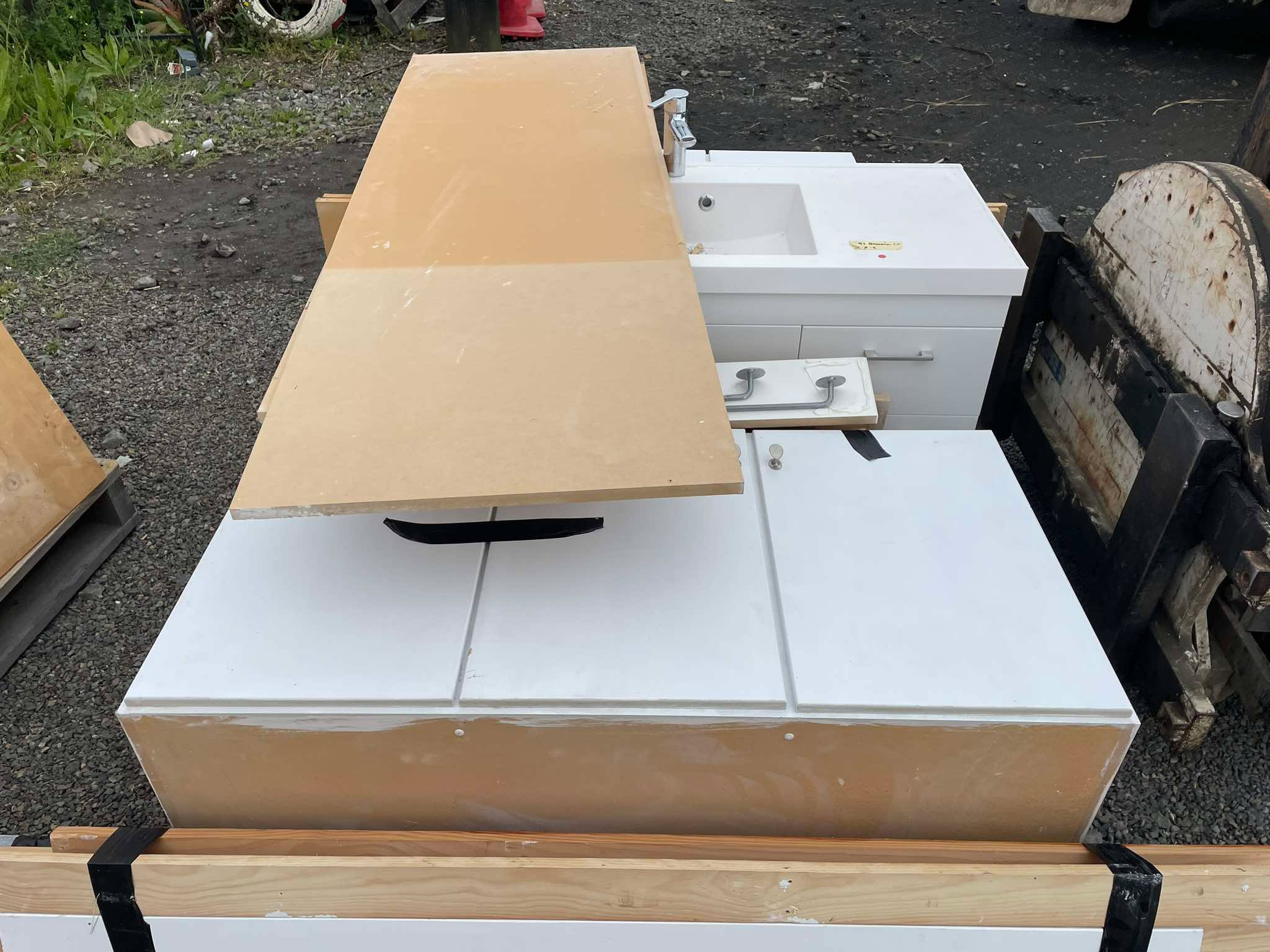
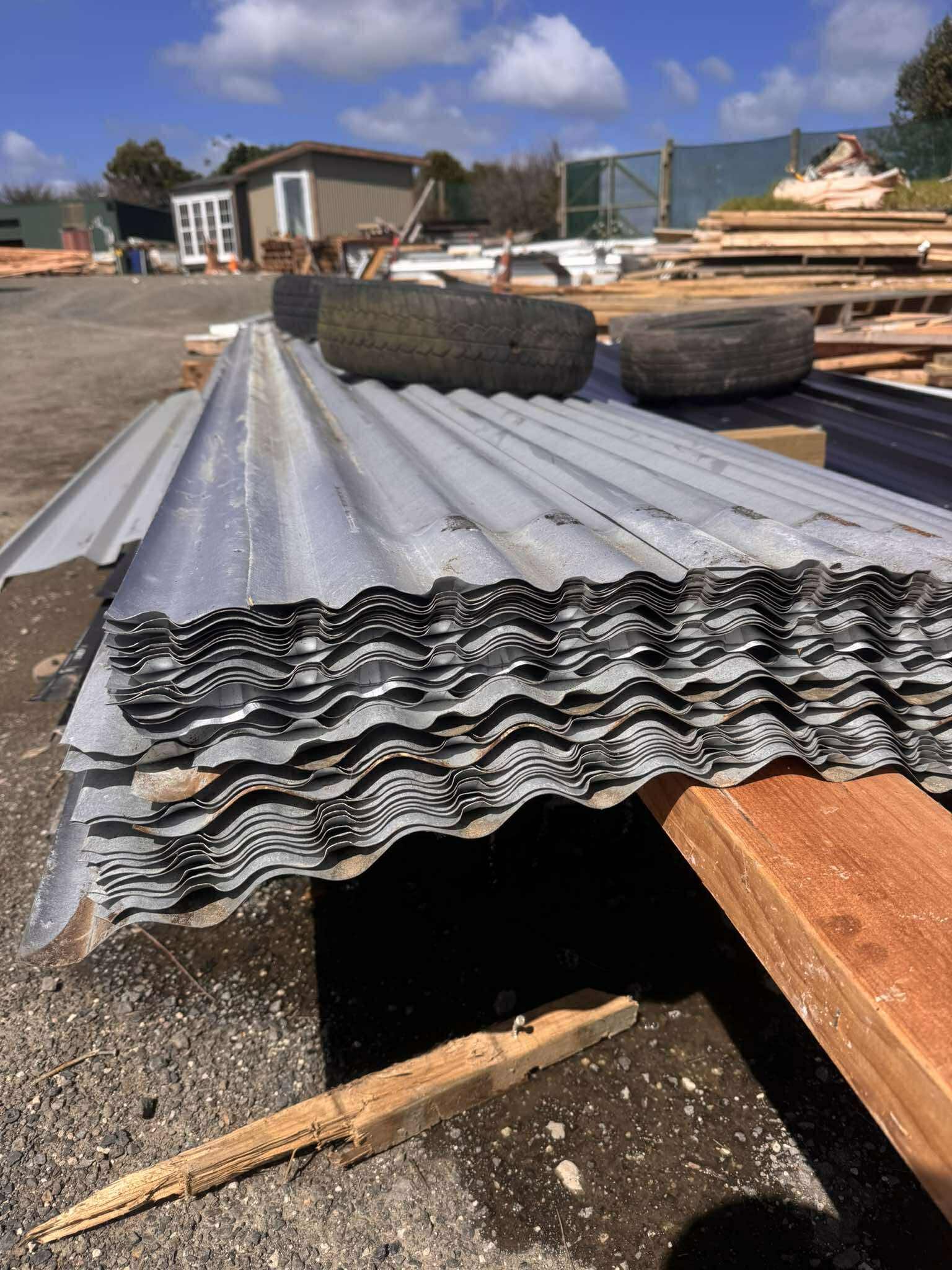
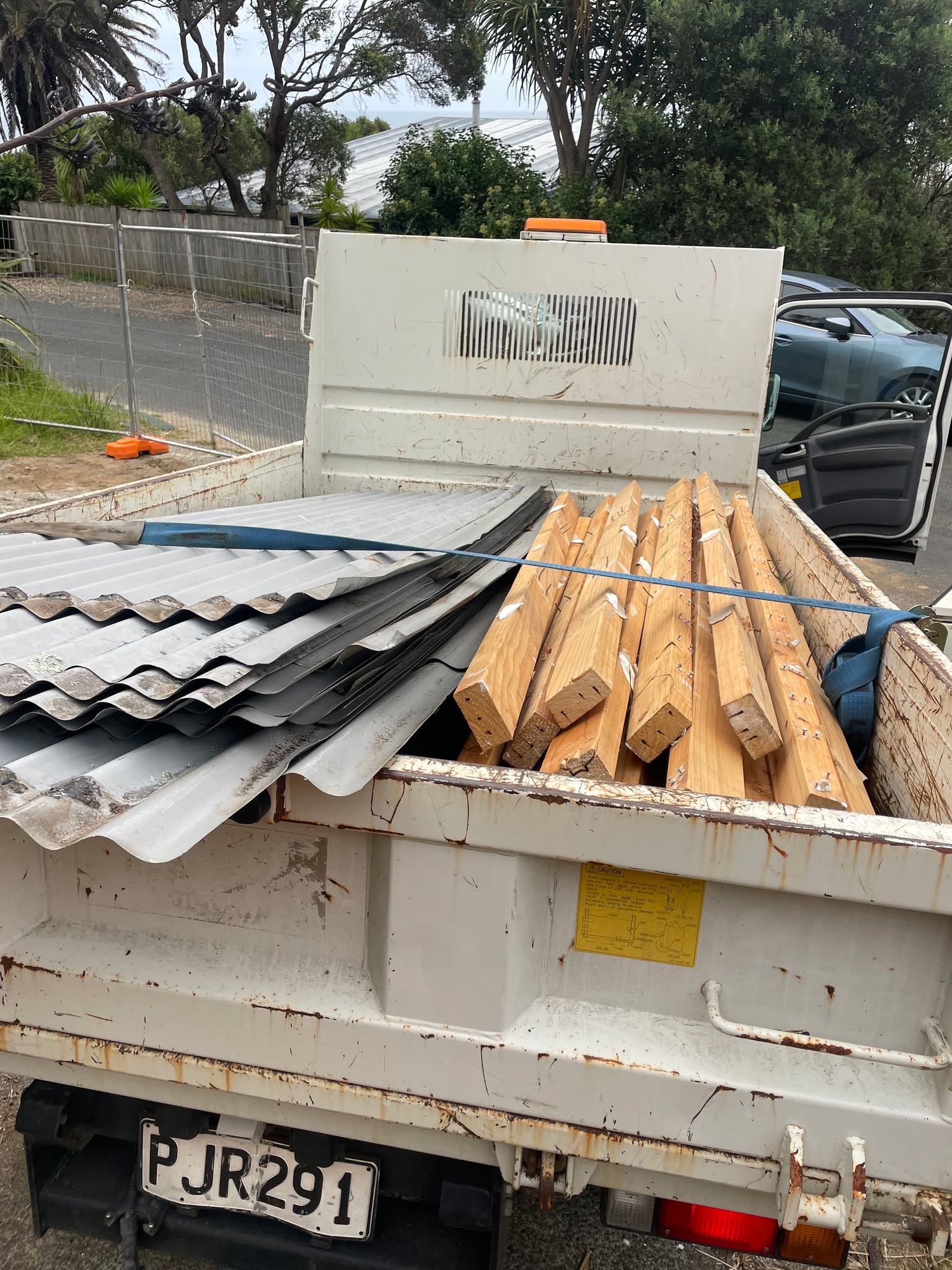
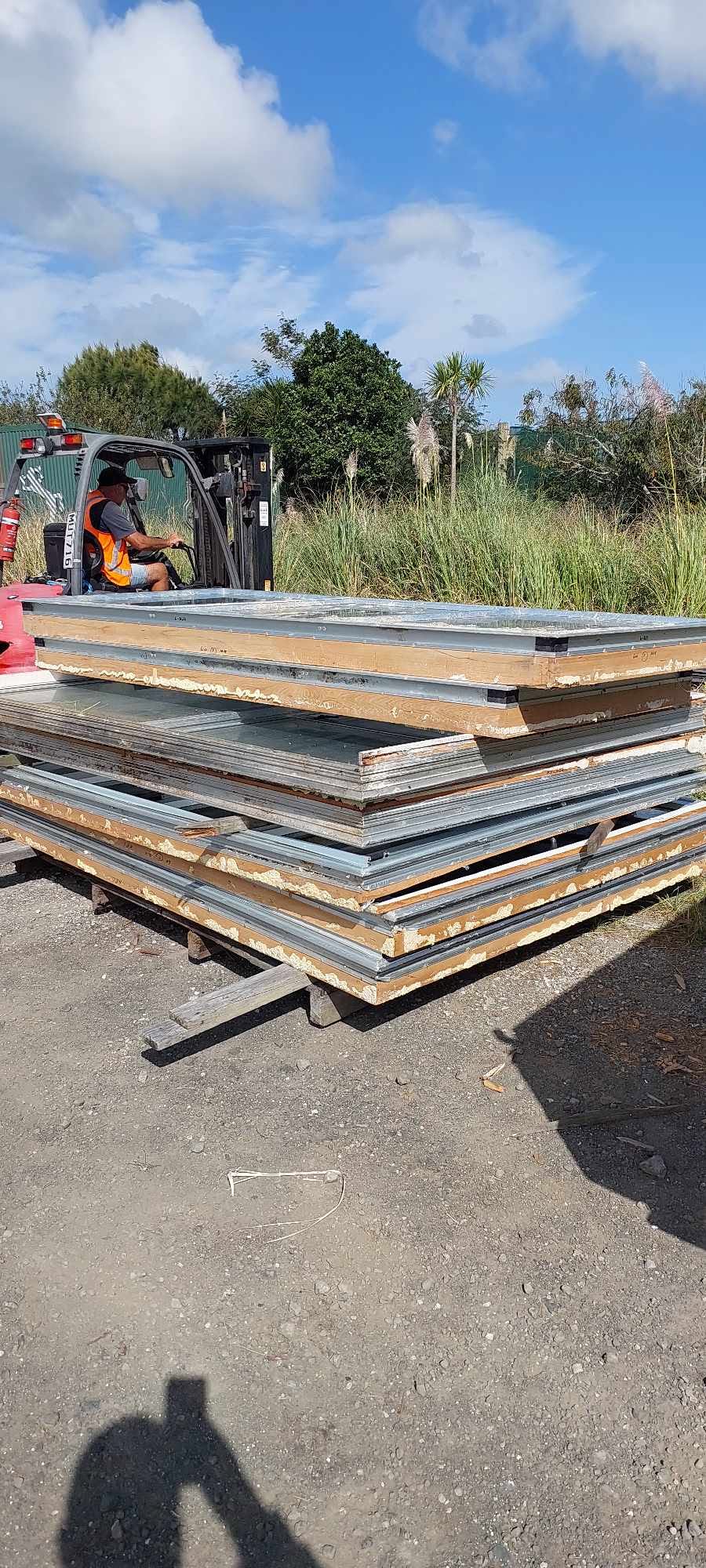
This led to a long-term partnership with the Helensville Community Recycling Centre (CRC), which became an important destination for suitable materials and furniture recovered through the Muriwai projects.
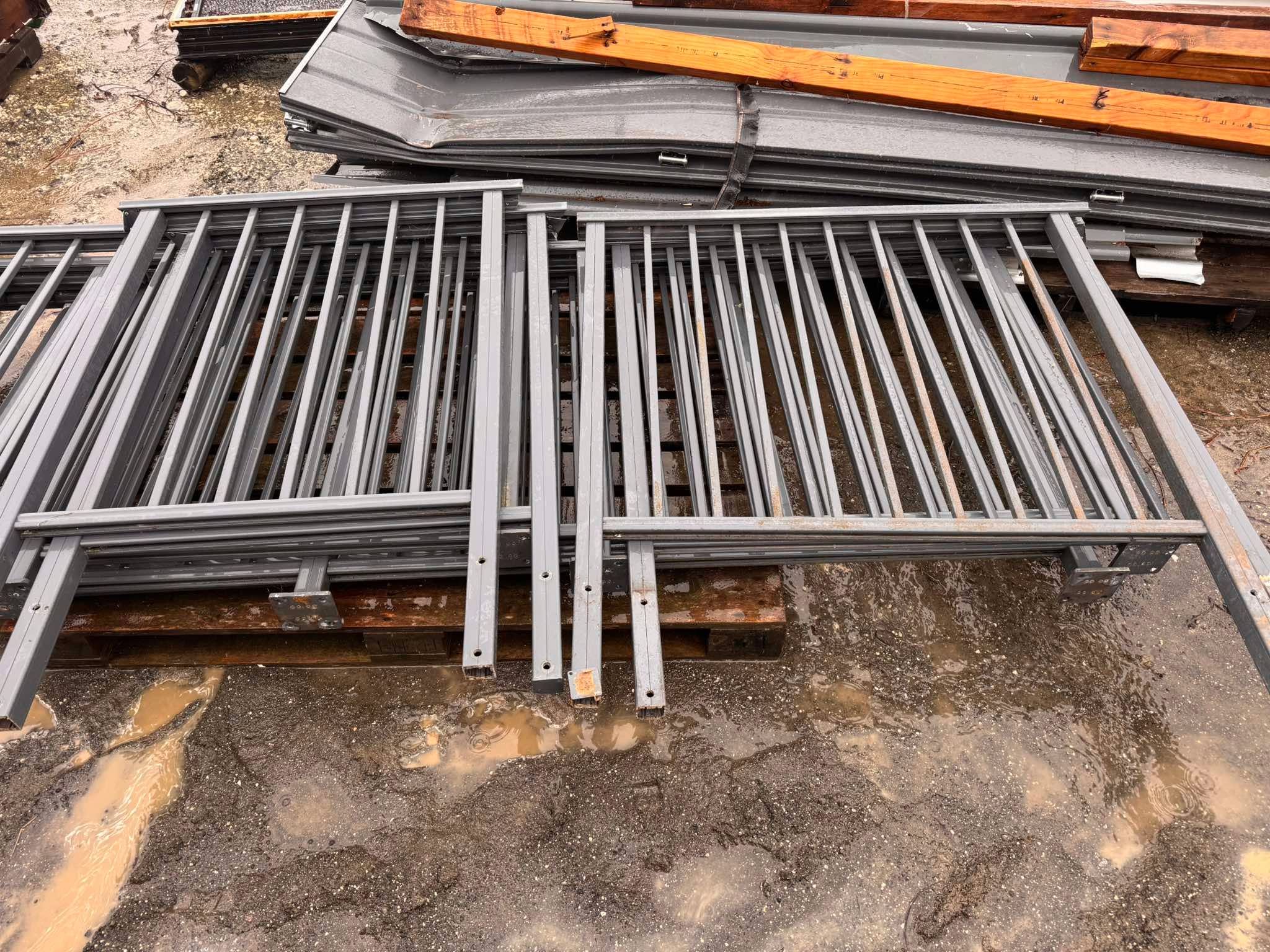
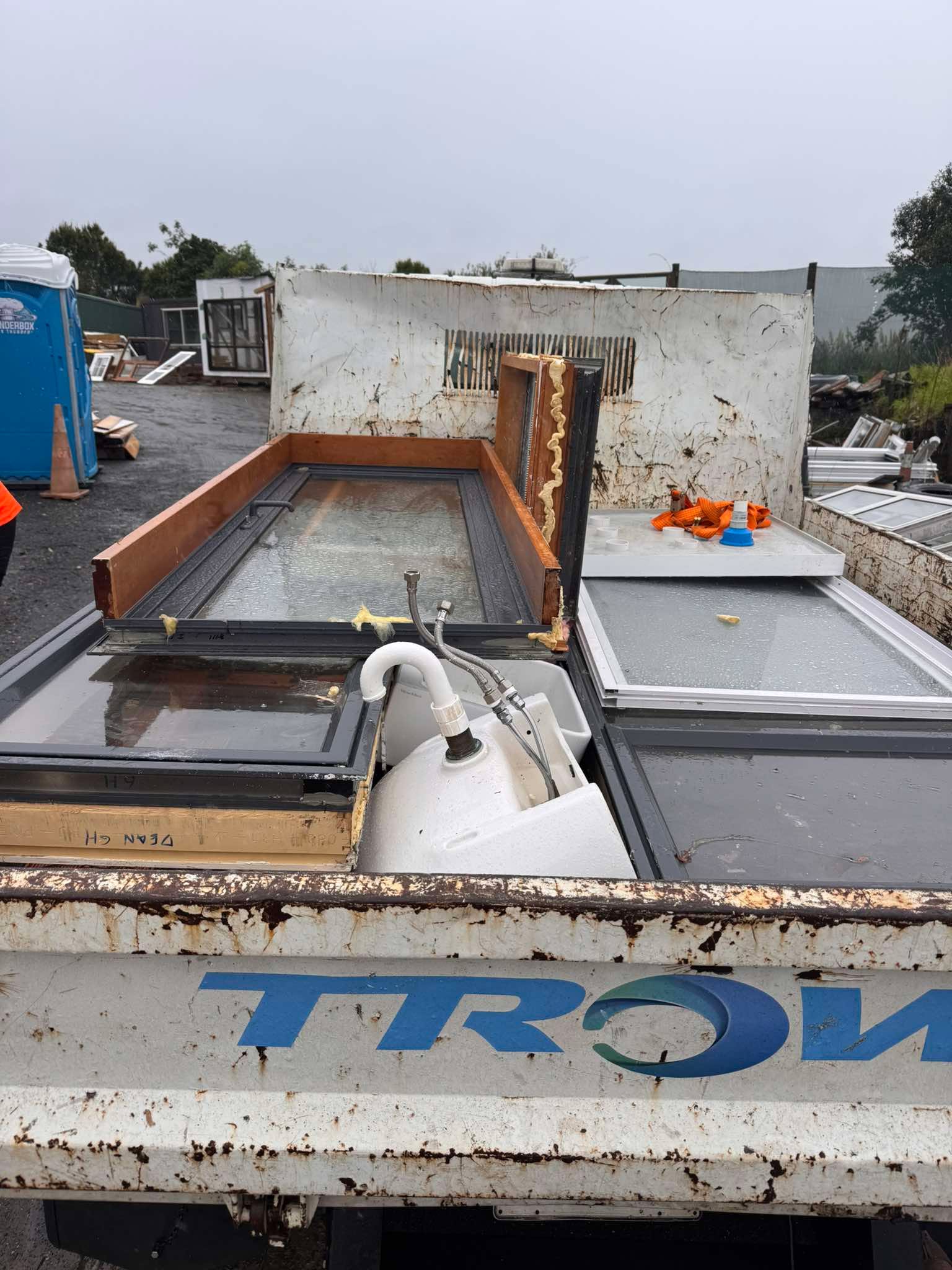
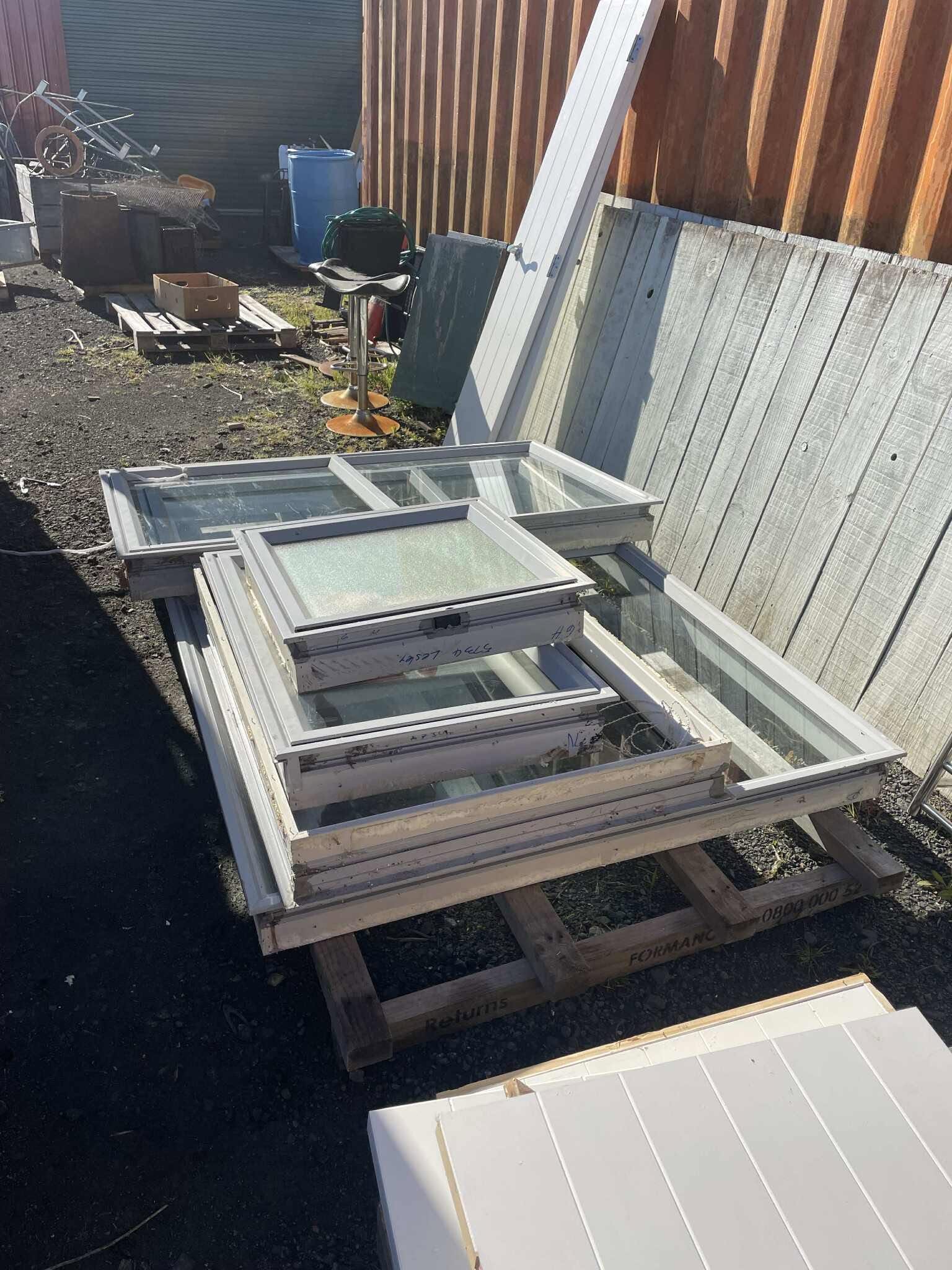
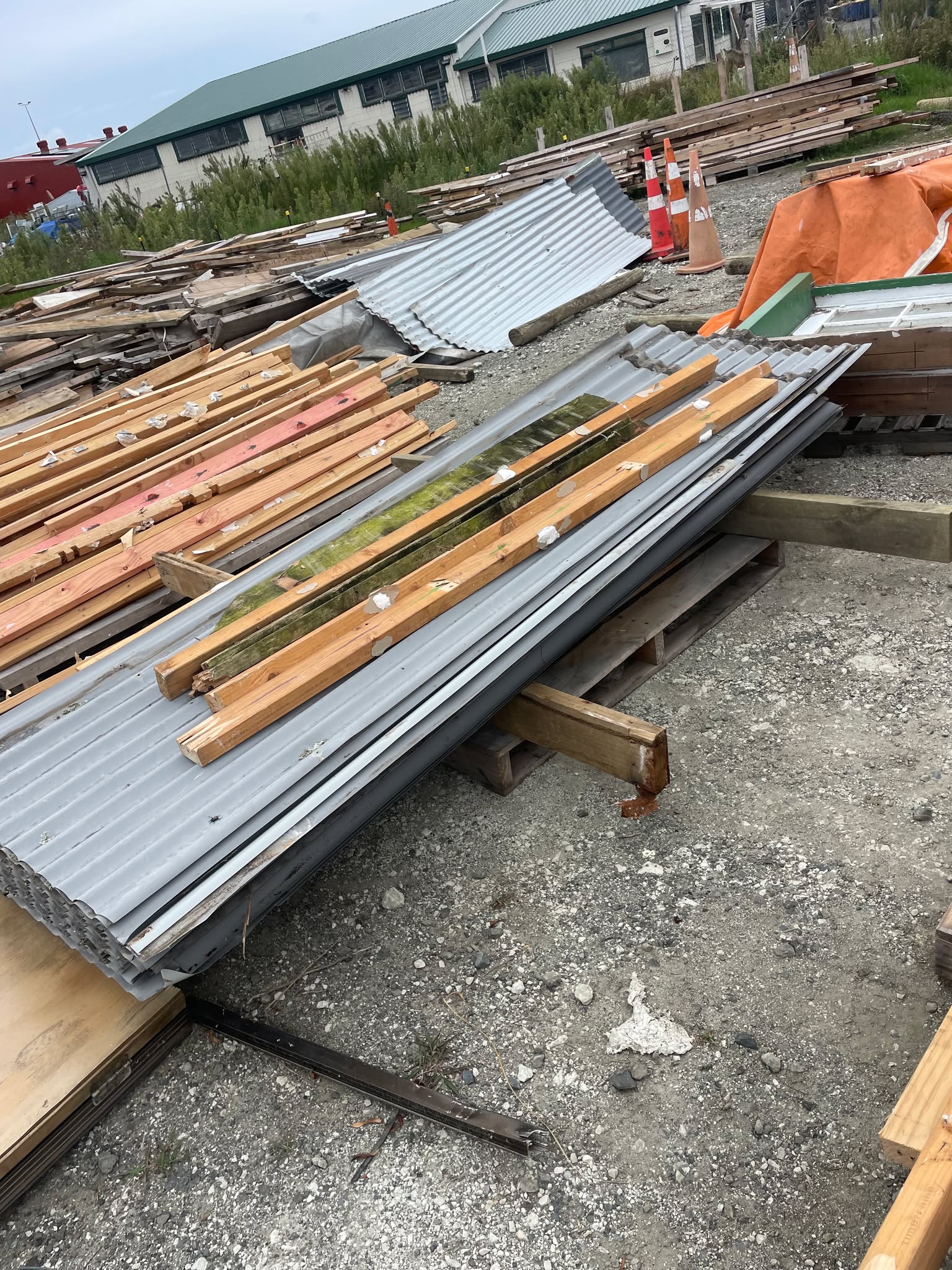
Swipe to see gallery →
Rather than materials leaving the area and moving through a longer chain of processors and suppliers, suitable items could be taken to a local facility where they could be stored, processed and made available for reuse within the community
The partnership created a practical connection between TROW’s deconstruction work and the local reuse network. Salvaged materials could move quickly from properties being deconstructed into the hands of people who could use them, helping reduce the amount of time materials spent sitting in storage and increasing the opportunity for them to find a second life.
For TROW, the relationship also highlighted the wider value of working with established community organisations. CRC already had connections with people looking for affordable, reusable materials, as well as an understanding of what could be recovered and redistributed locally. By working together, TROW could bring more suitable materials into that existing network rather than trying to create a separate pathway for everything recovered through the programme.
Challenging Project
181 Motutara Road, Muriwai.
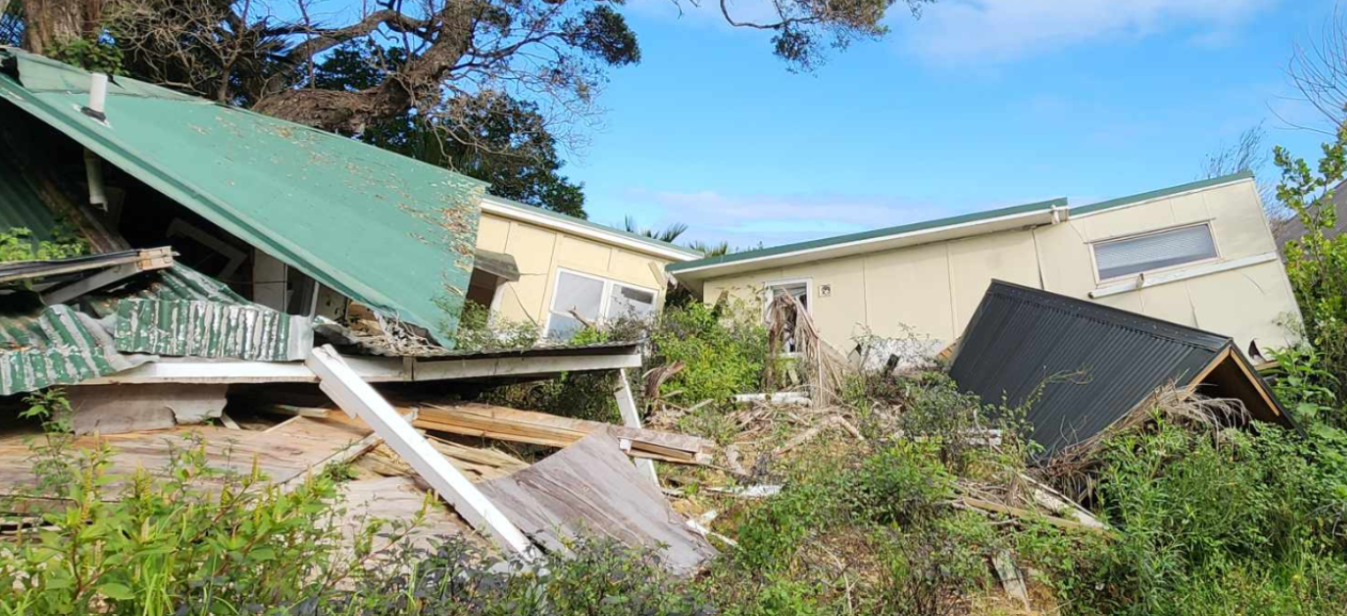
181 Motutara Road was one of the more technically challenging sites our team worked on during the Muriwai recovery programme.
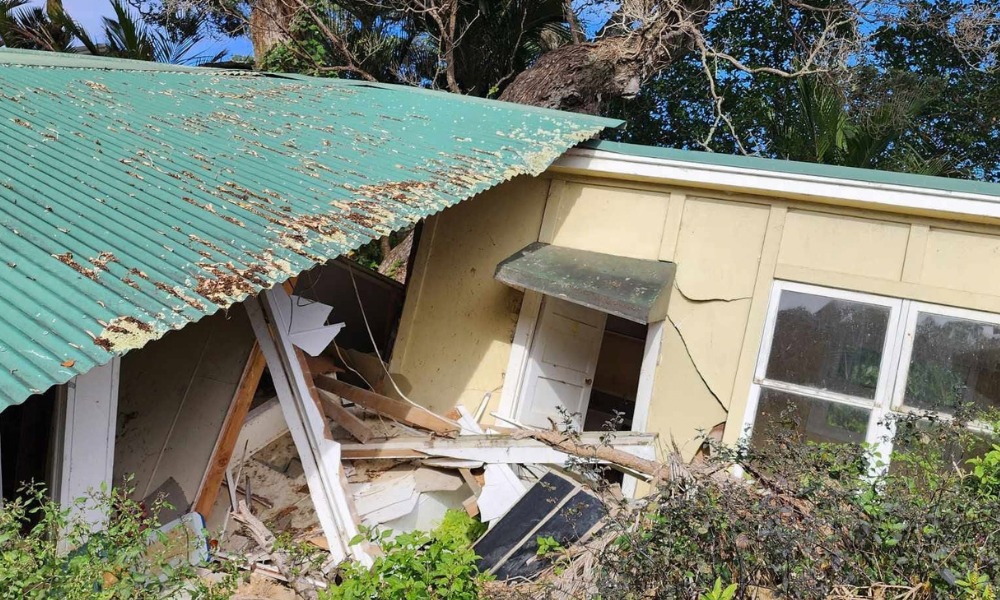
The property had been affected by the landslide, leaving the building resting in an unstable position and creating risks not only for our team working on site, but for the neighbouring properties and people in the surrounding area.
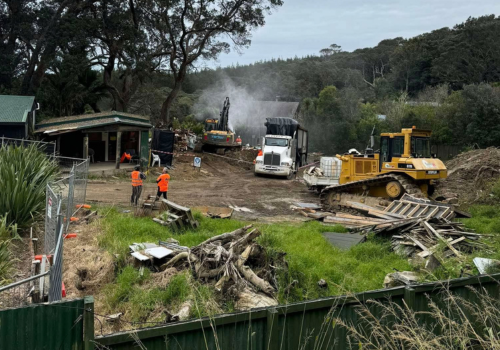
Because of the ground conditions, we couldn’t approach this like a standard deconstruction. A detailed methodology was developed to first stabilise the working area using additional hardfill and topsoil. The locations for the heavy plant were also stabilised and verified before the D7 bulldozer was positioned.
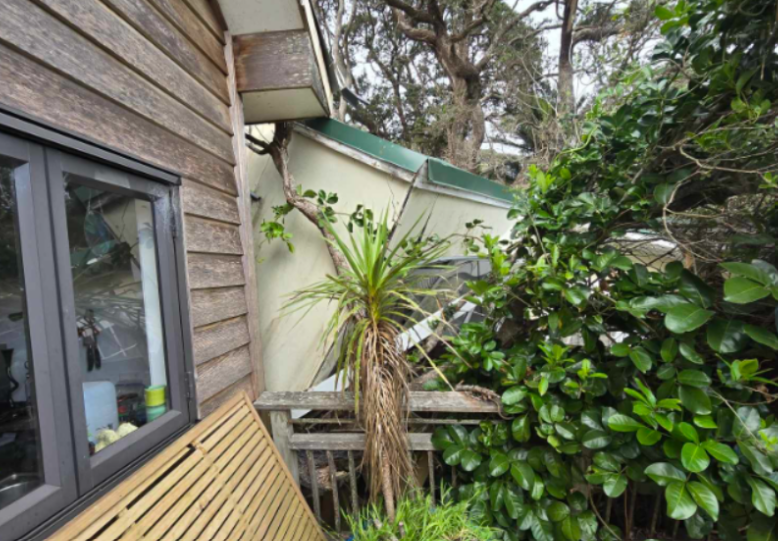
(Image: The property had be leaning against the neighbouring property)
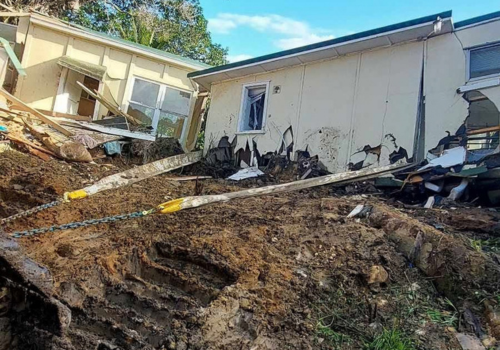
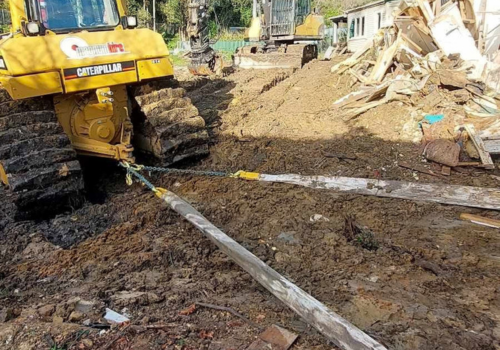
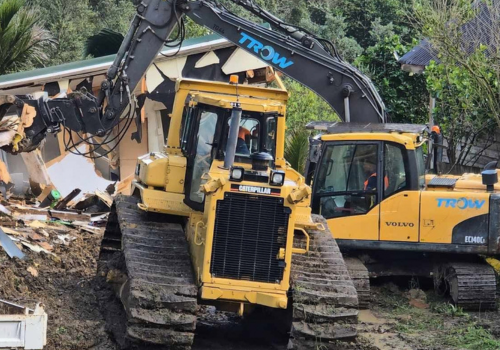
The building was then secured using two 300 mm ANCRA straps, each with a 72-tonne capacity. The top strap was connected to two 3.5-tonne TIRFOR winches, which were anchored to the D7 Bulldozer. A second strap was connected directly to the bulldozer to provide an additional level of control should there be an issue with the winches. Winch cable dampers were also used to help manage cable tension.
The building was lifted and moved slowly rather than being pulled in one movement. Ground conditions, building movement and the surrounding structures were continuously monitored throughout the process. Acrow props were also installed to support the neighbouring structure while the resting building was being removed.
Once the building had been lifted, the soil underneath was progressively cleared and plywood planks were laid to create a more controlled path for moving the structure away from the unstable area.
Safety planning extended beyond the site itself. Before work began, courtesy letters and asbestos notices were distributed to surrounding neighbours so people understood what was happening and what to expect.
Weather conditions and ground stability were monitored as part of the planning, and the work was carried out under a site-specific safety plan covering the identified risks.
Asbestos management was another important part of the process. An asbestos assessor was present to identify and separate contaminated materials, allowing the team to safely handle the building while also identifying materials that could still be salvaged or recycled.
Despite the difficult conditions, the team successfully completed the work safely and continued to recover materials wherever it was practical and safe to do so.
It was a good example of why deconstruction requires more than just taking a building apart. On sites like this, the methodology, plant, ground conditions, neighbouring properties, public safety and material recovery all have to be considered together.
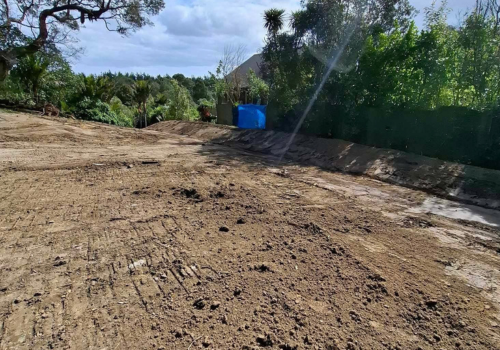
181 Motutara Road, Muriwai – BEFORE
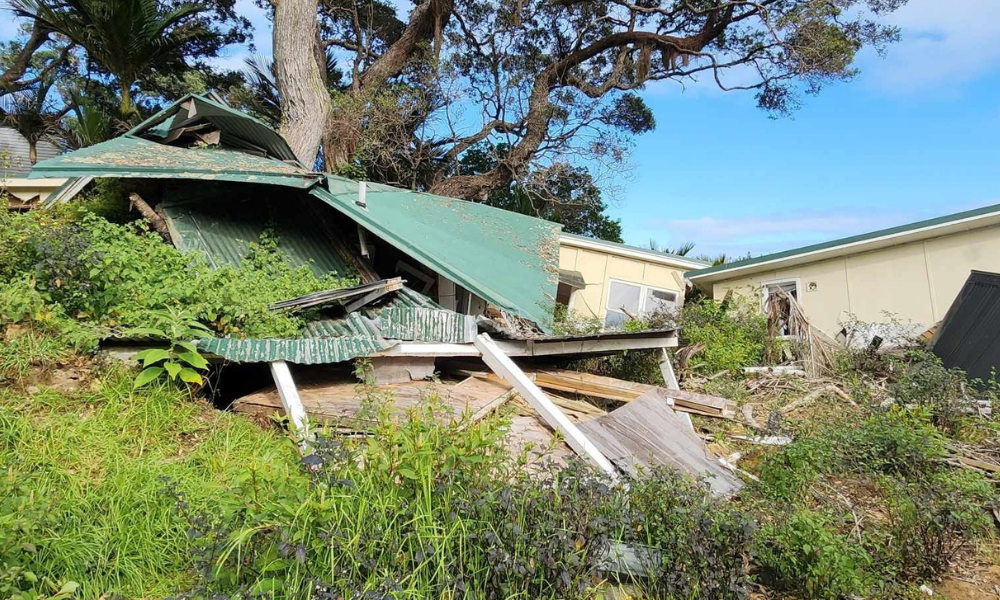
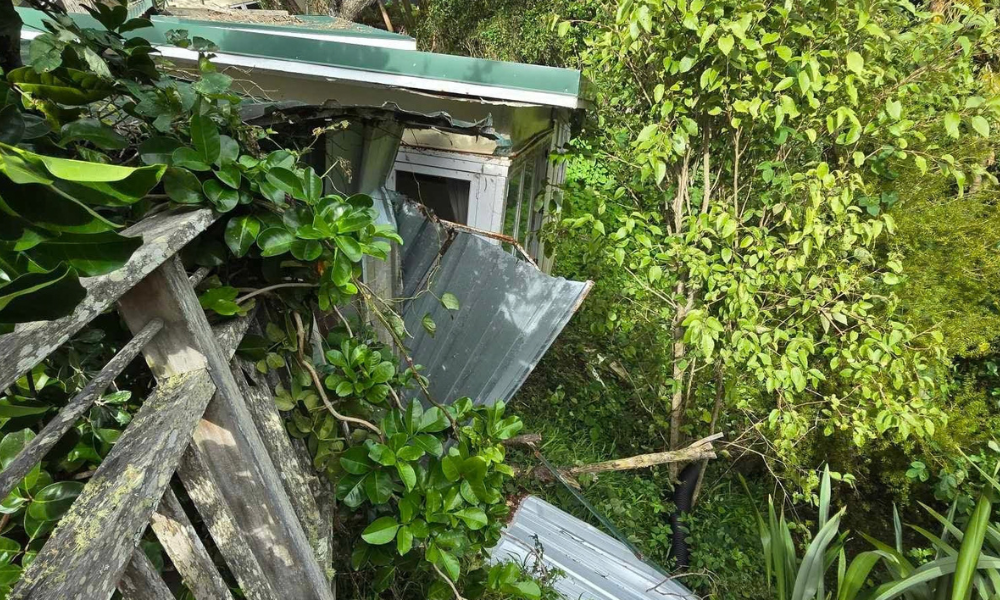
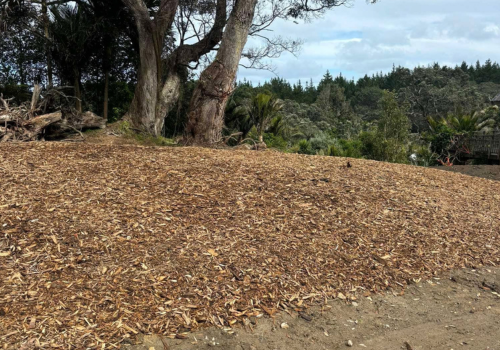
181 Motutara Road, Muriwai – DURING
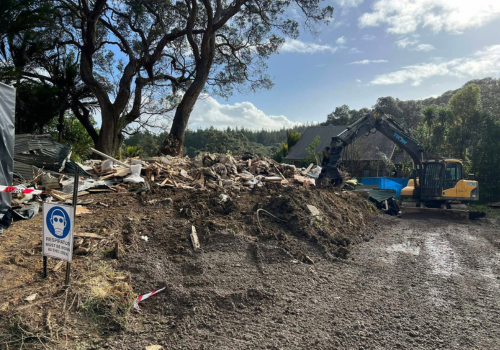
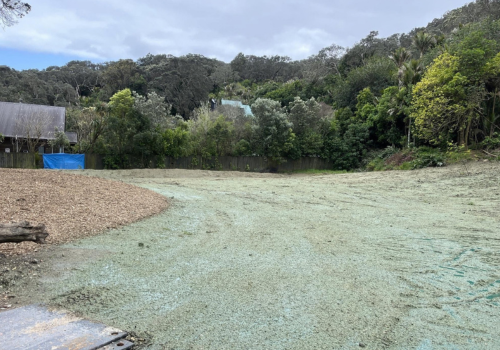
181 Motutara Road, Muriwai – AFTER
Project Highlights
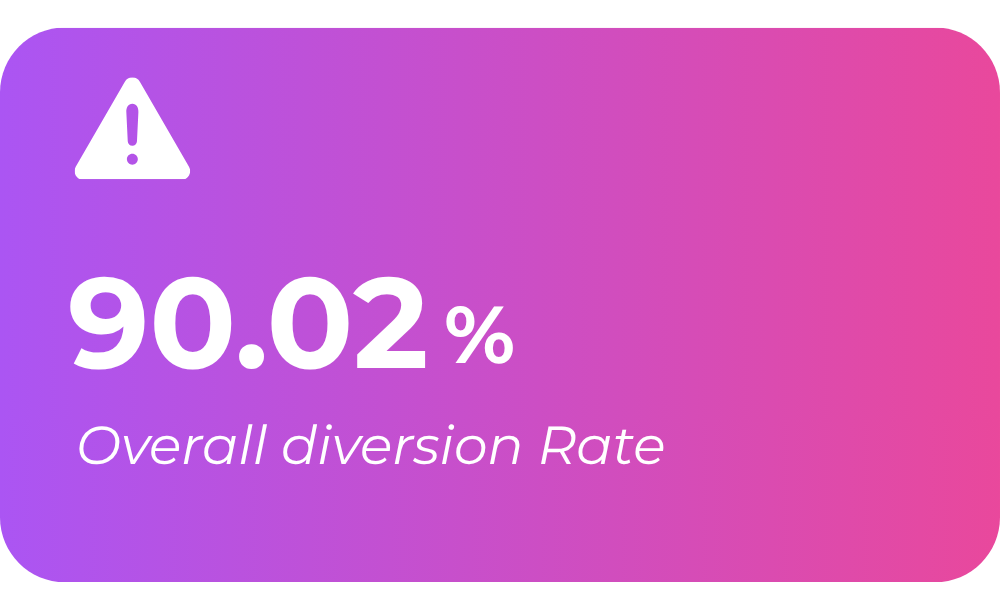
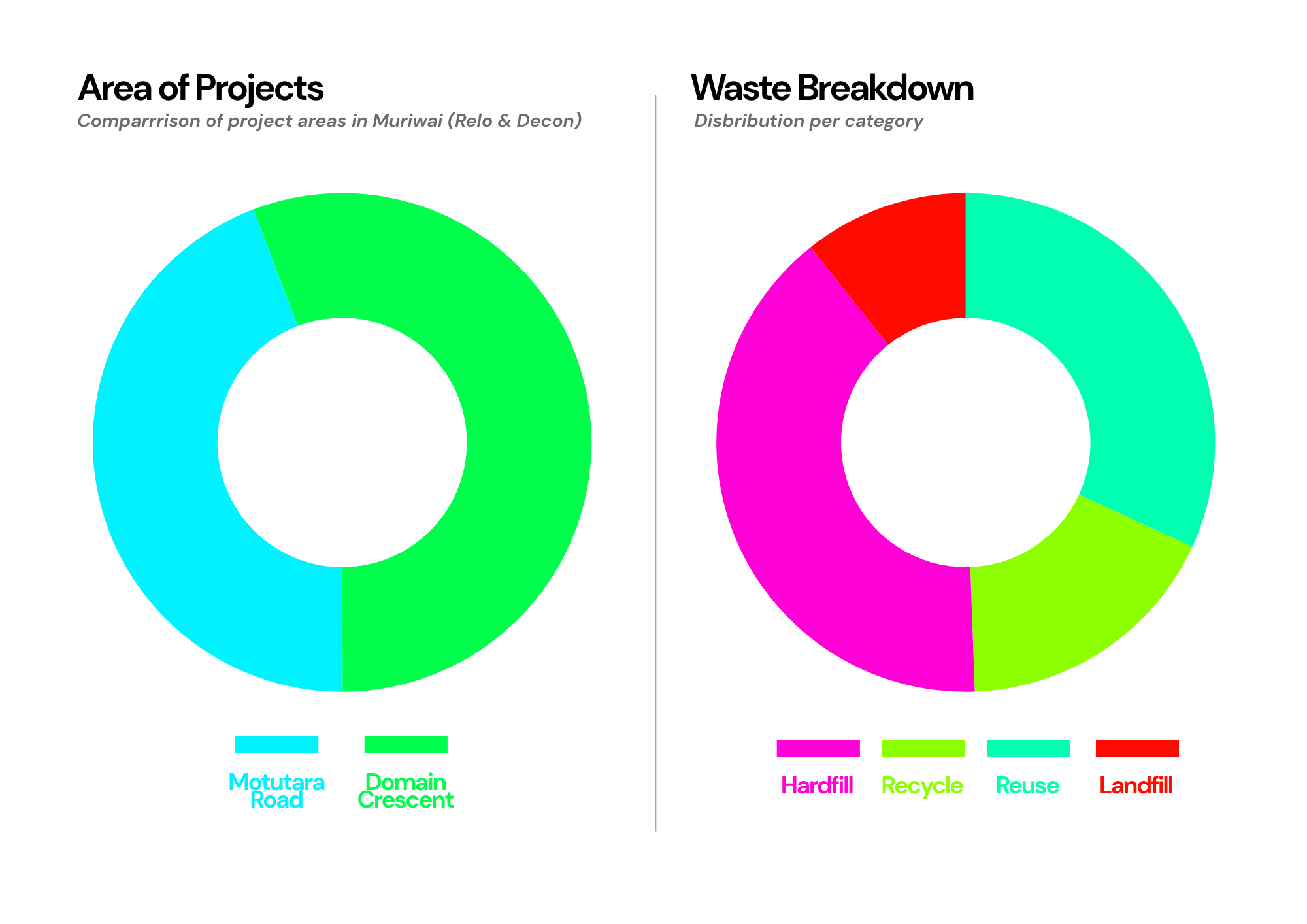
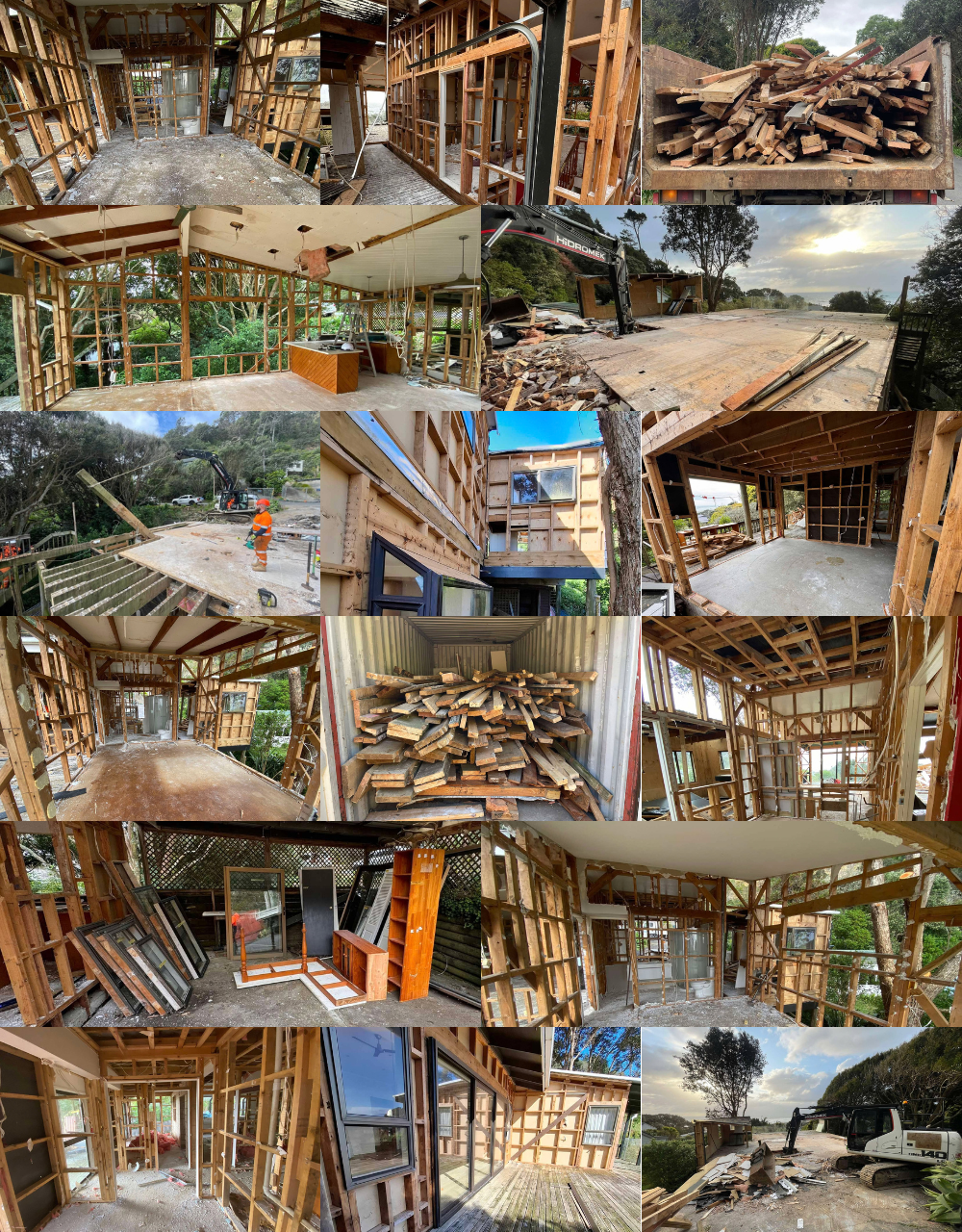
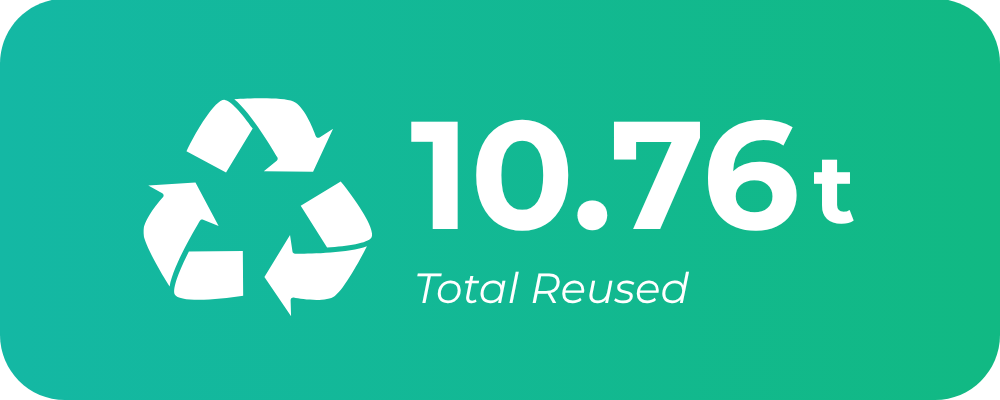
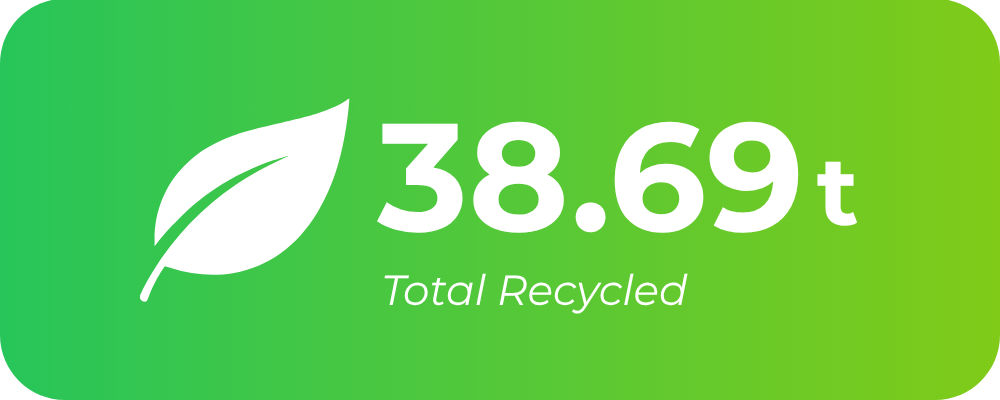
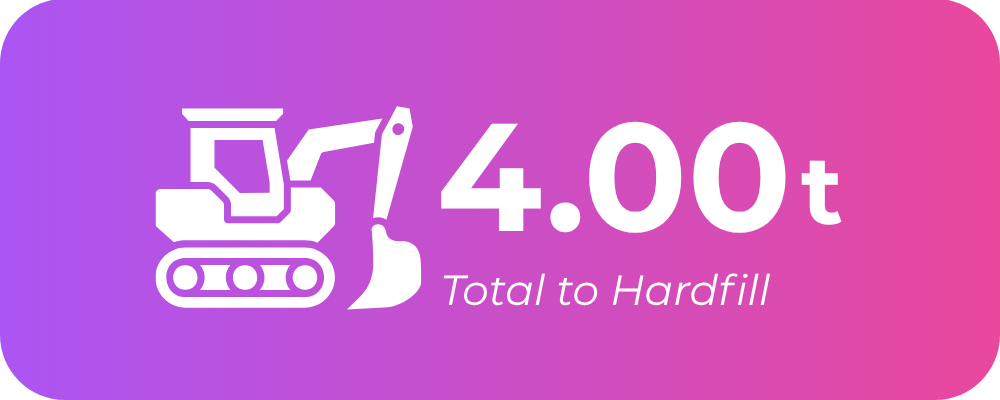
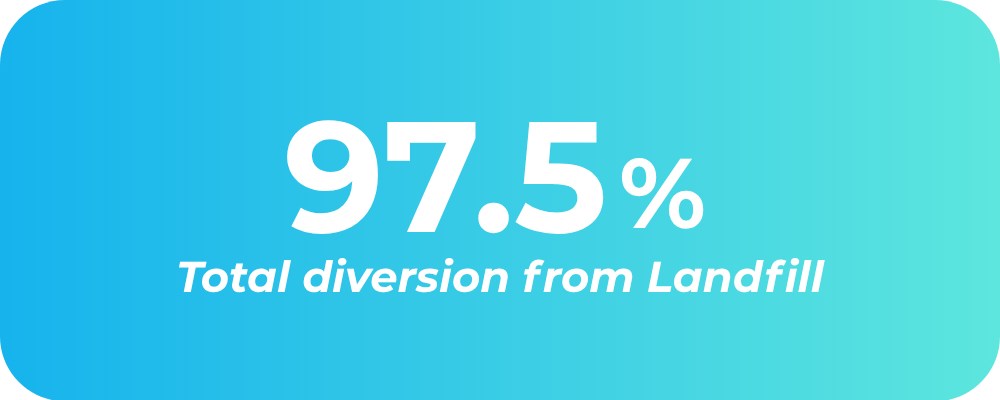
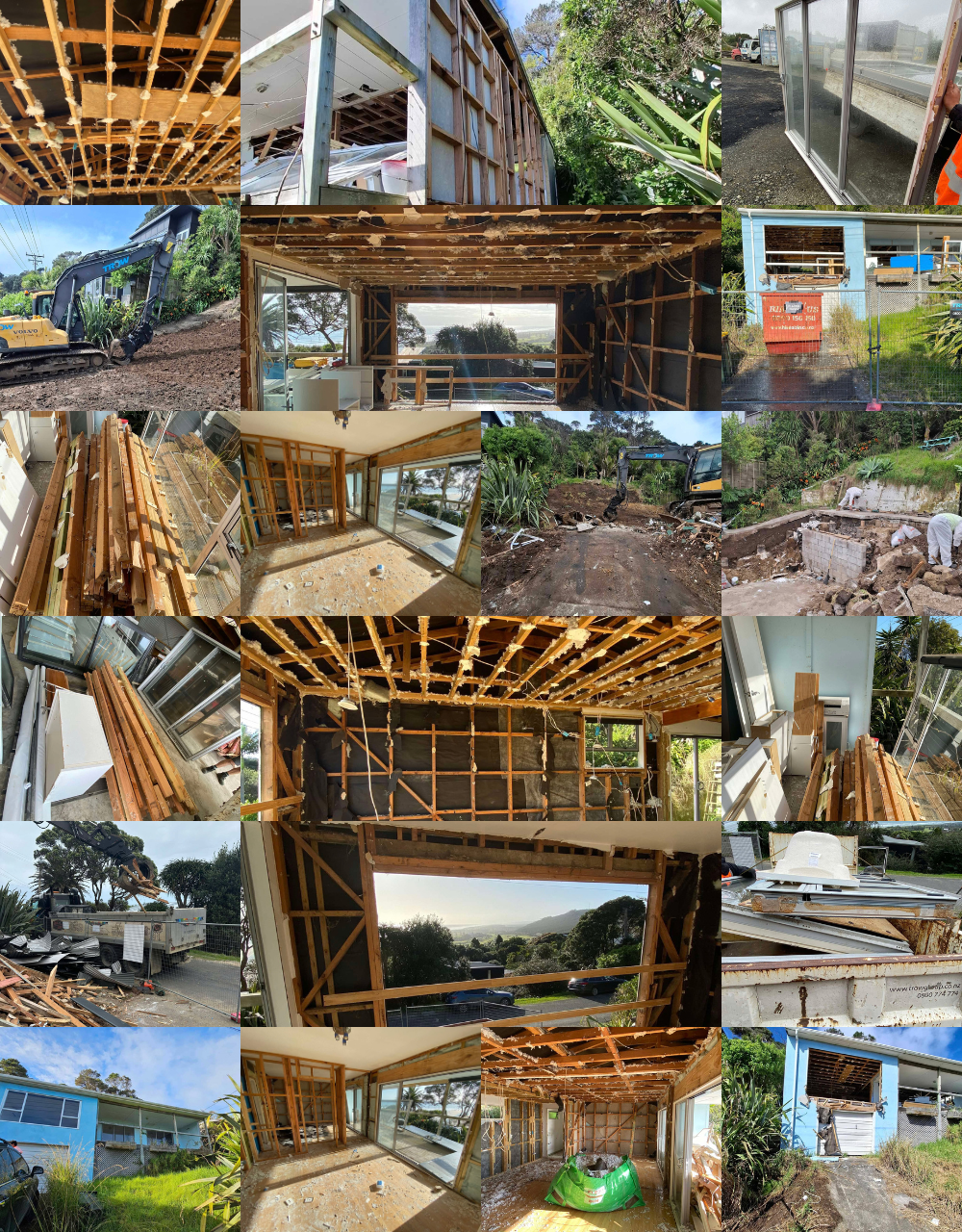
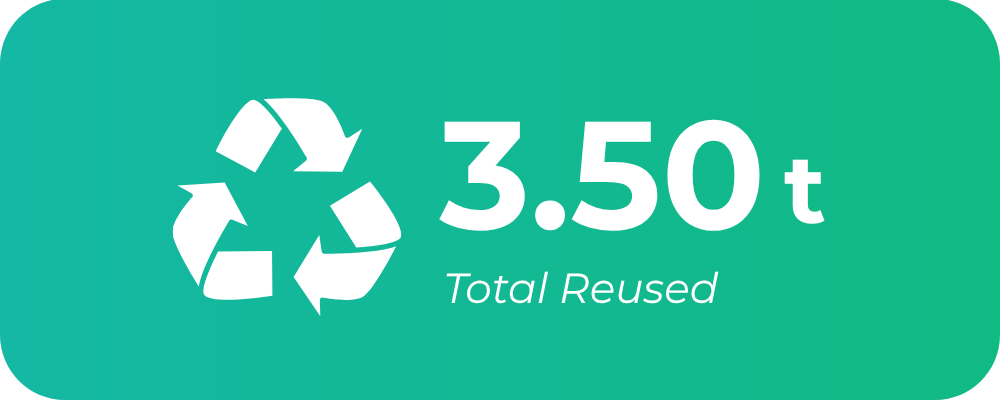
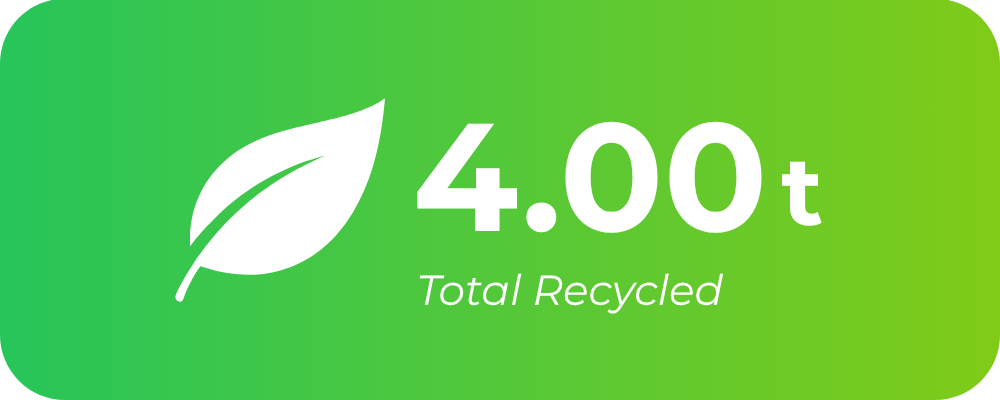
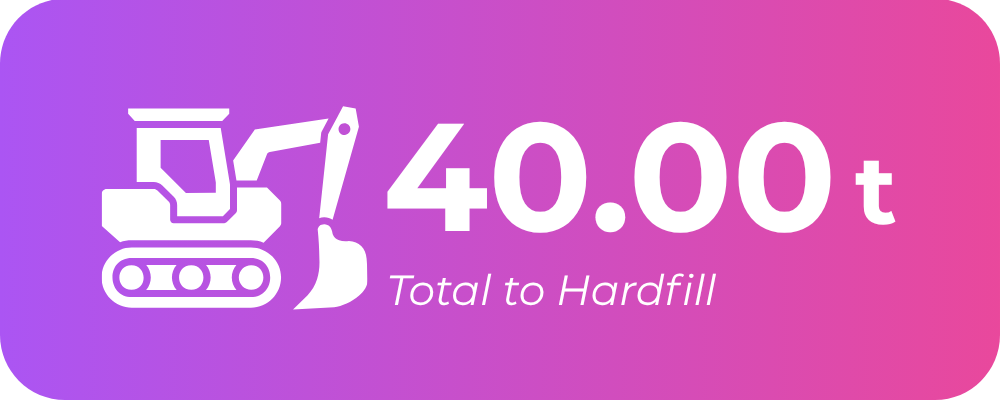
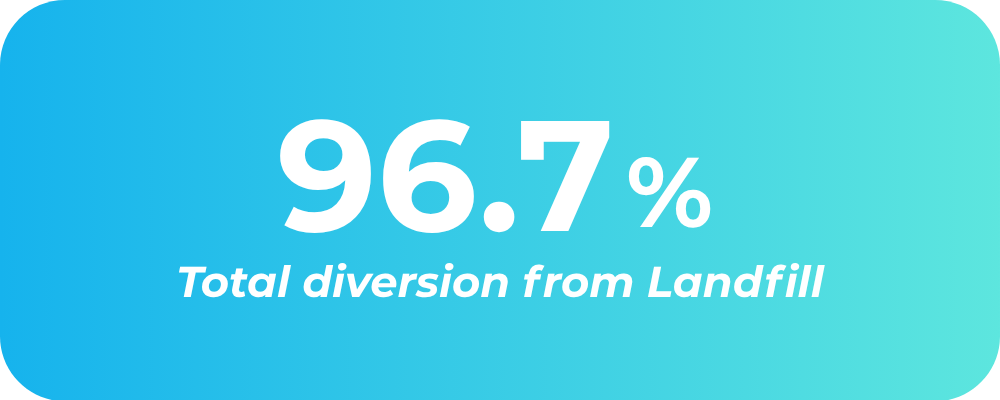
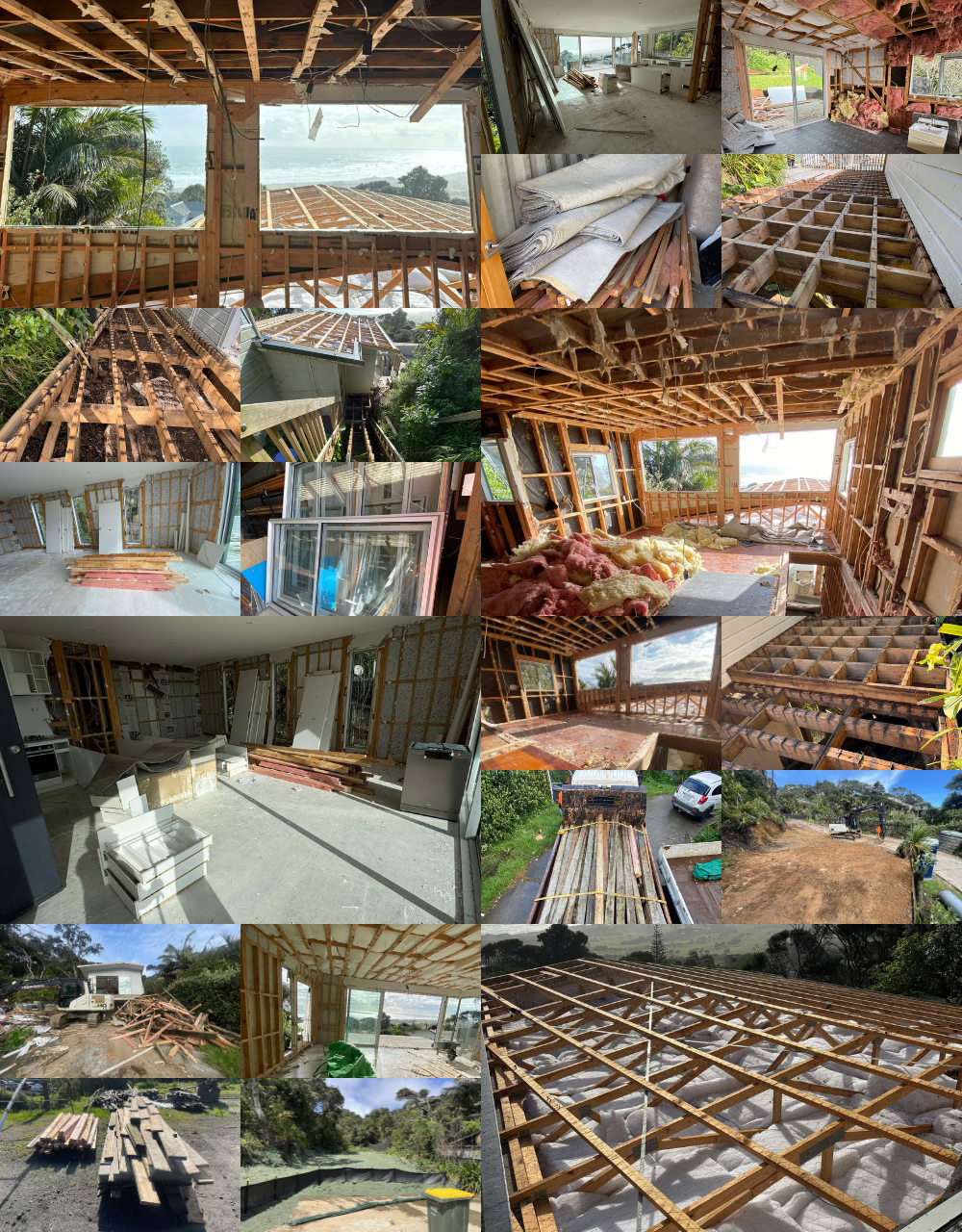
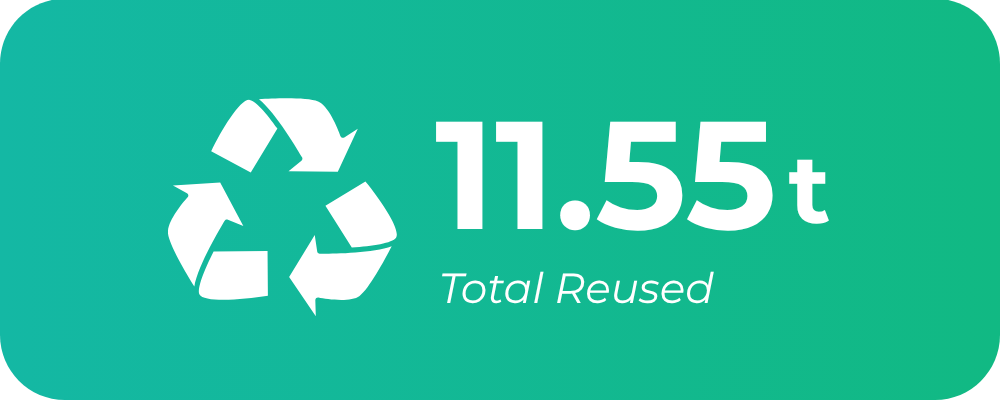
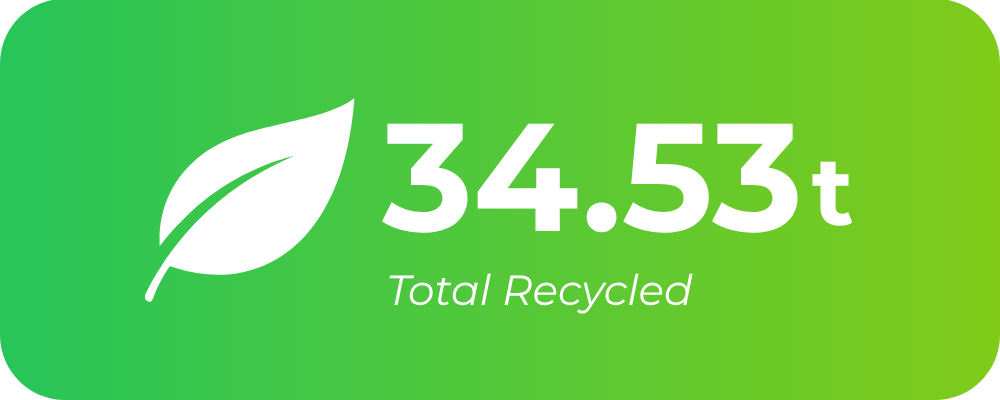
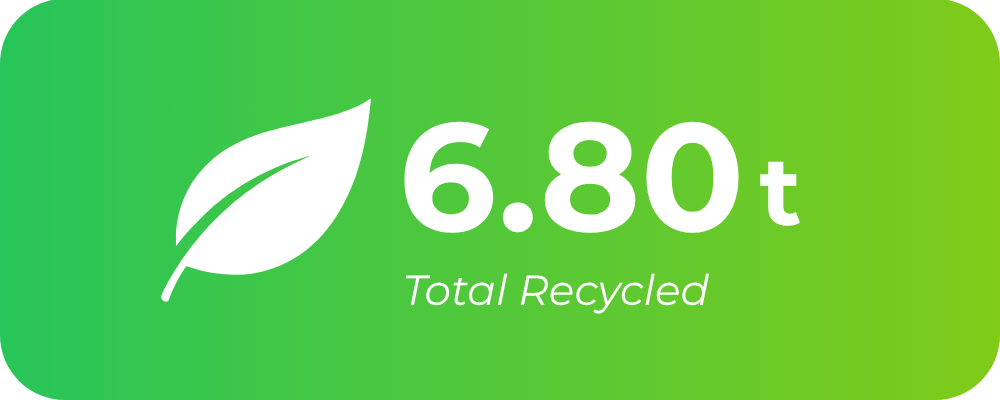
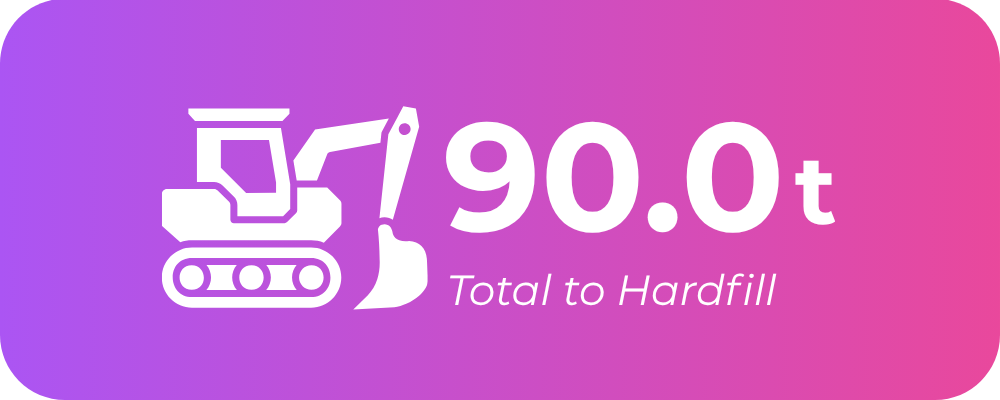
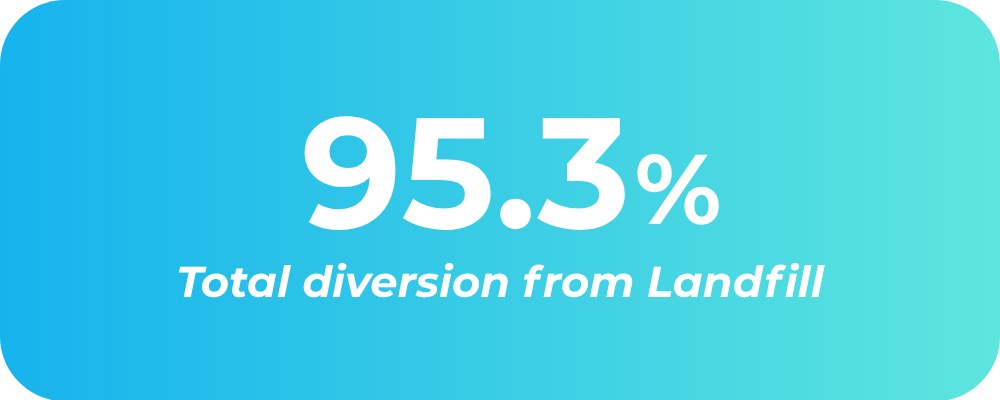
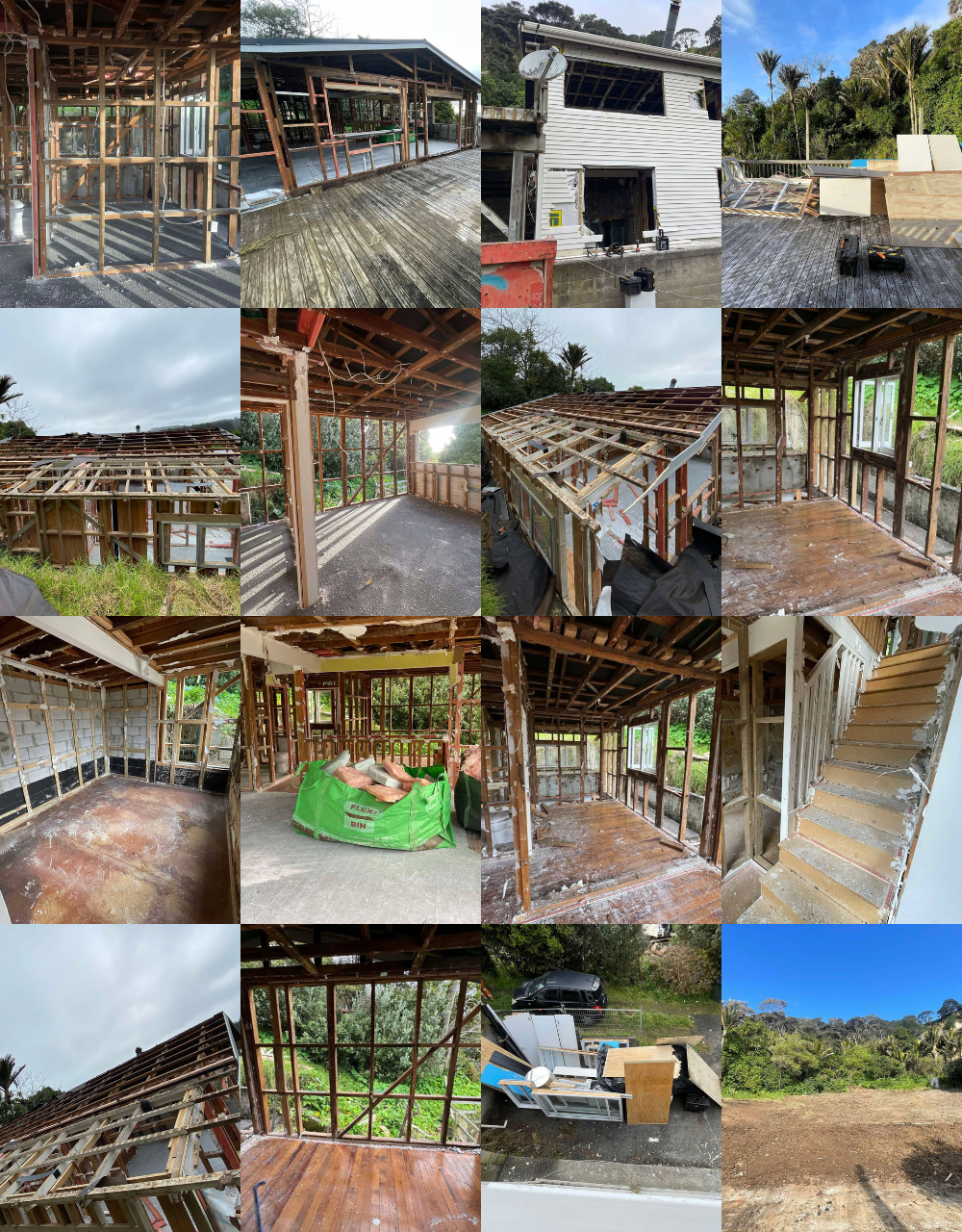
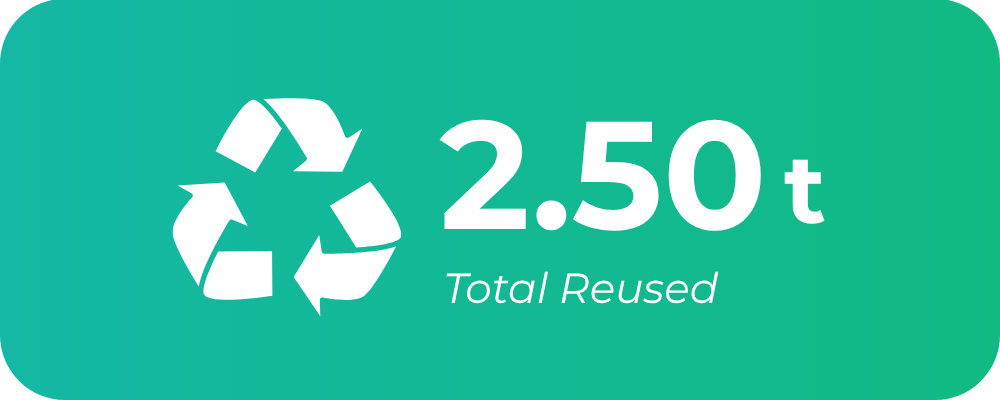
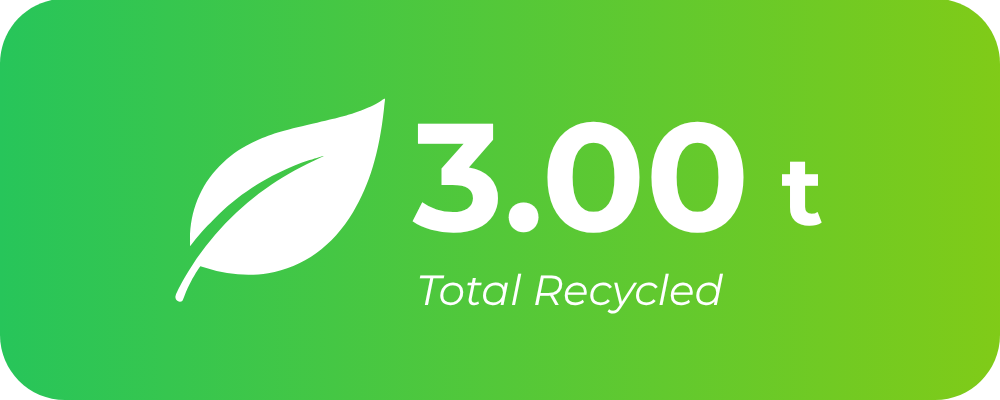
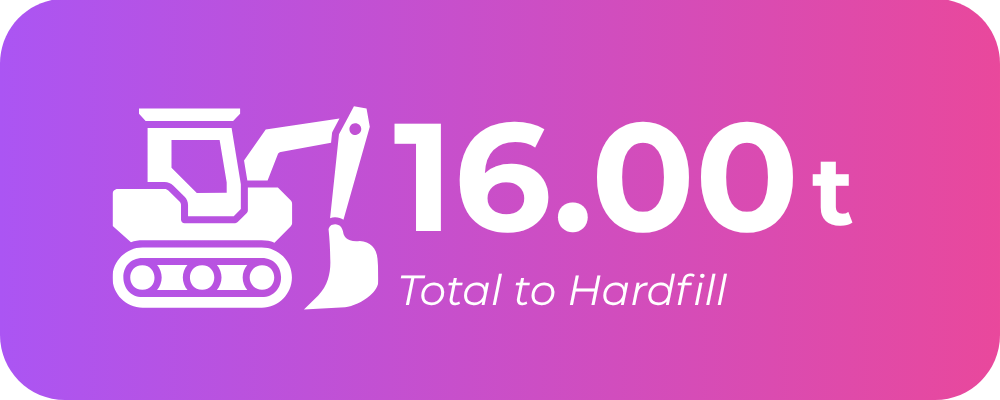
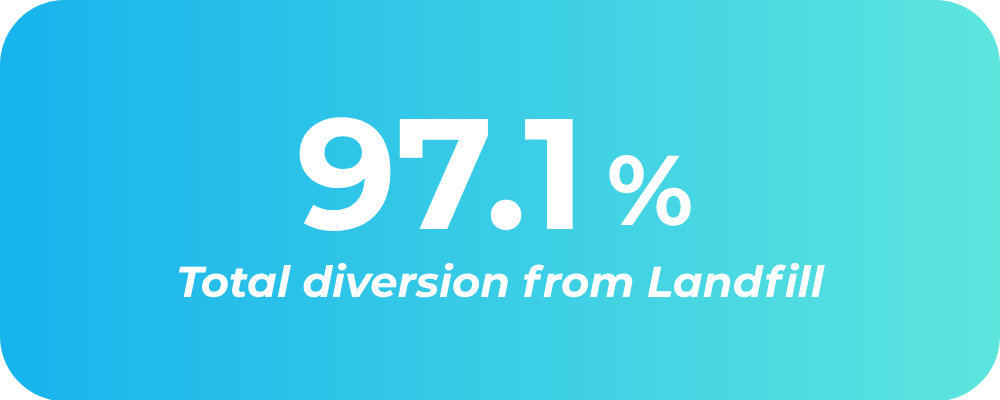
Below are some of the Muriwai projects that achieved our highest waste diversion rates, with each sitting between 95–99% diversion. While our standard target is 80%, these projects pushed well beyond that.
What makes this achievement even more significant is the condition of the homes we were working with. These were red-stickered, unliveable properties impacted by Cyclone Gabrielle, where much of the material could easily have ended up in landfill.
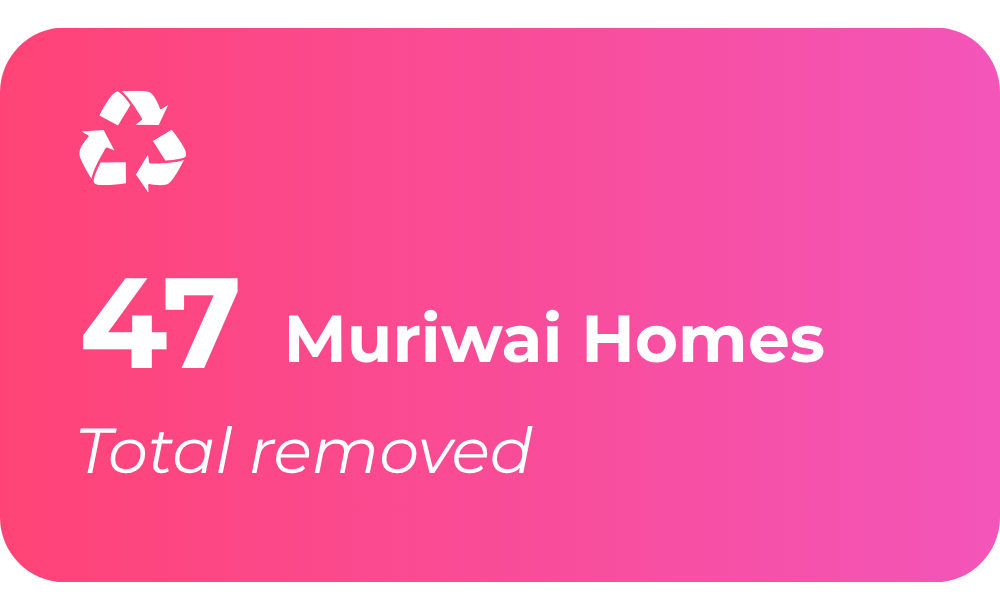
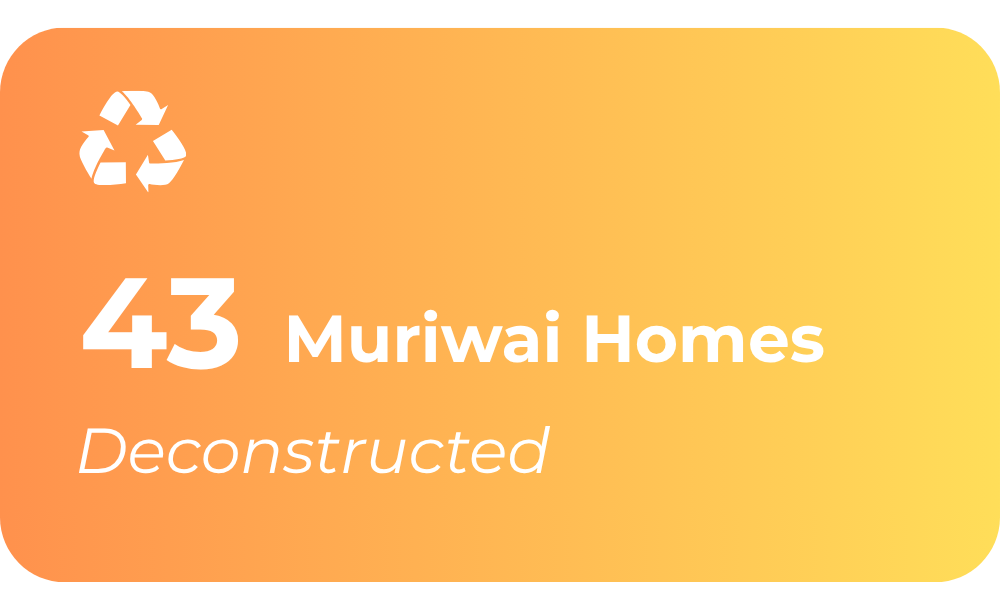
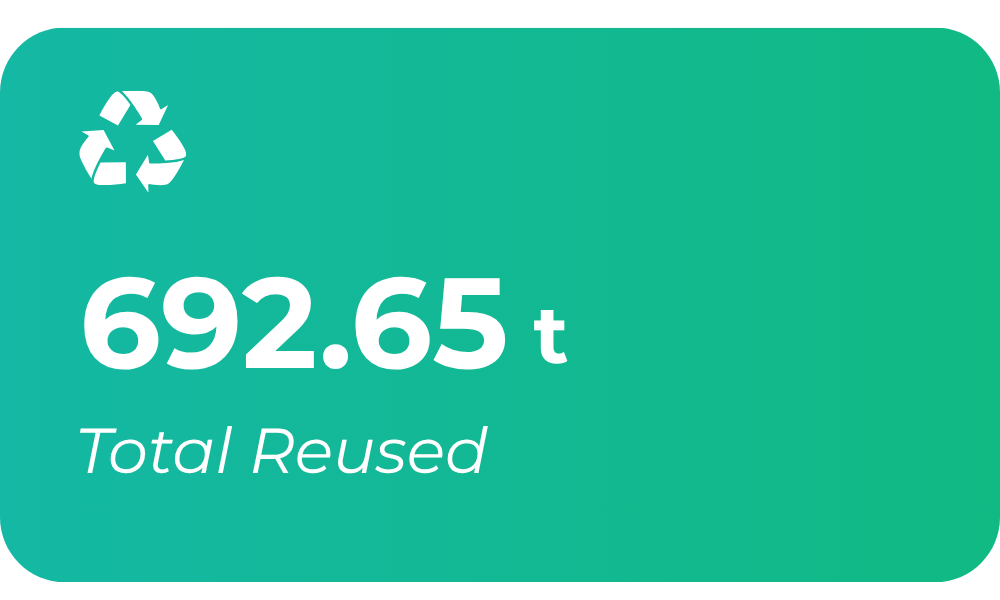
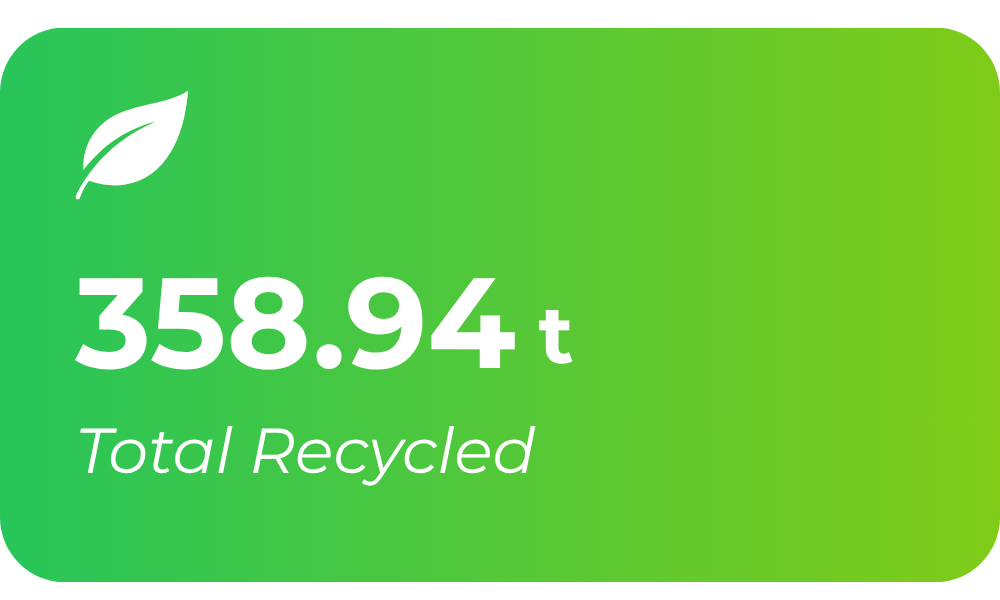
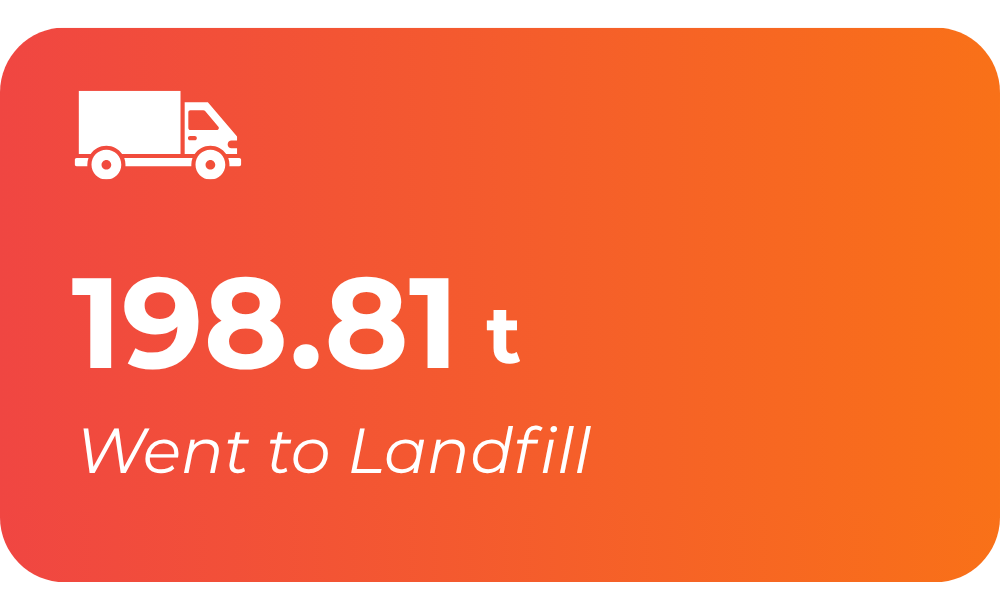
Instead, our team worked closely with community groups, reuse partners and local businesses to carefully work through each property and identify what could be salvaged, reused and recycled. Across all 47 homes, we diverted more than 1,000 tonnes of material from landfill. Being able to recover that much from homes that had been so heavily impacted by the cyclone is something our team can be incredibly proud of. It was a huge team effort, and one that showed what can be achieved when materials are given another opportunity instead of being sent straight to landfill.
38 Domain Crescent, Muriwai

83 Domain Crescent, Muriwai

97 Domain Crescent, Muriwai.
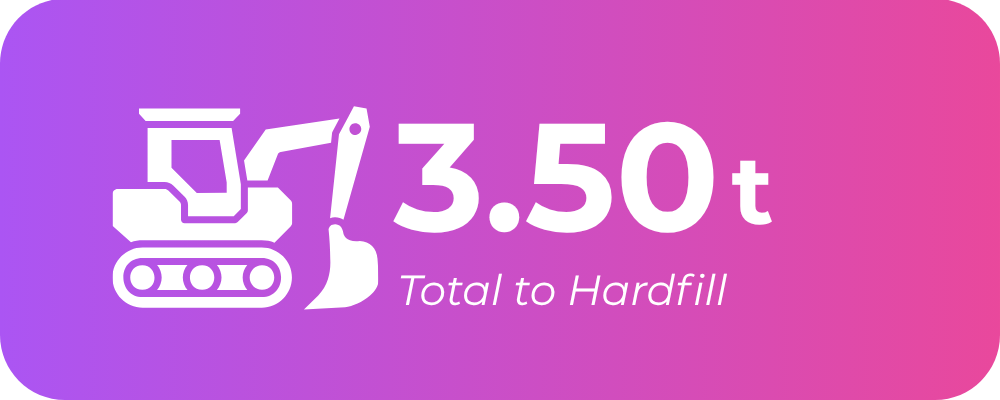

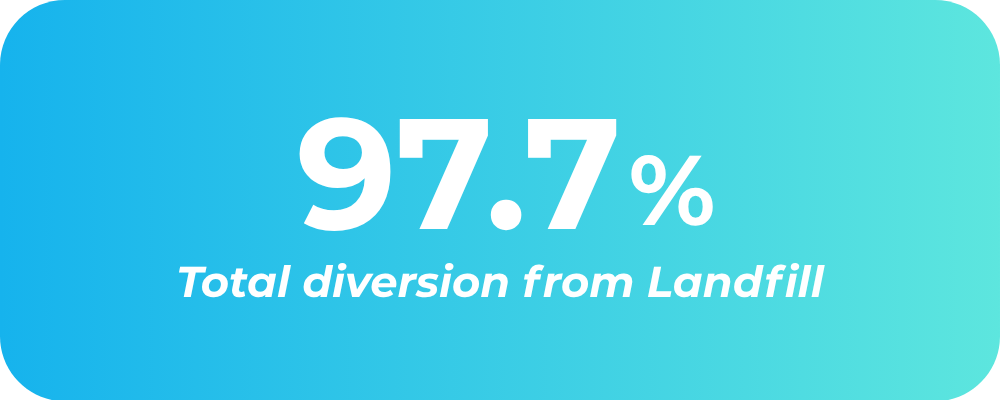
204 Motutara Road, Muriwai.
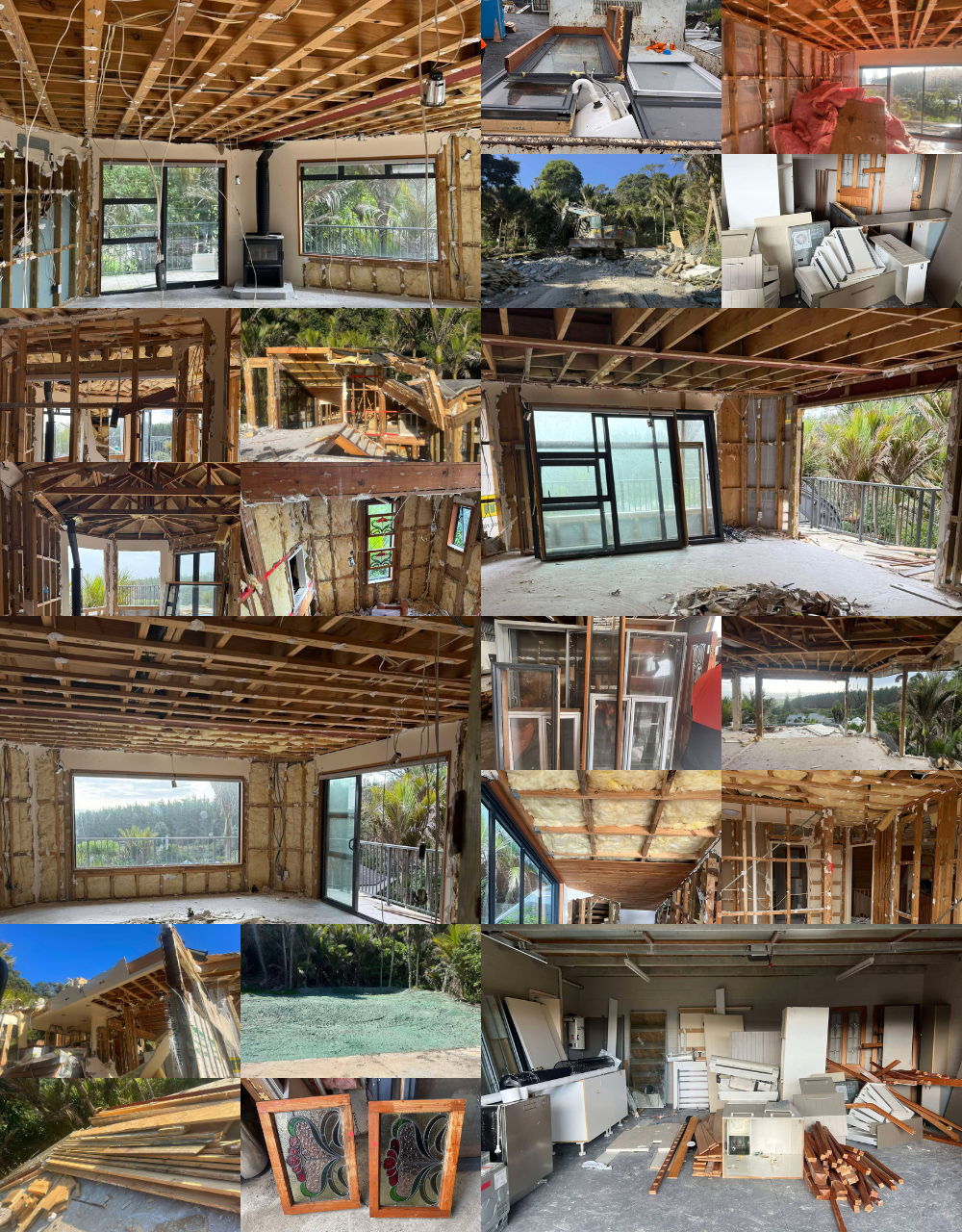
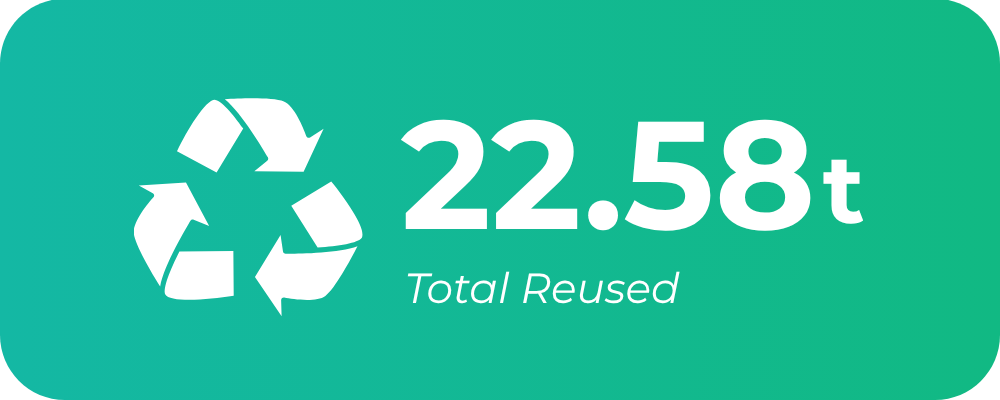

214a Motutara Road, Muriwai.

Back