
Back
Deconstruction
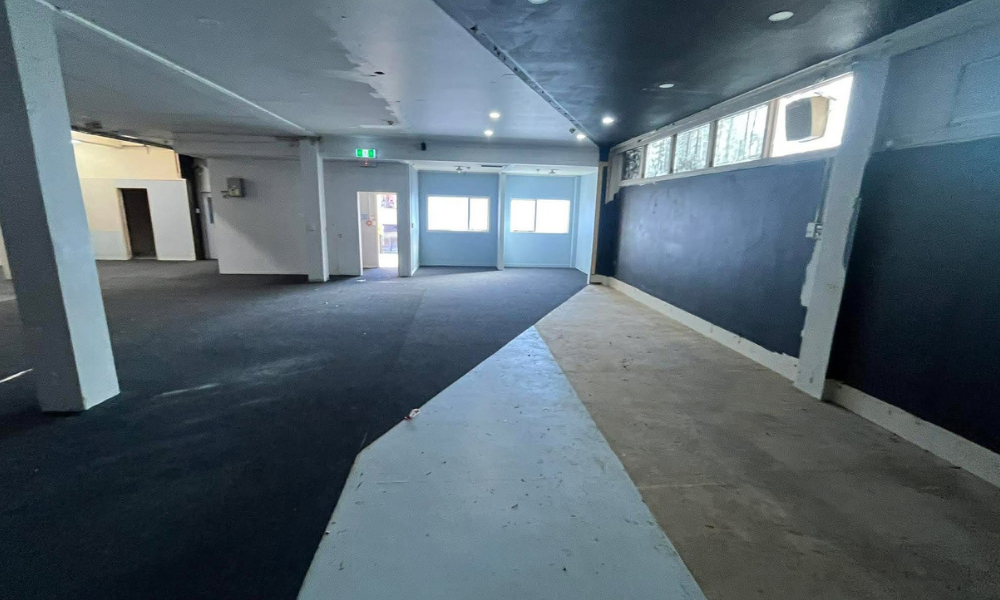
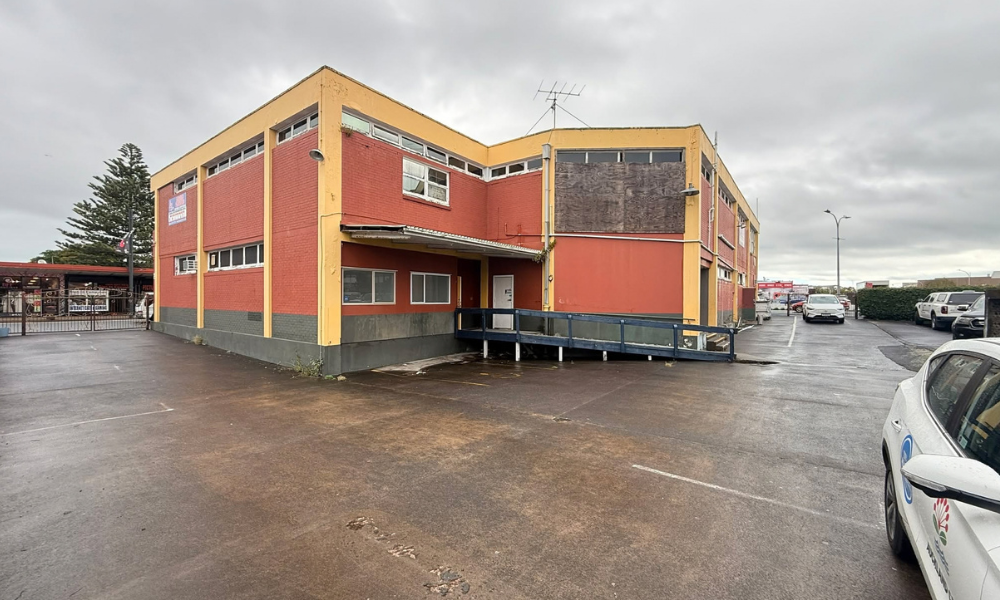
98 St George Street, Papatoetoe
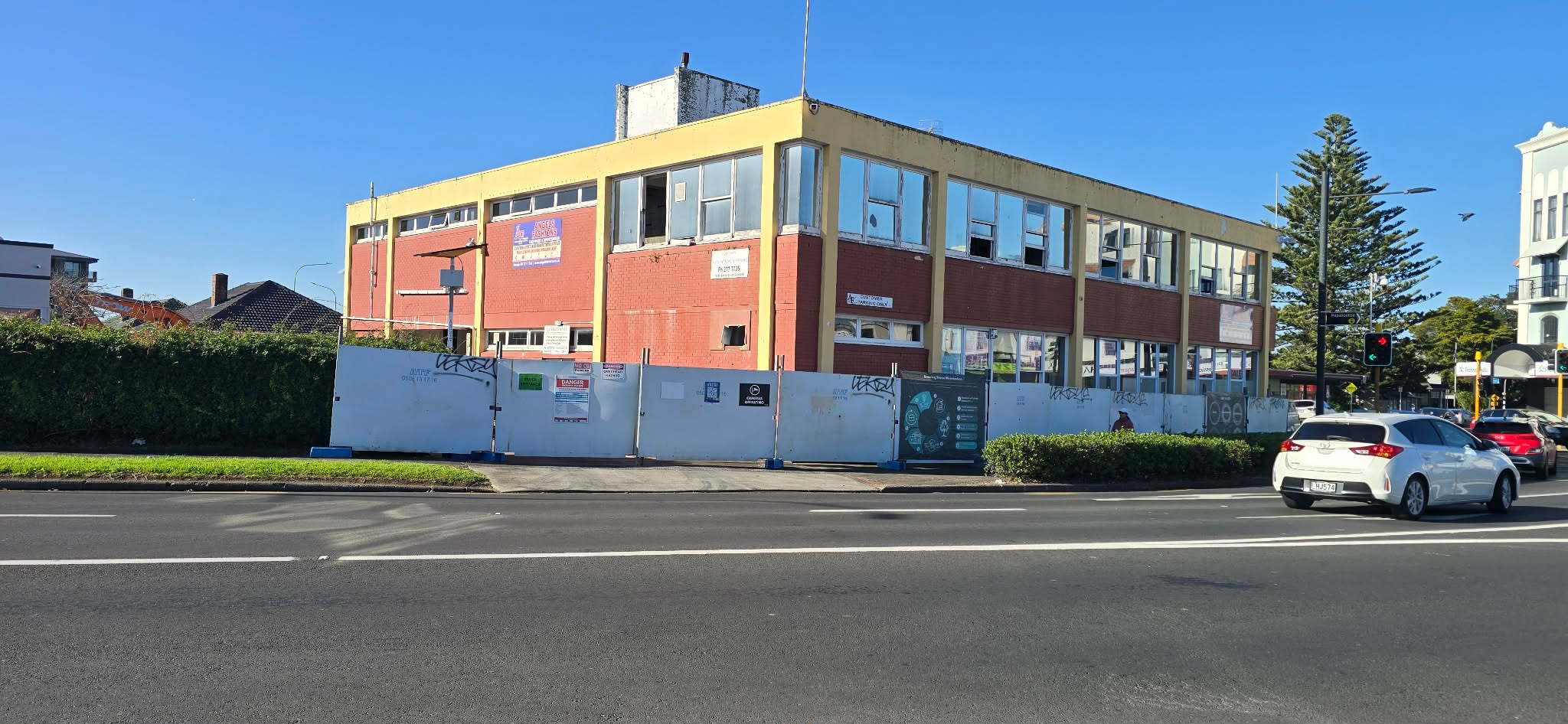
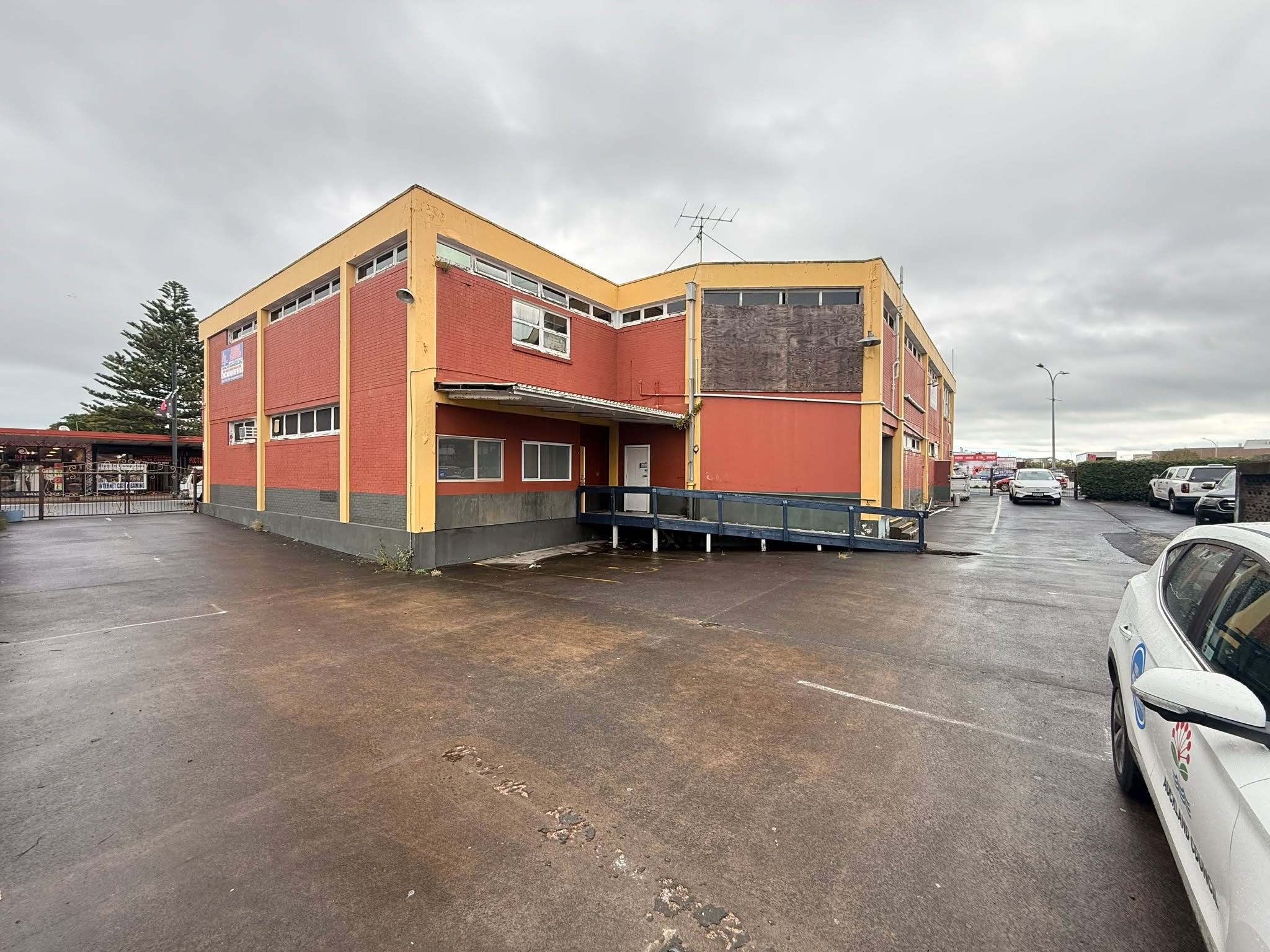
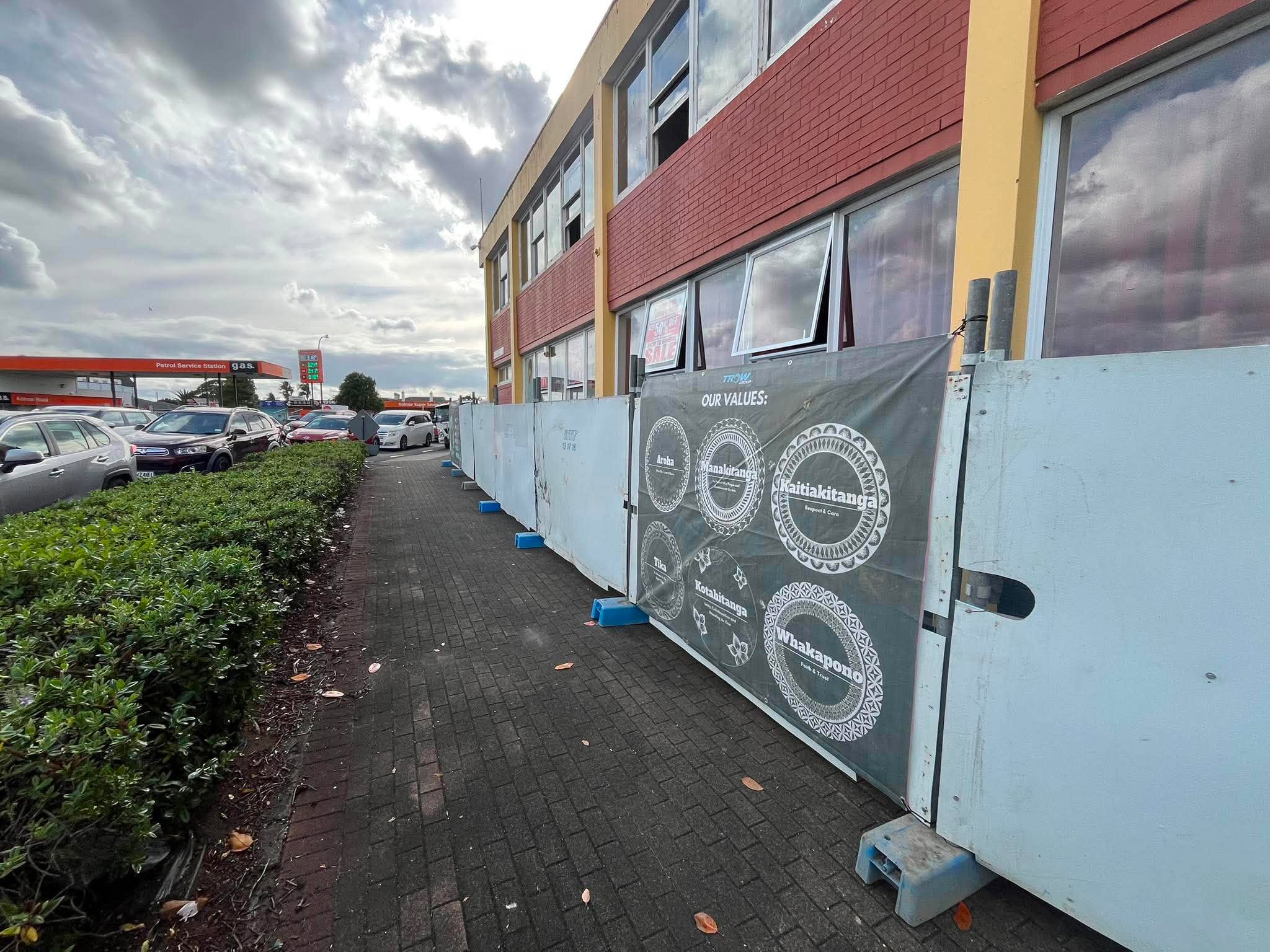
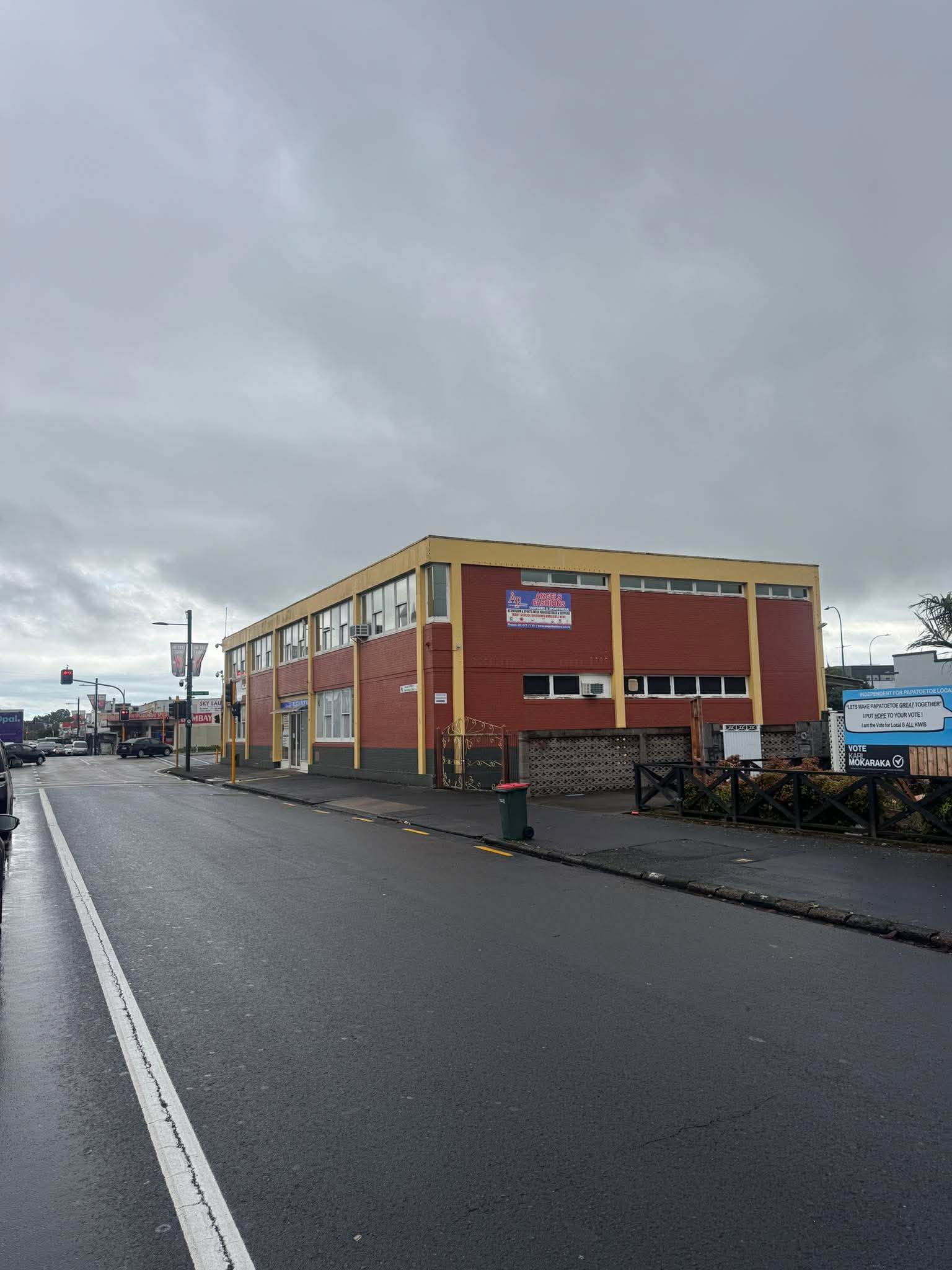
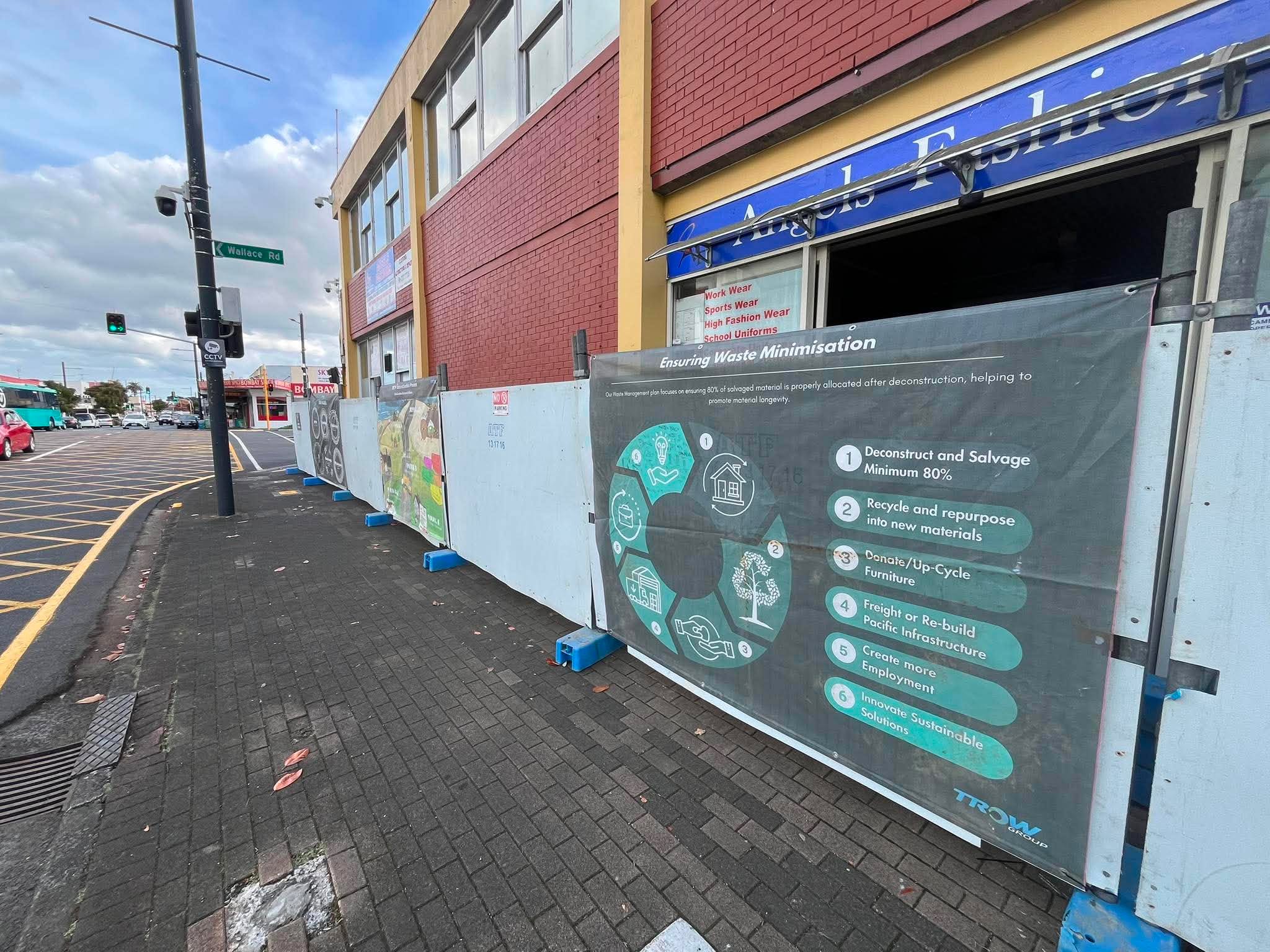
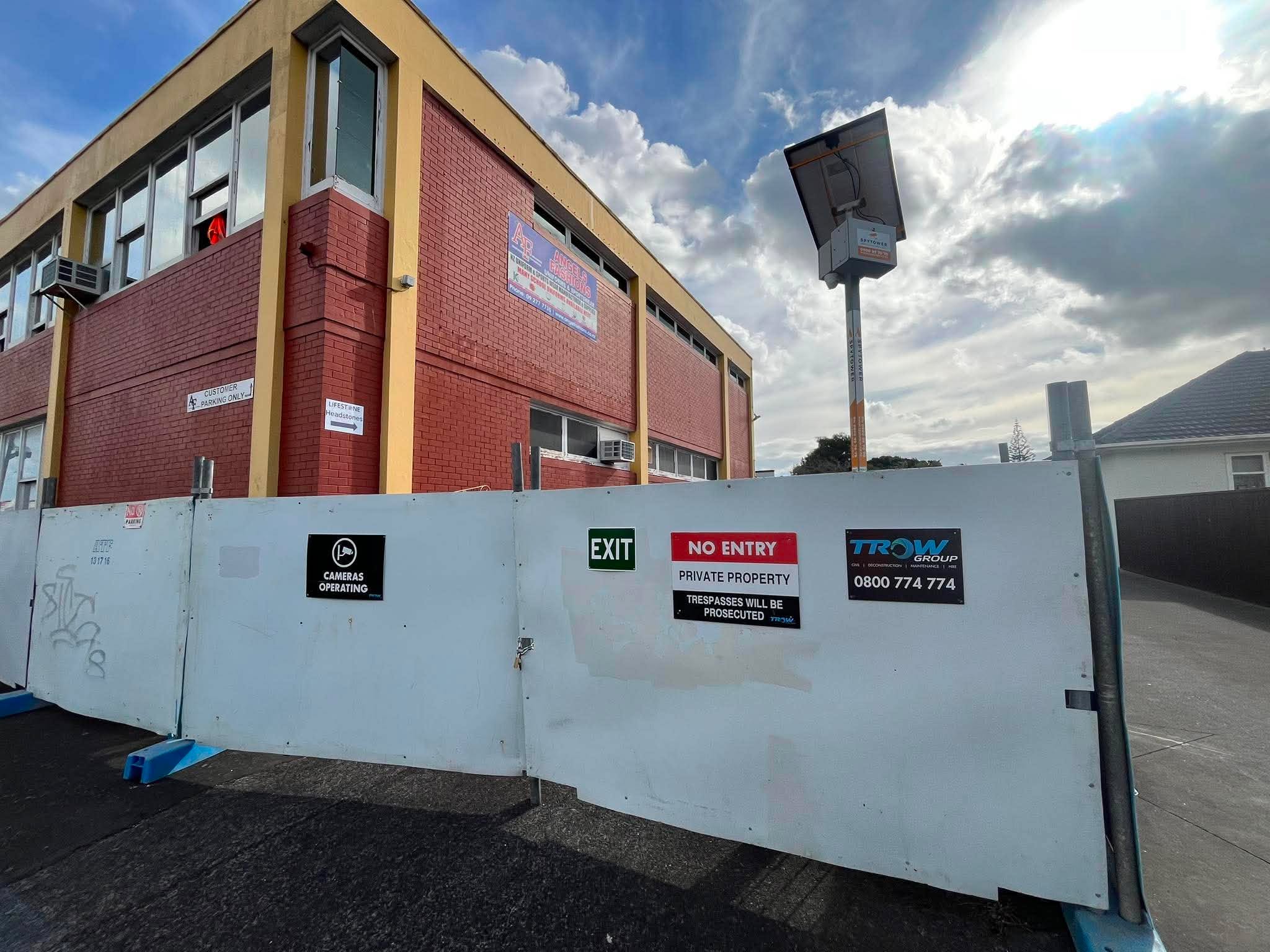
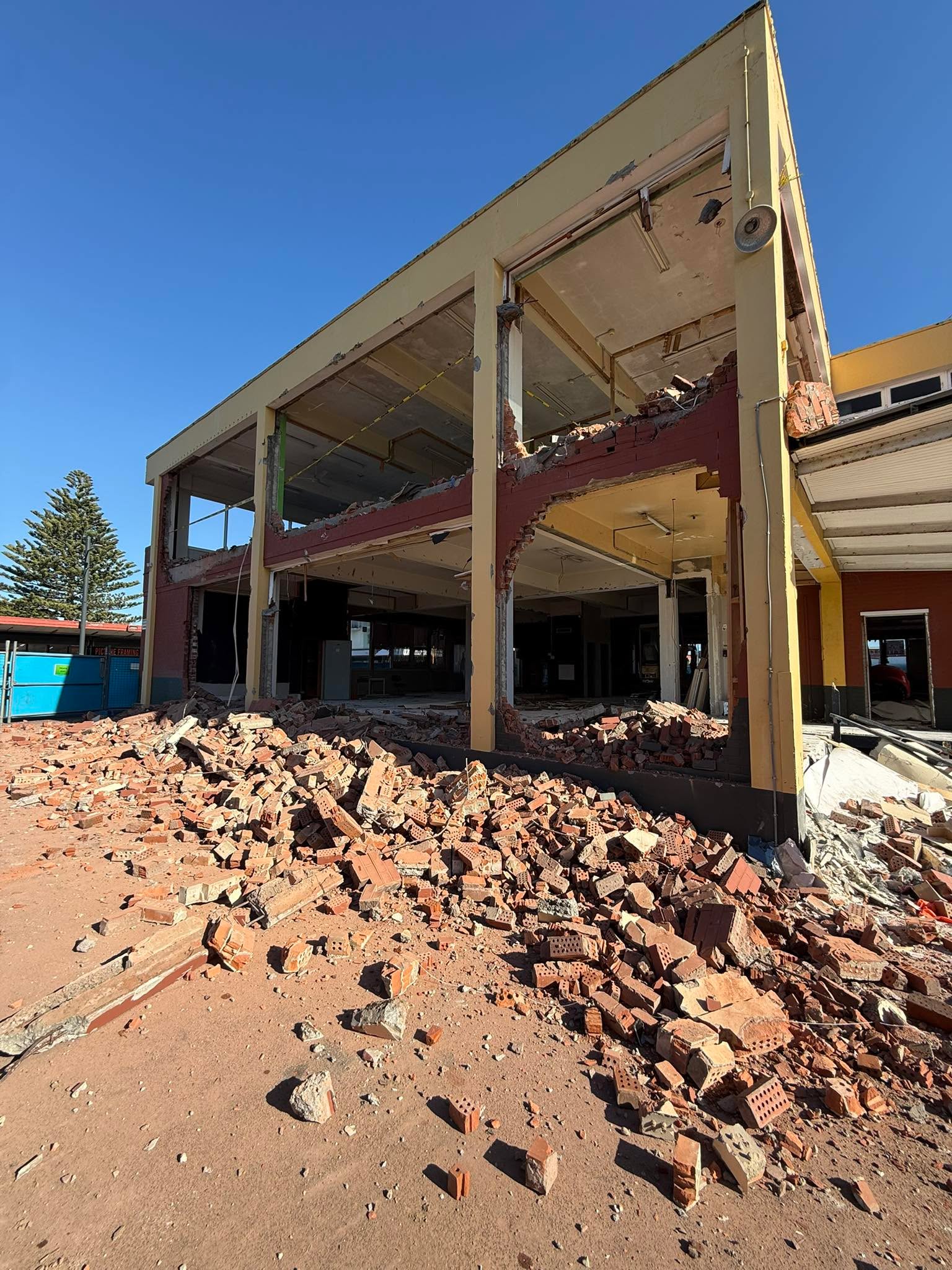
Project Overview:
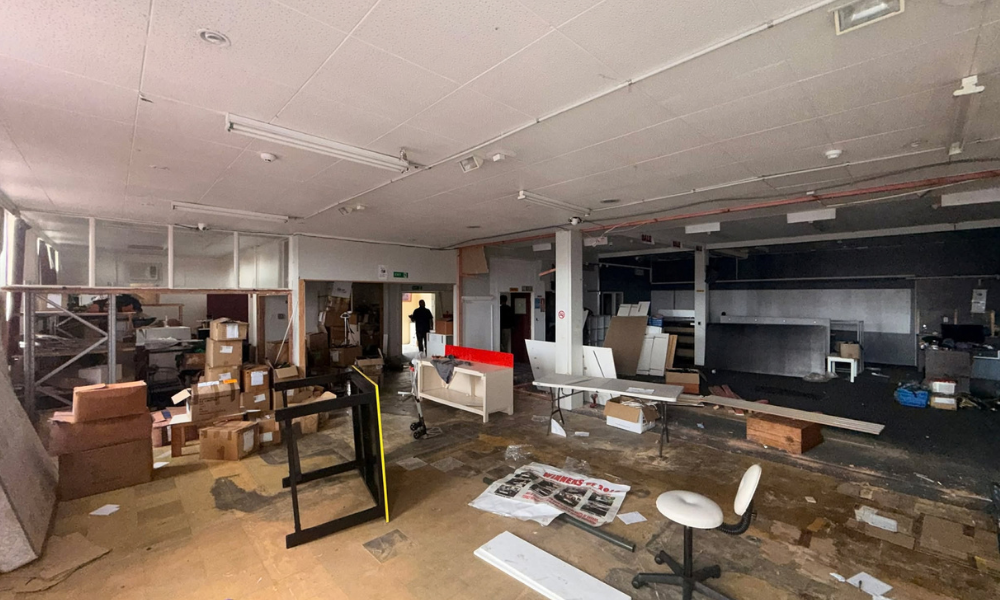
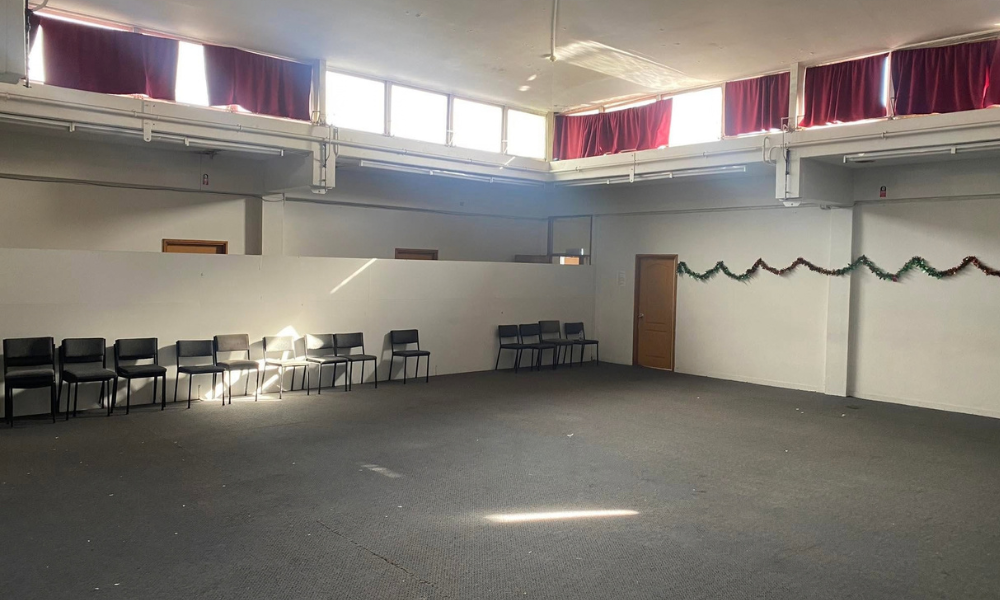
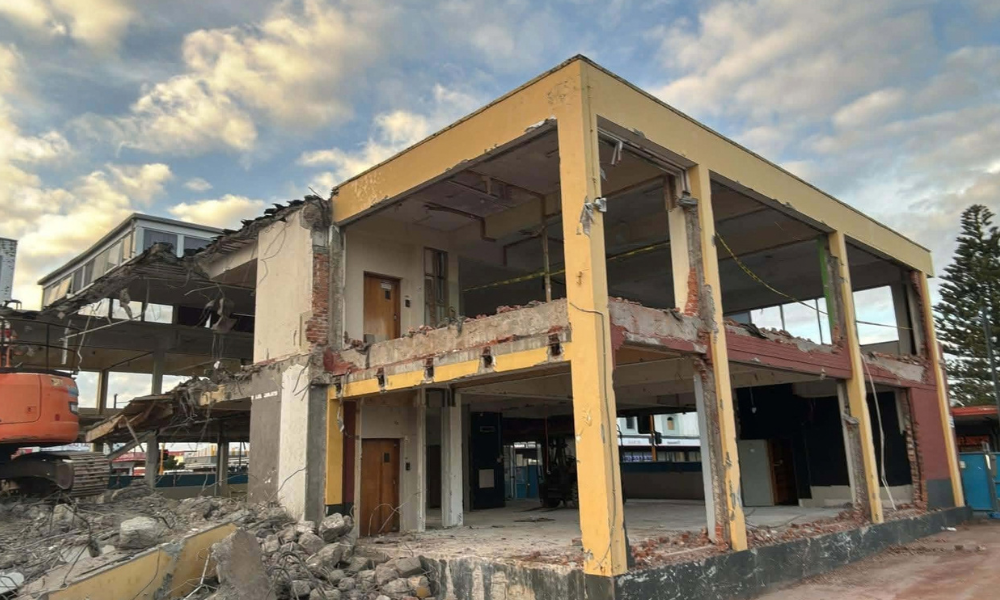
This project will be delivered using a staged deconstruction methodology focused on safety, resource recovery, and environmental responsibility. Materials will be carefully assessed throughout the project to maximise opportunities for reuse and recycling in alignment with the project waste management objectives.
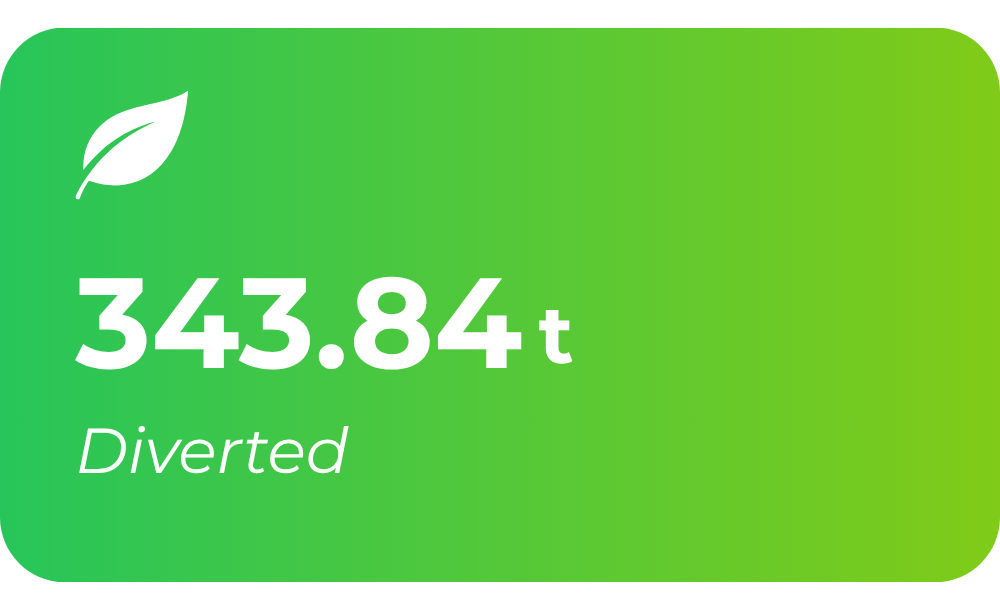
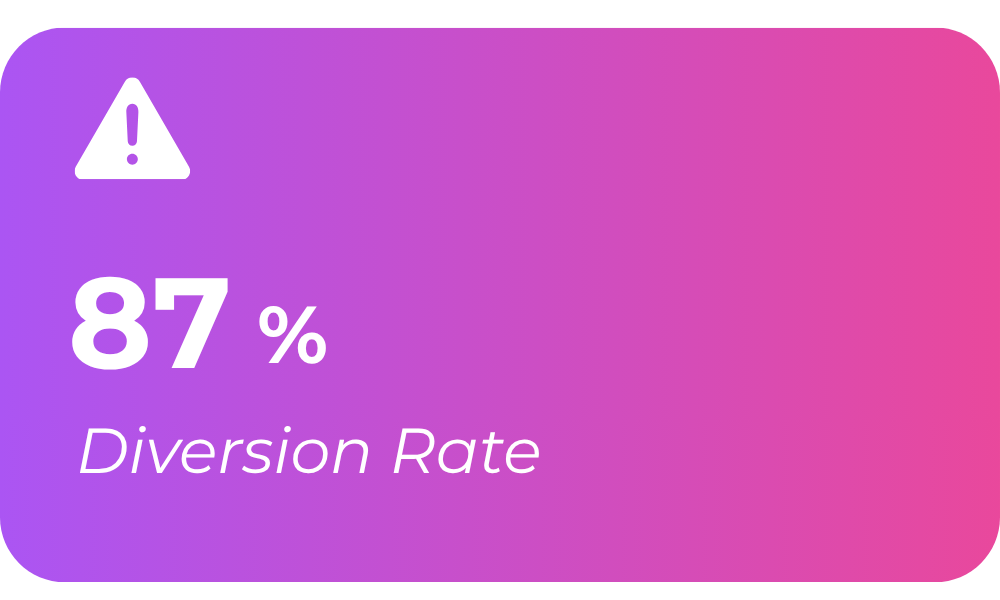
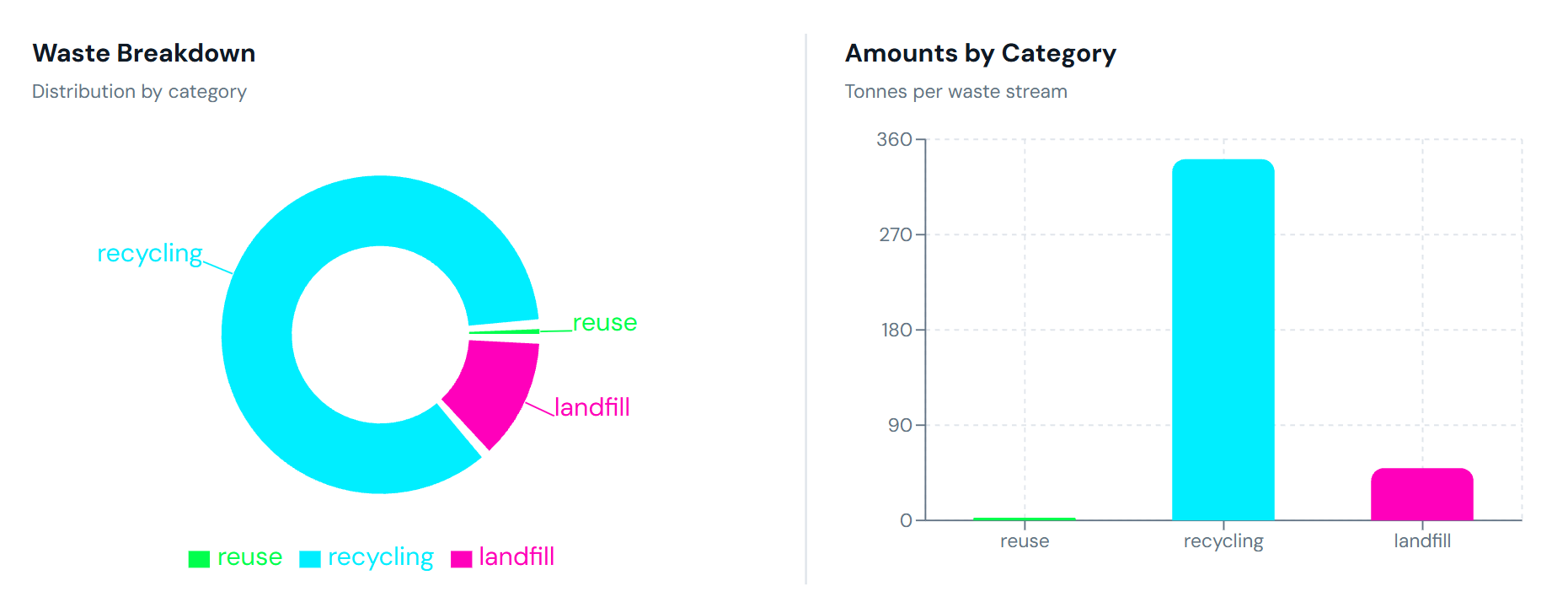
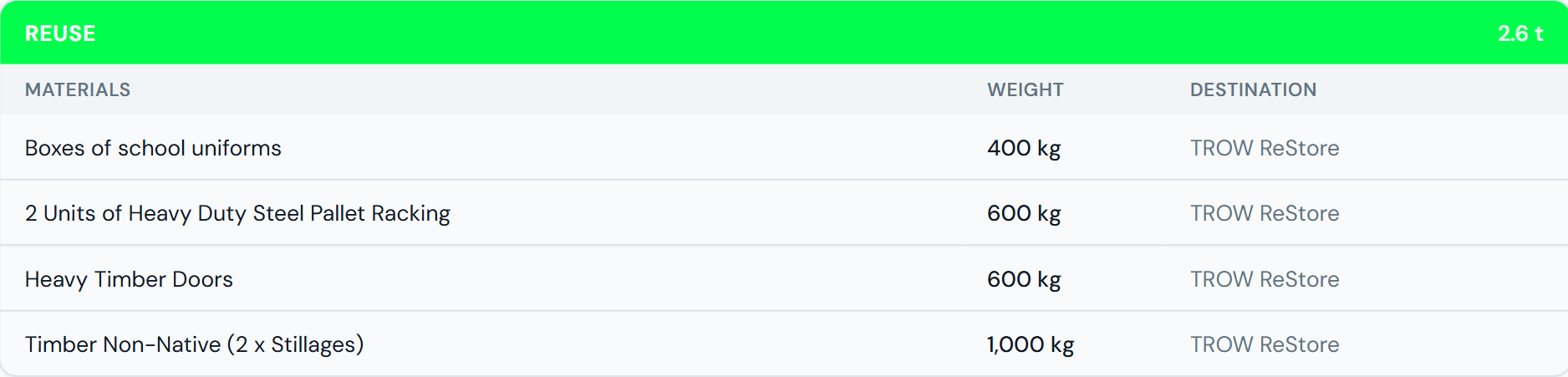
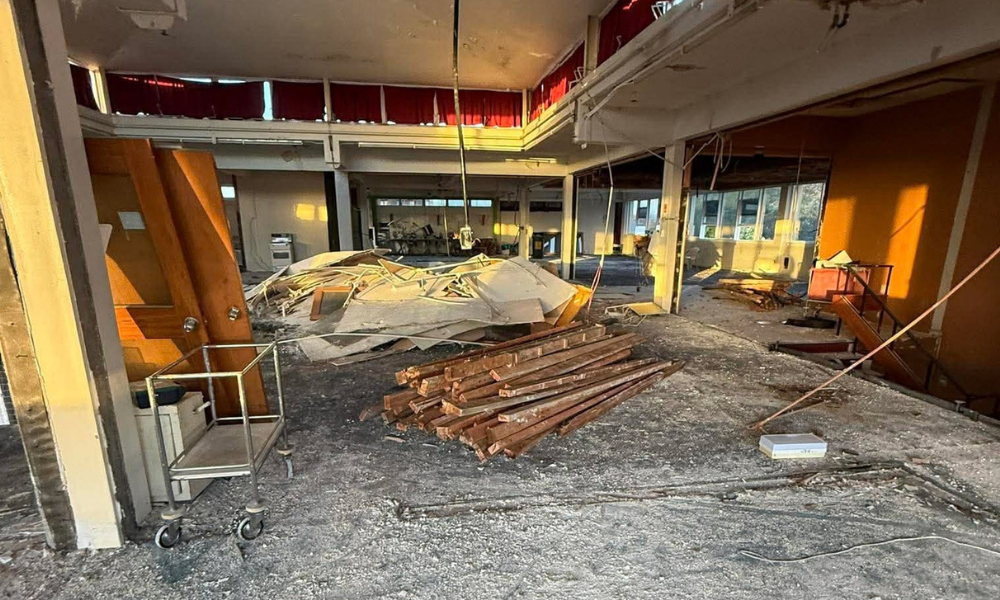
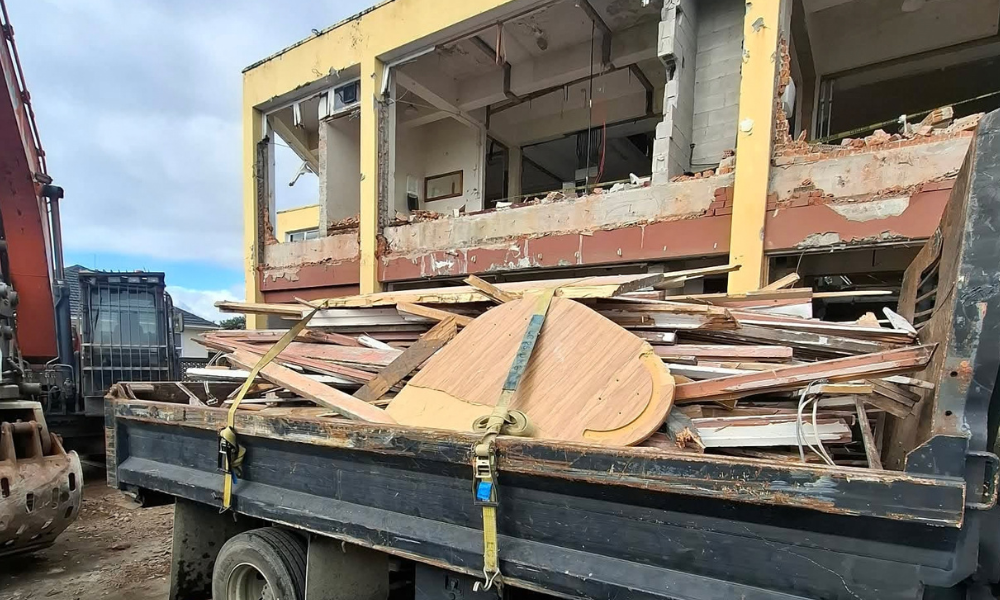
A significant proportion of recoverable materials will be diverted from landfill through salvage, reuse, and recycling pathways where practicable. This will include the careful removal of building components and materials that can be repurposed for future community, construction, or circular economy initiatives.
Works will include the removal and deconstruction of associated site structures such as garages, sheds, carports, and ancillary buildings where applicable. All project activities will be undertaken in accordance with site-specific safety and environmental management procedures, with collaboration between project teams, contractors, and specialist trades to ensure efficient and coordinated delivery outcomes.
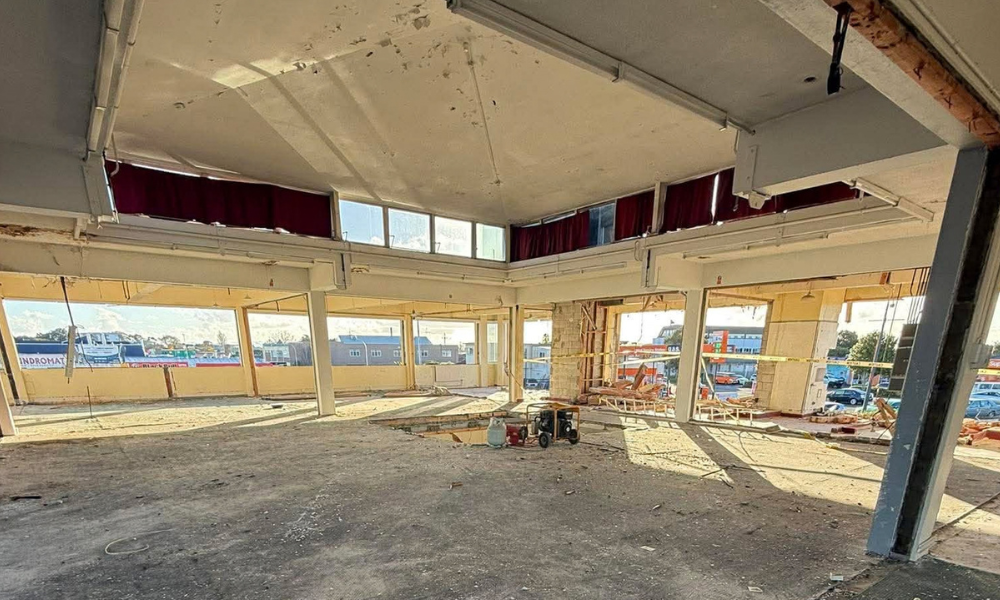
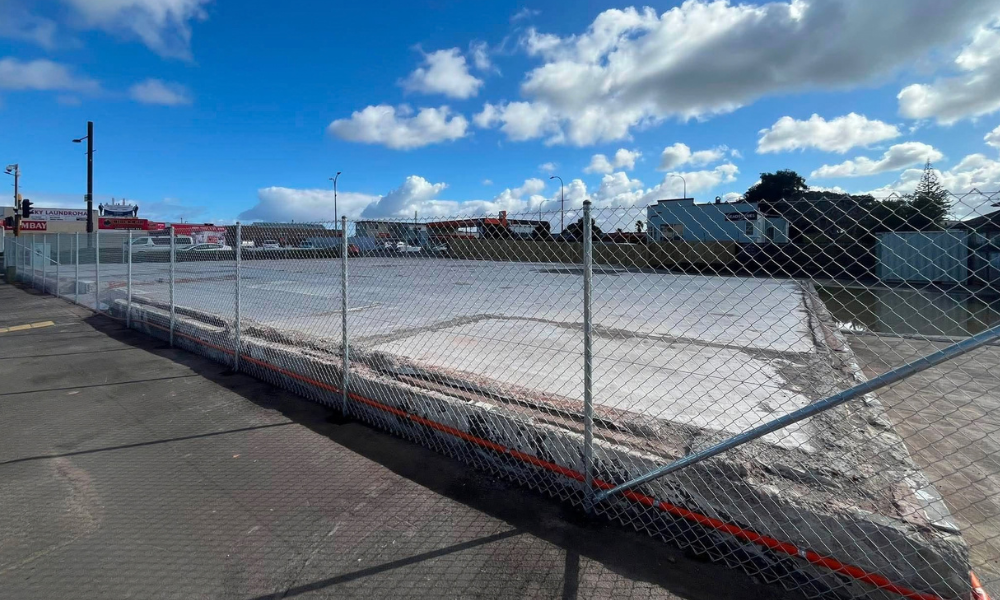
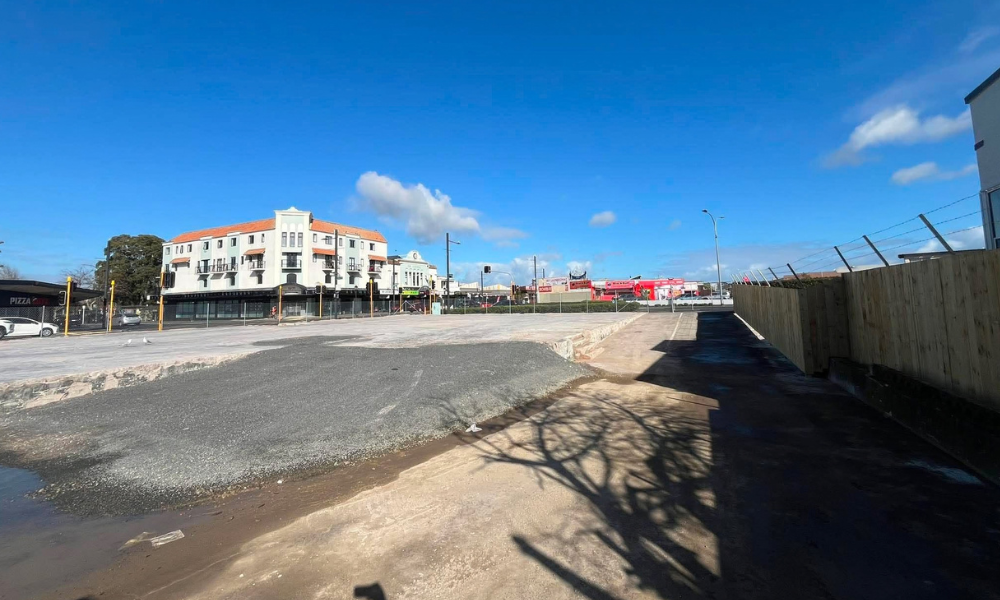
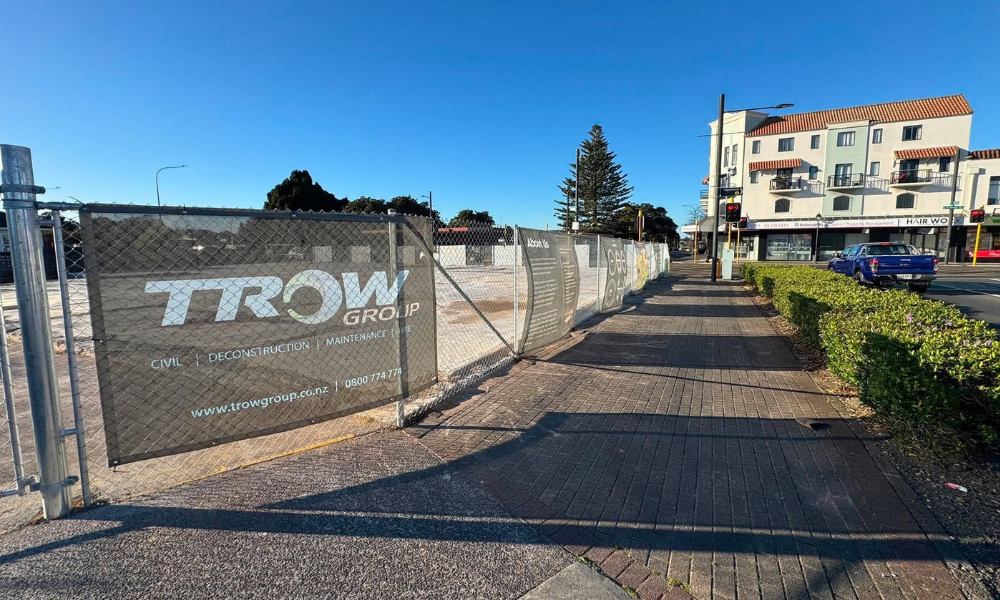
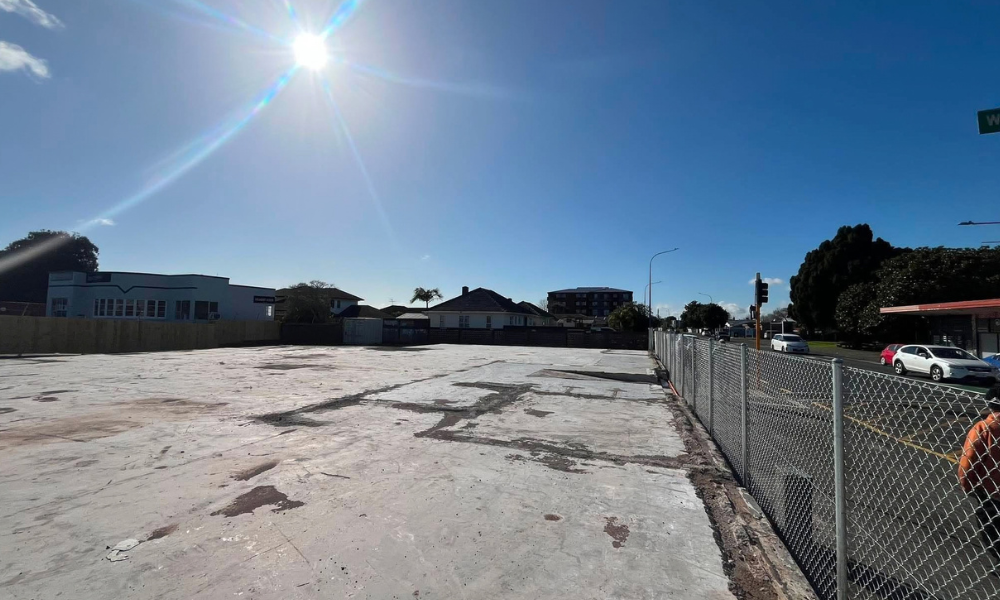
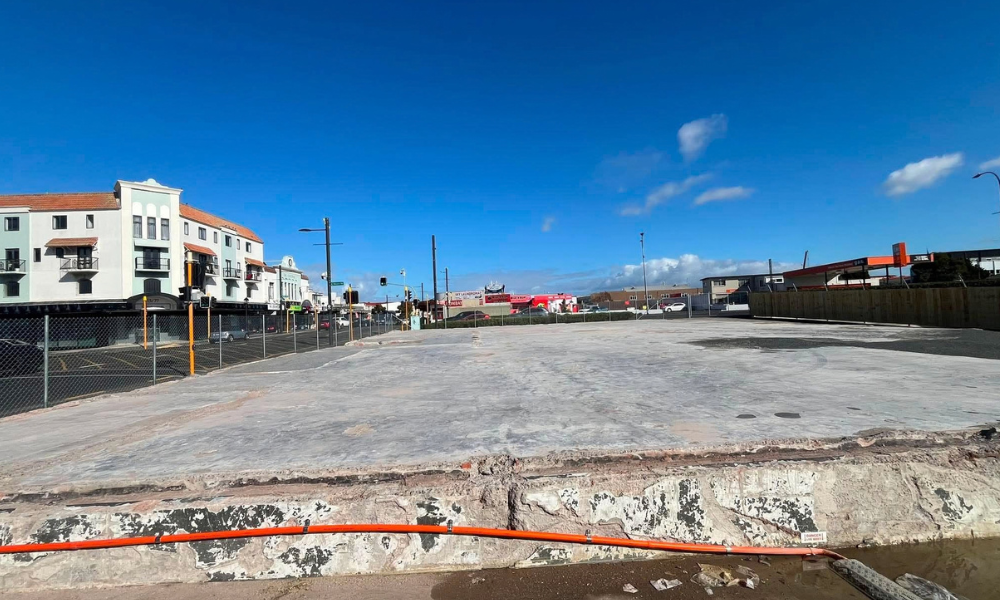
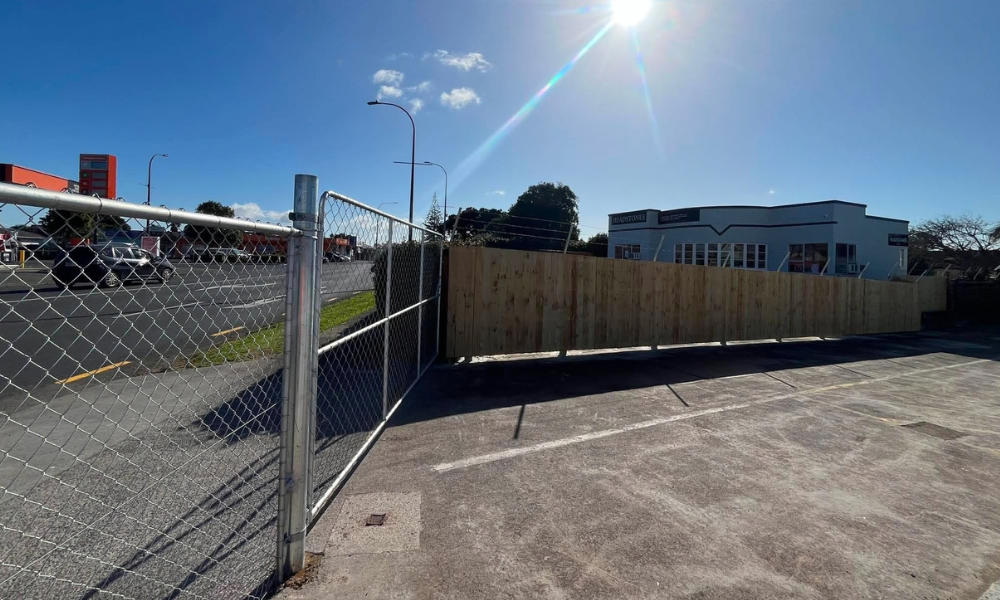
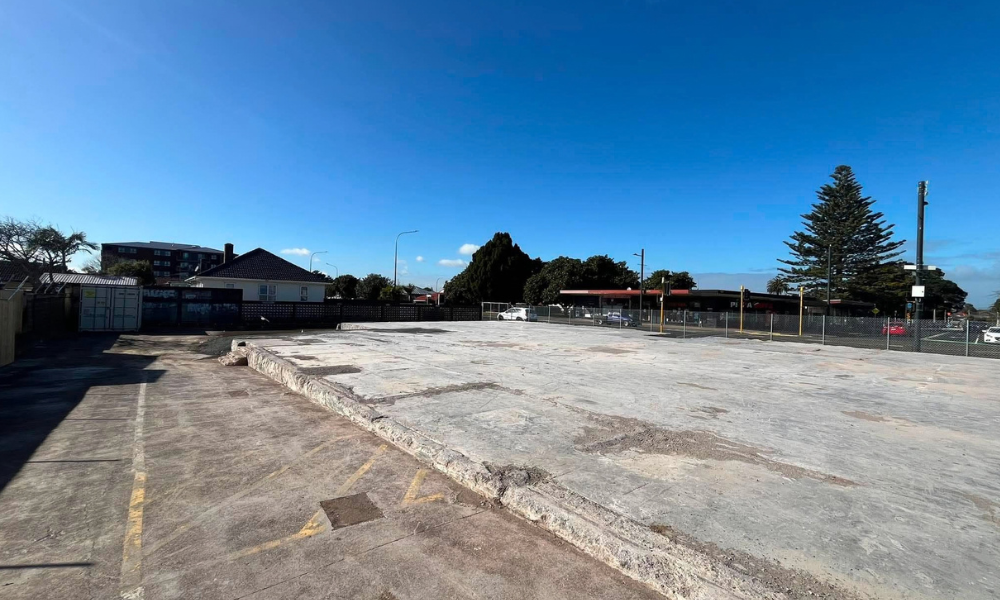
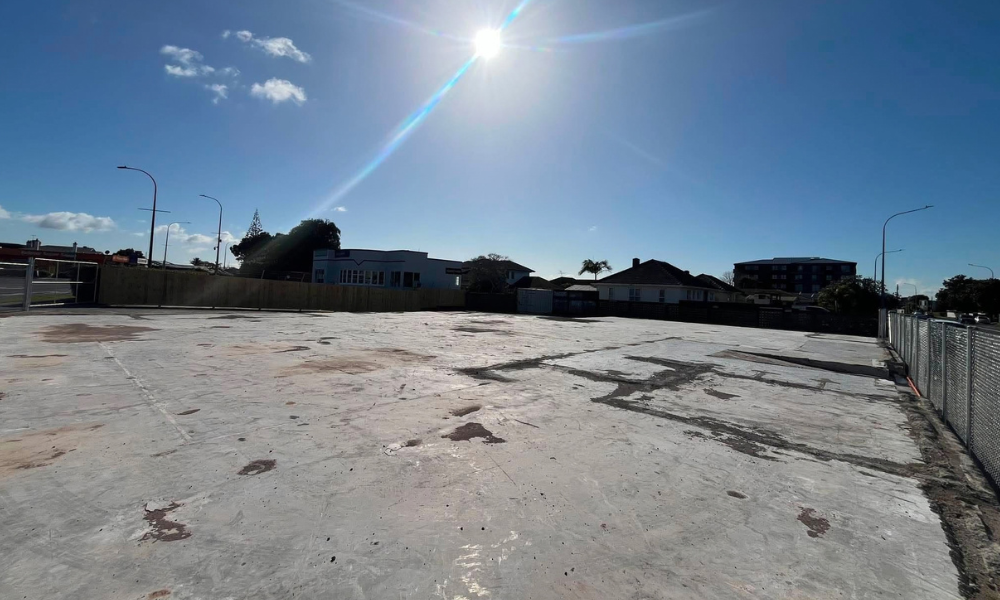
Throughout the project, reusable materials will be documented and assessed to support transparency around resource recovery outcomes and circular economy performance. The site will be cleared and prepared to a clean, safe, and functional condition upon completion, including the removal of demolition debris and levelling of the site where required.
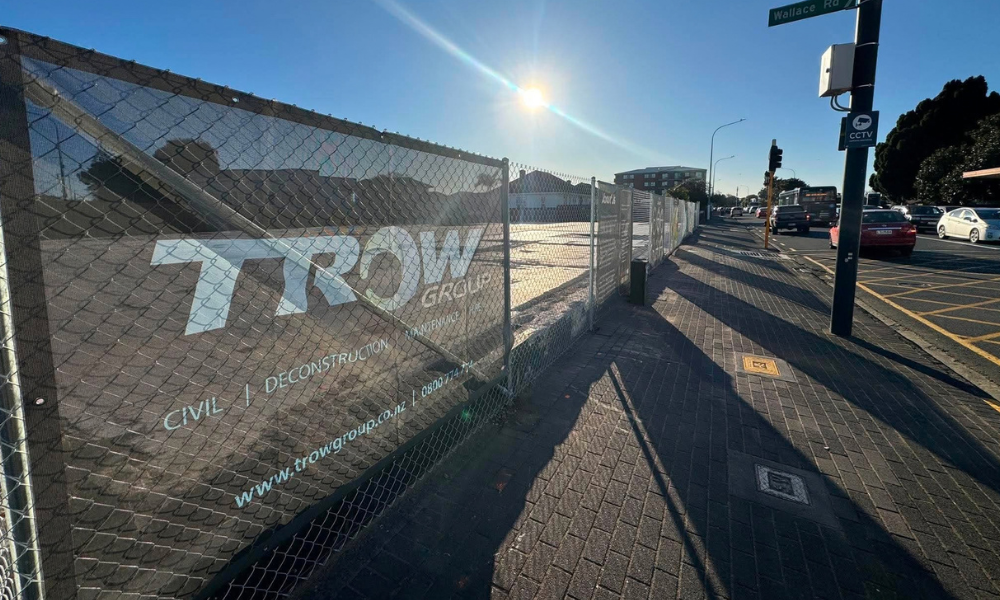
This project reflects TROW Group’s commitment to responsible deconstruction practices, landfill diversion, and creating positive environmental and community outcomes through material recovery and reuse.
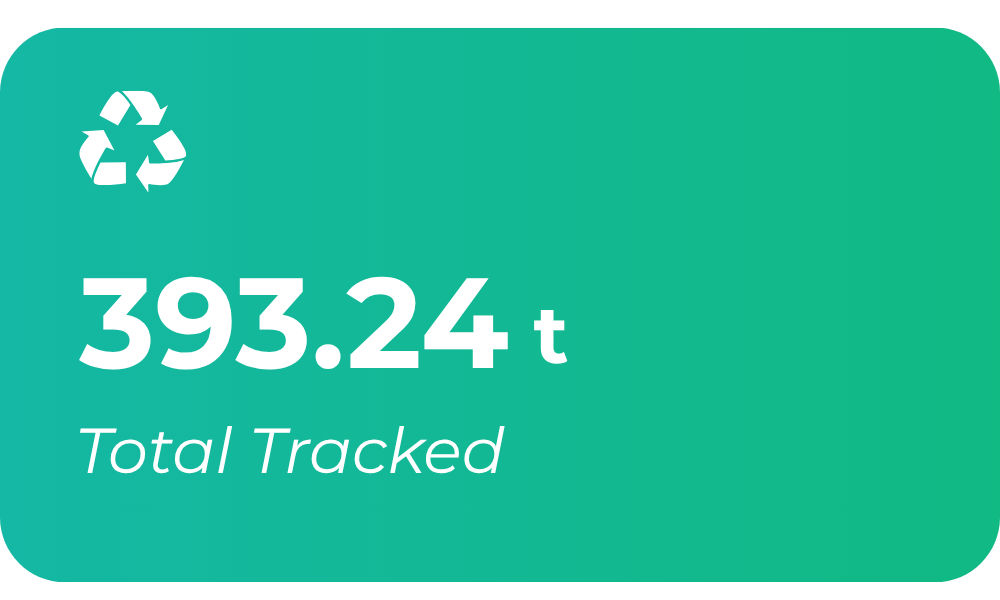

Line Item Breakdown
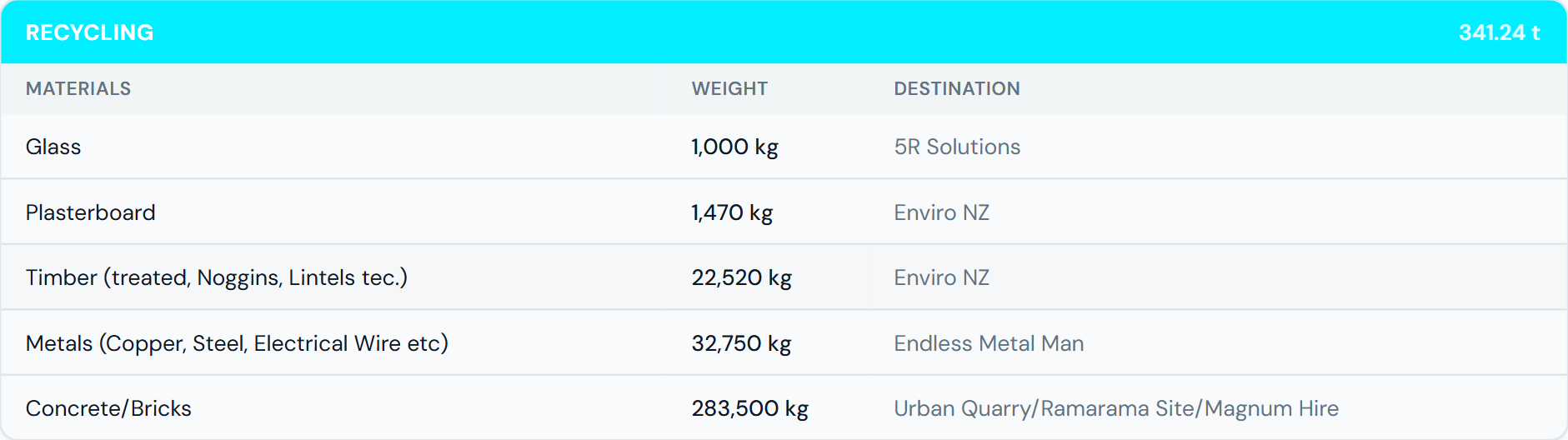
Detailed items per waste category

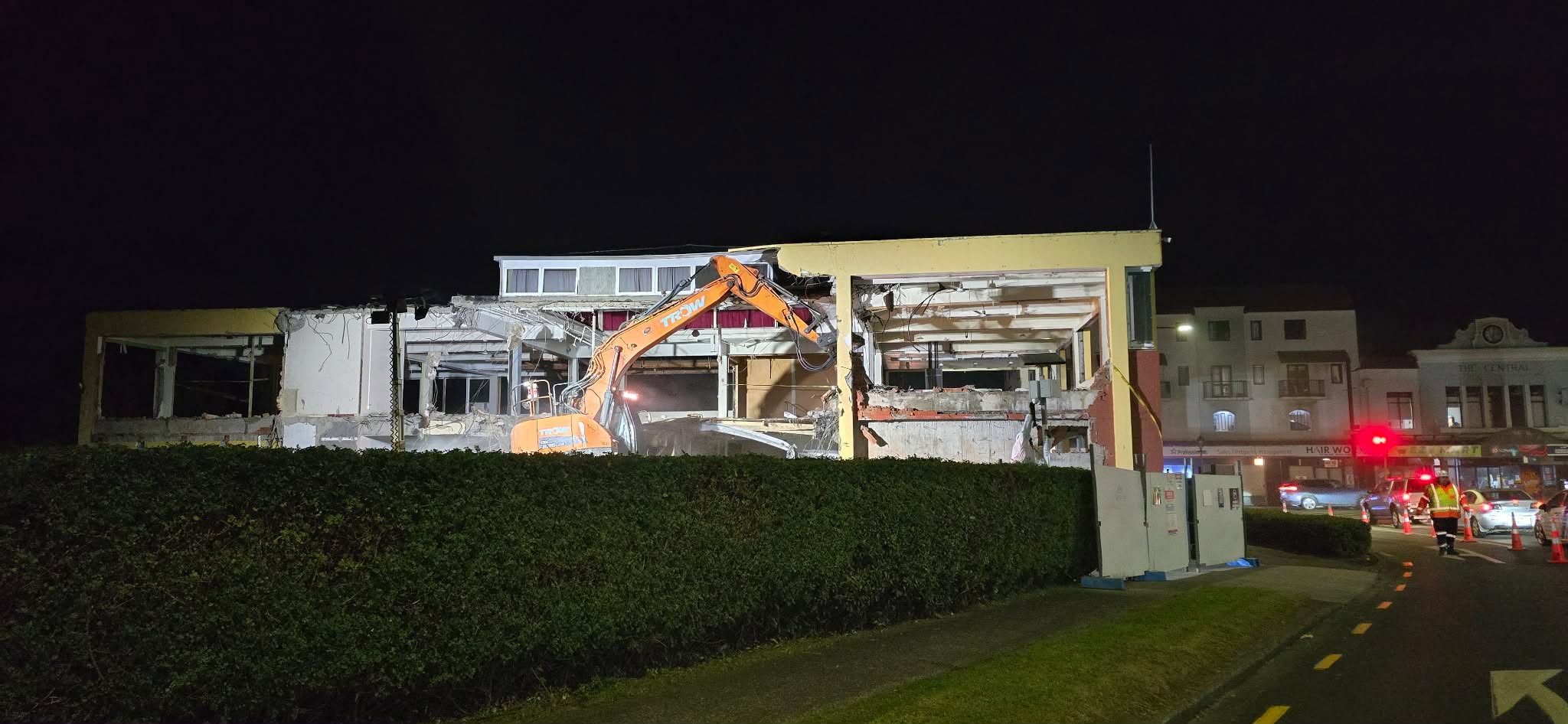
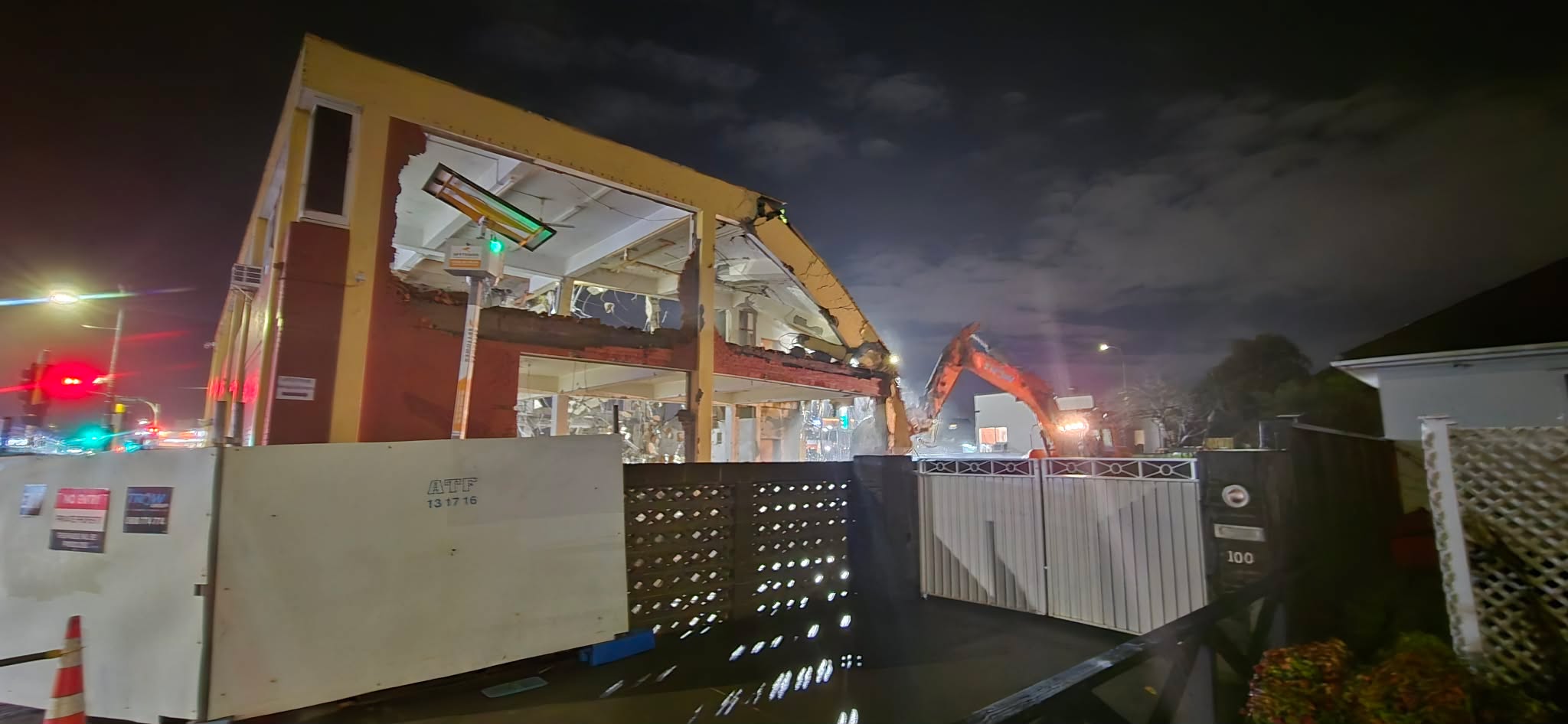
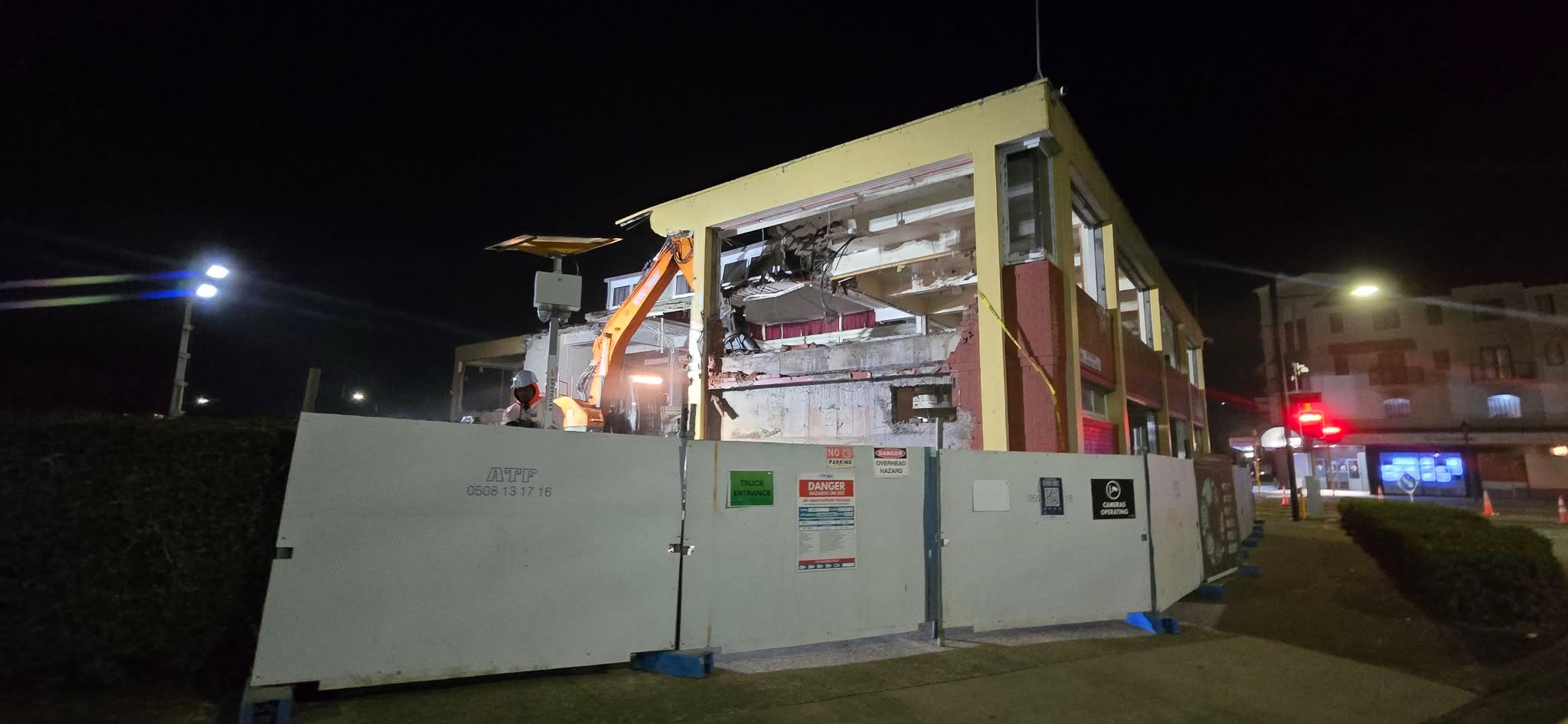
NIGHT WORKS
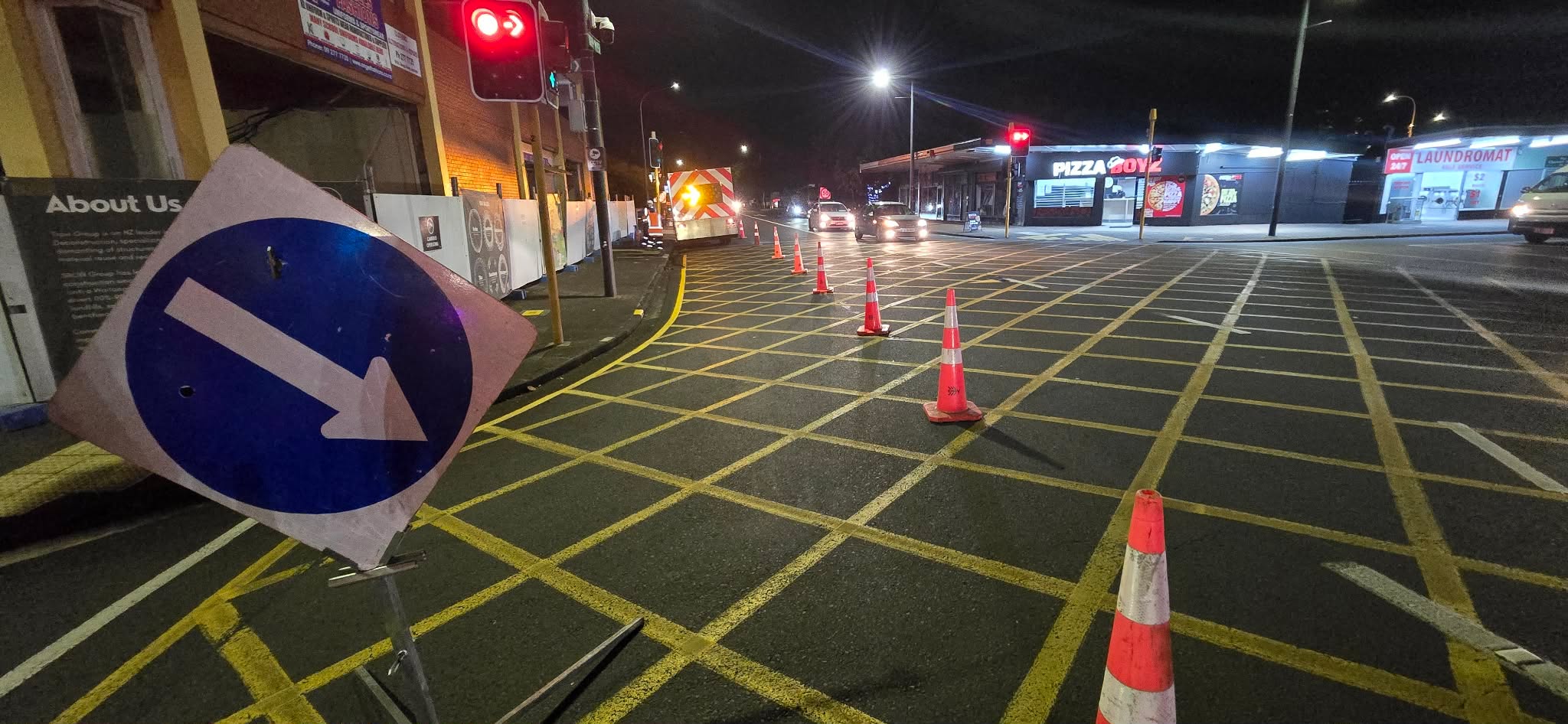
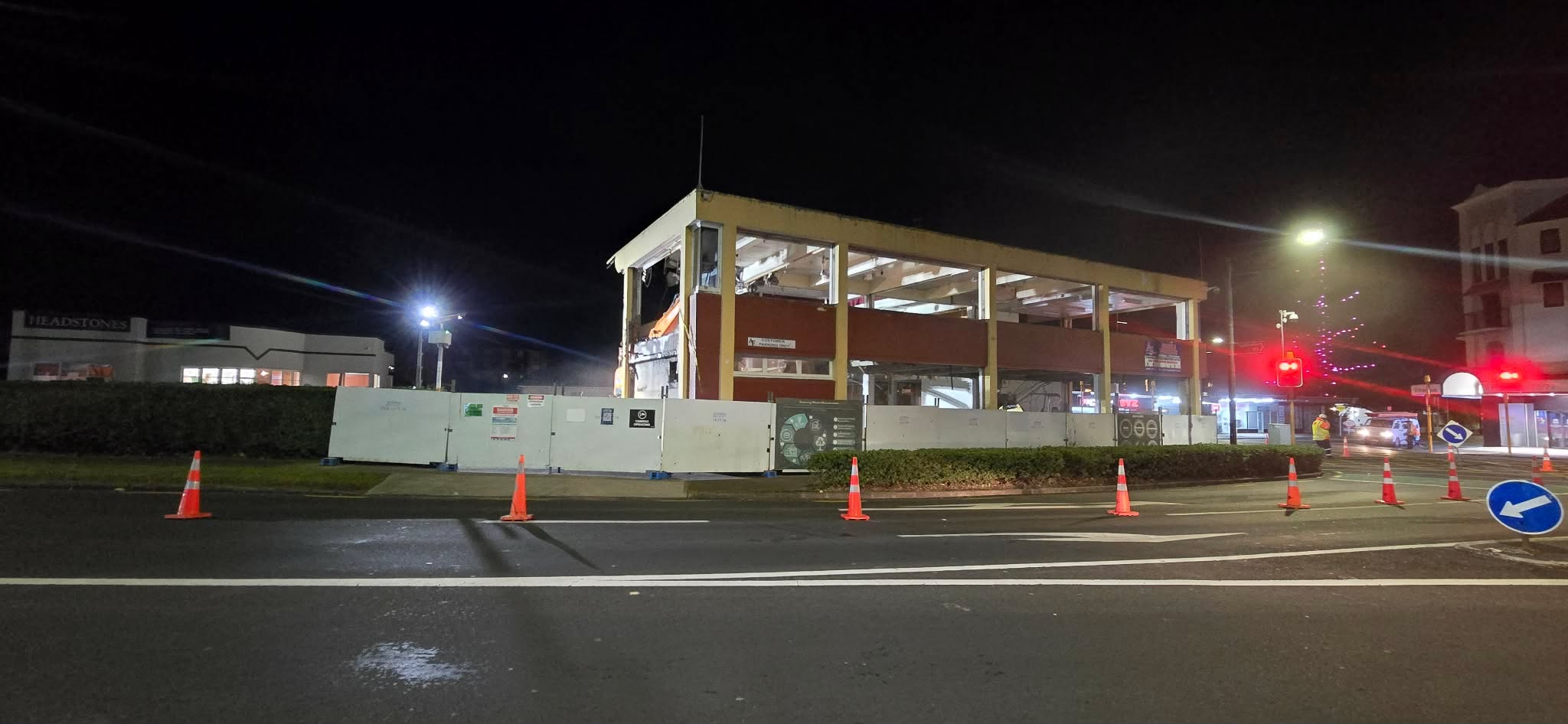
Given the location of the project on a busy and vibrant road in Papatoetoe, undertaking key construction activities during night-time hours was an important part of our approach to minimising disruption to the surrounding community and the public.
Scheduling works at night allowed the project team to complete higher-impact activities during periods of lower traffic and pedestrian activity. This significantly reduced the potential impact on motorists, pedestrians, local businesses and the wider community compared with carrying out the same activities during busy daytime and peak traffic periods.
The use of night works provided a number of benefits, including:
- Minimised disruption to the public by carrying out higher-impact activities outside the busiest periods.
-
Reduced traffic congestion by limiting the need for construction activities to take place during peak traffic hours.
-
Improved safety through reduced interaction between construction activities, vehicles and pedestrians.
-
More efficient construction activities by providing greater flexibility to undertake works within the road corridor when traffic volumes were lower.
-
Reduced impact on local businesses and surrounding properties by completing disruptive activities outside normal daytime operating periods.
-
Improved productivity by allowing the project team to focus on specific activities without the same level of interaction with daytime road users.
-
Better use of available road space, particularly where construction activities required temporary restrictions or changes to normal traffic movements.
The decision to undertake night works demonstrated a proactive approach to construction planning, balancing the requirements of the project with the needs of the surrounding community. By carefully selecting activities suitable for night-time delivery, the team was able to maintain project progress while reducing the disruption associated with major construction works on a busy urban road.
Traffic Management Plan (TMP)
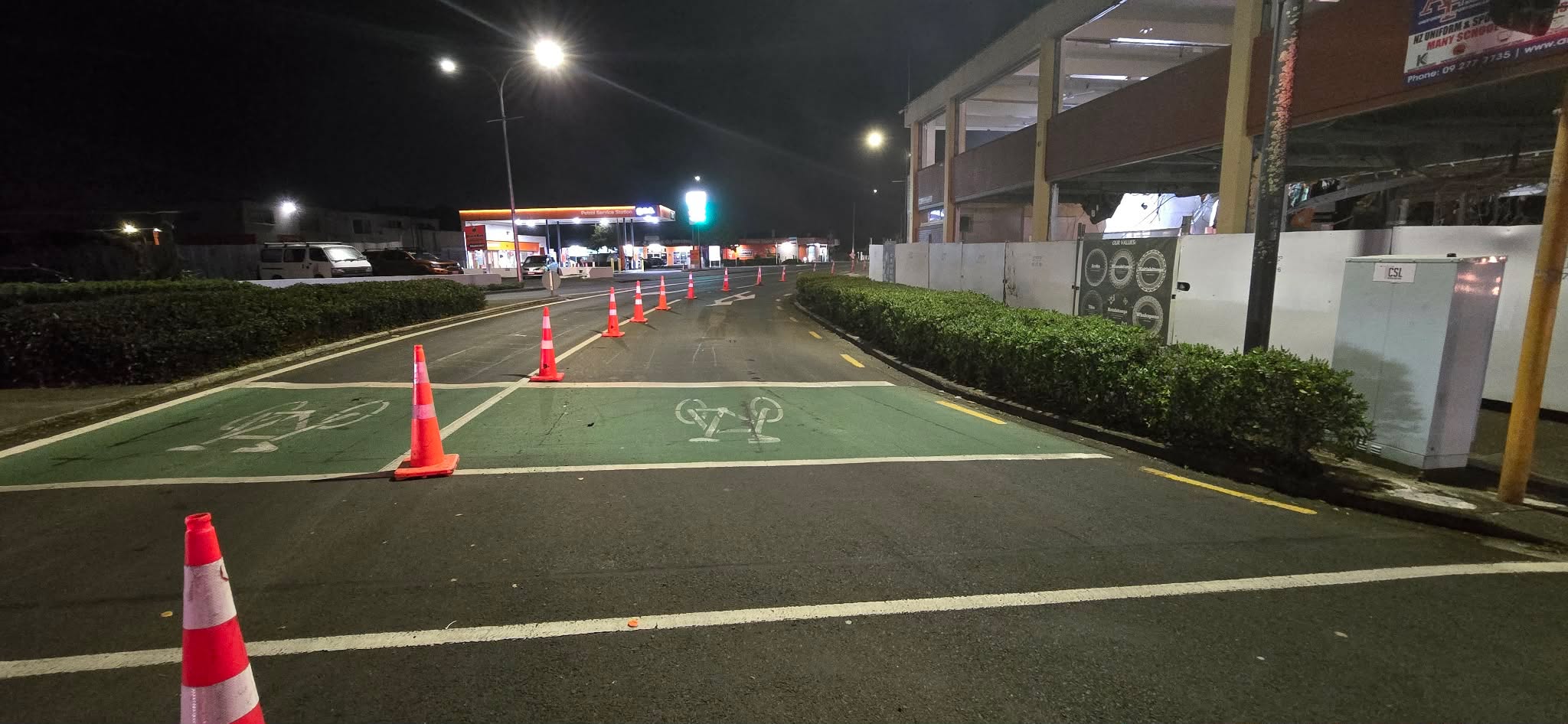
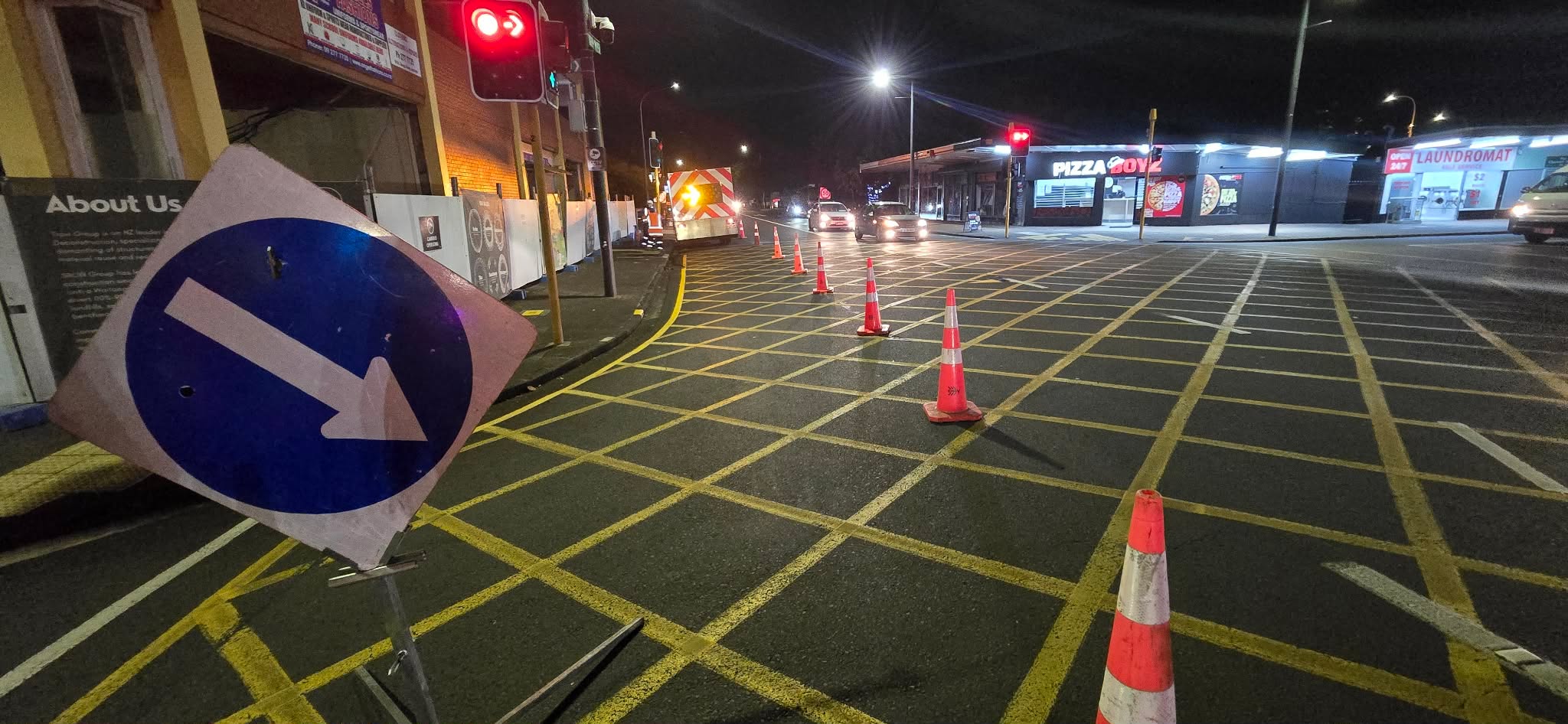
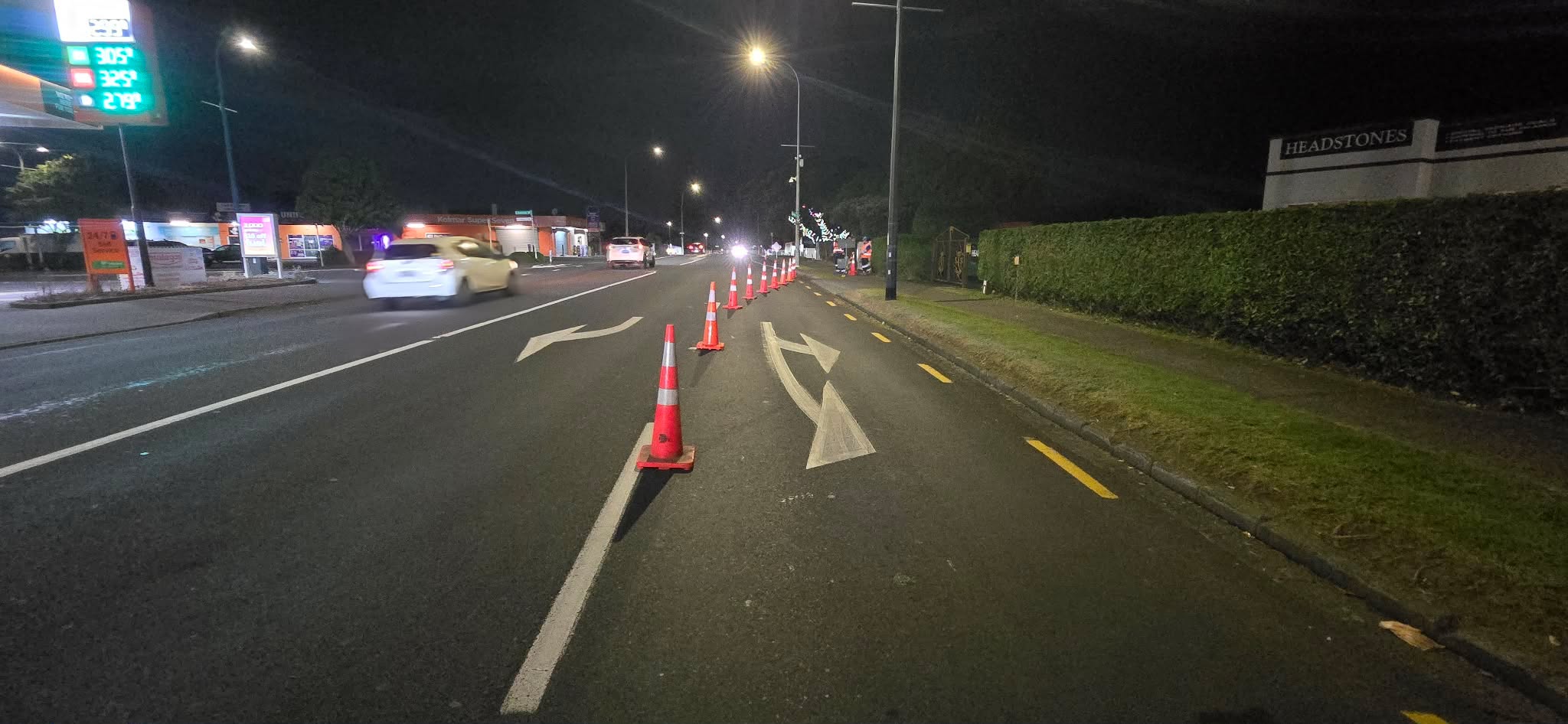
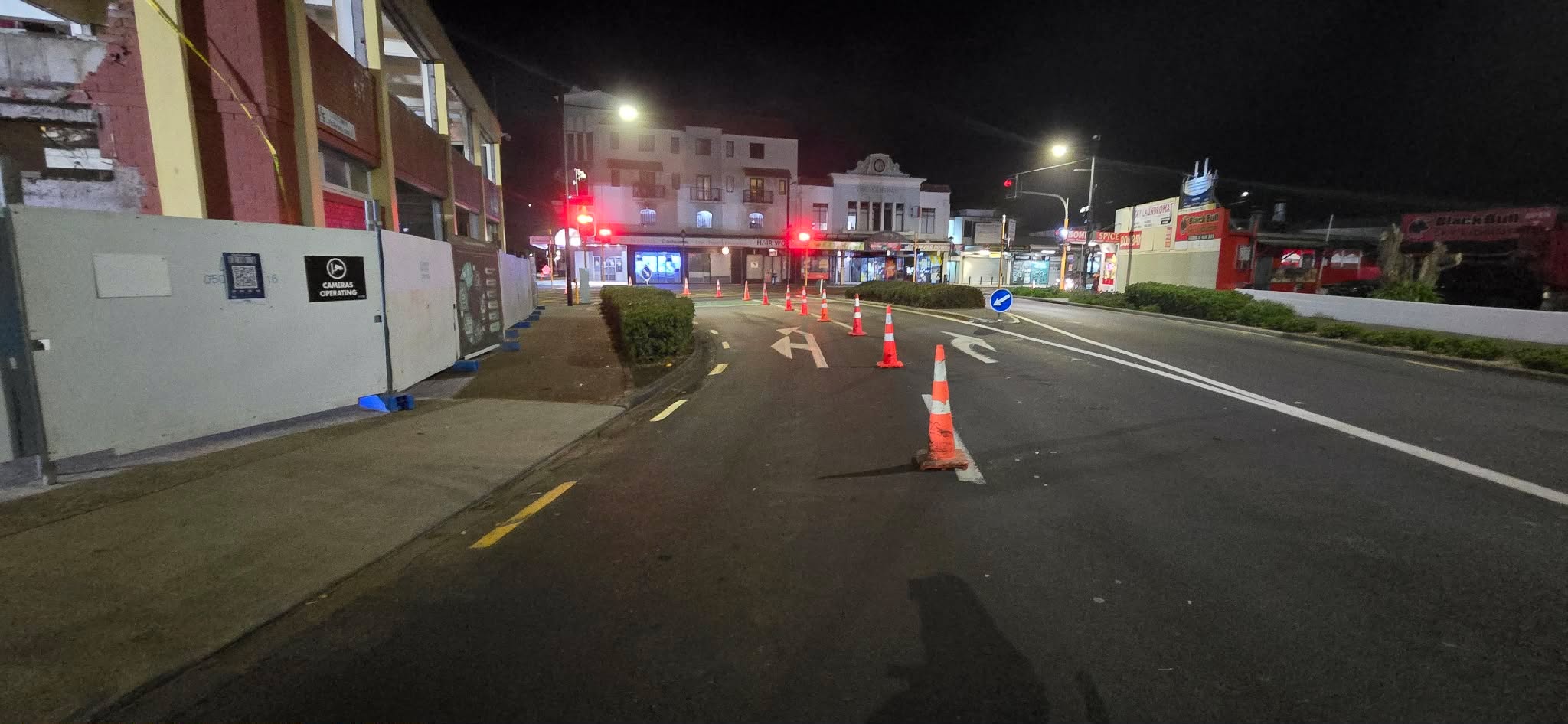
A comprehensive Traffic Management Plan (TMP) was developed and implemented to support the safe delivery of the works and minimise the impact of construction activities on road users, pedestrians and the surrounding community.
The TMP provided a clear framework for managing traffic movements around the worksite and maintaining a safe separation between construction activities and members of the public. Traffic controls, signage, delineation and pedestrian management measures were planned around the specific requirements of the site and the activities being undertaken.
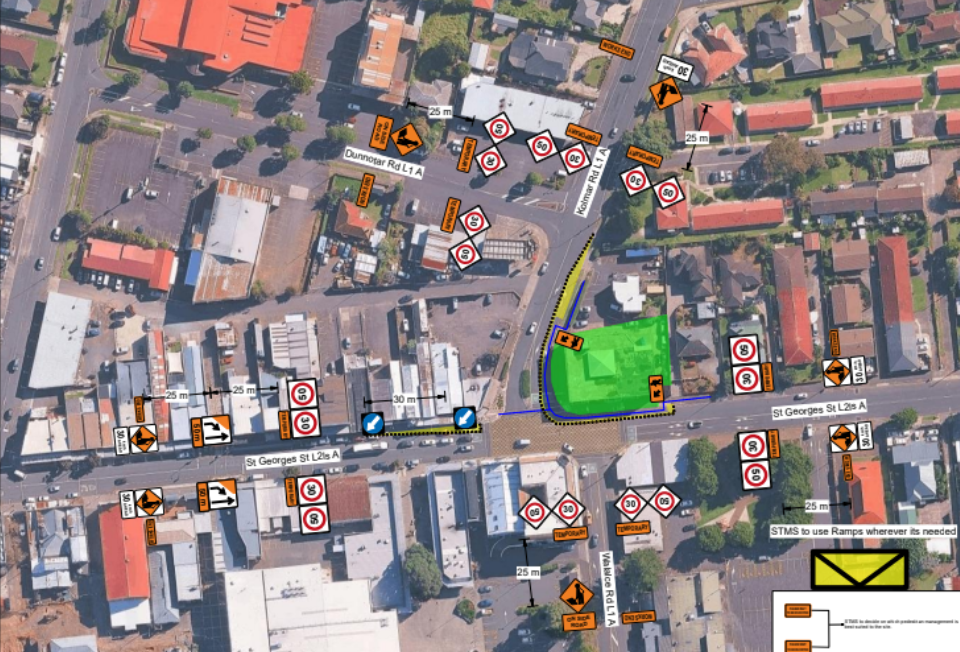
Particular consideration was given to the project’s location on a busy road in Papatoetoe, where maintaining safe and predictable movements for motorists and pedestrians was essential. The traffic management arrangements were coordinated with the planned construction activities and adjusted as required to accommodate different stages of the works.
The TMP helped the project team to:
- Maintain safe access for motorists and pedestrians around the worksite.
- Clearly separate construction areas from public traffic and pedestrian movements.
- Manage temporary lane restrictions and changes to normal traffic movements.
- Reduce the potential for conflicts between construction vehicles and road users.
- Provide clear signage and delineation so road users could safely navigate the work area.
- Coordinate traffic management with the project’s night works and construction activities.
- Maintain a controlled and organised work environment for the construction team.
- Minimise disruption to the surrounding road network and community while allowing the works to progress efficiently.
The combination of detailed planning, appropriate traffic controls and ongoing monitoring allowed the team to safely manage the interface between the construction site and the public. The TMP was an important component of the project’s overall approach to public safety, construction efficiency and minimising disruption to the surrounding community.
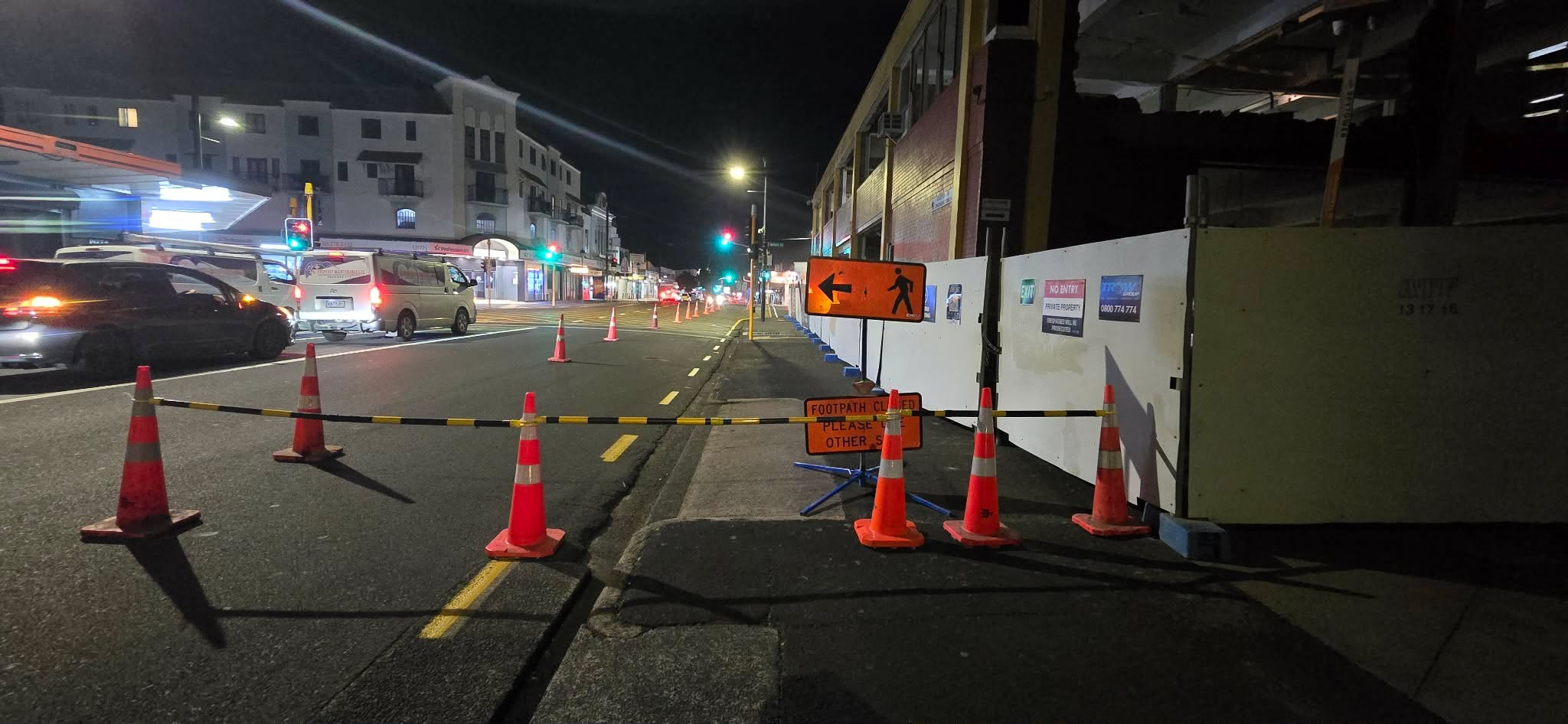
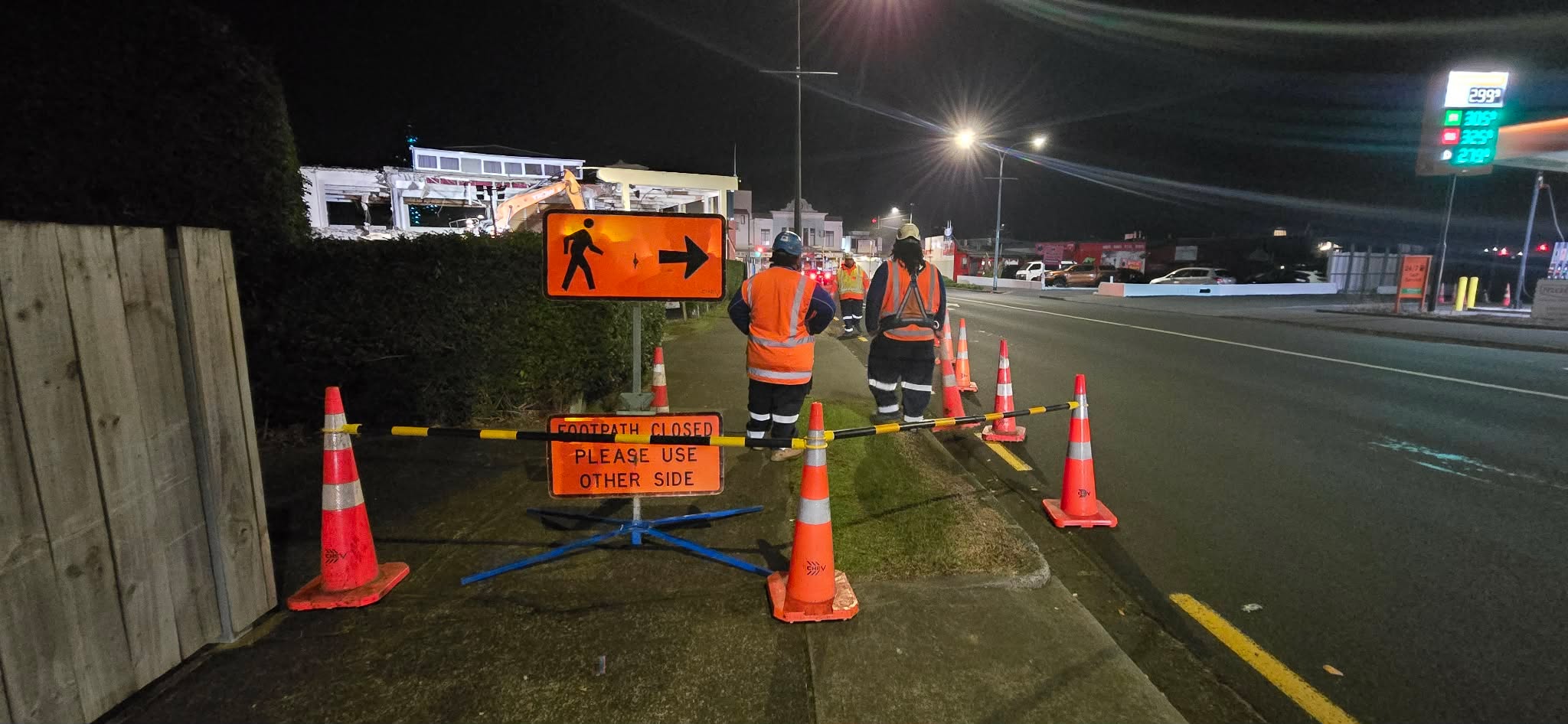
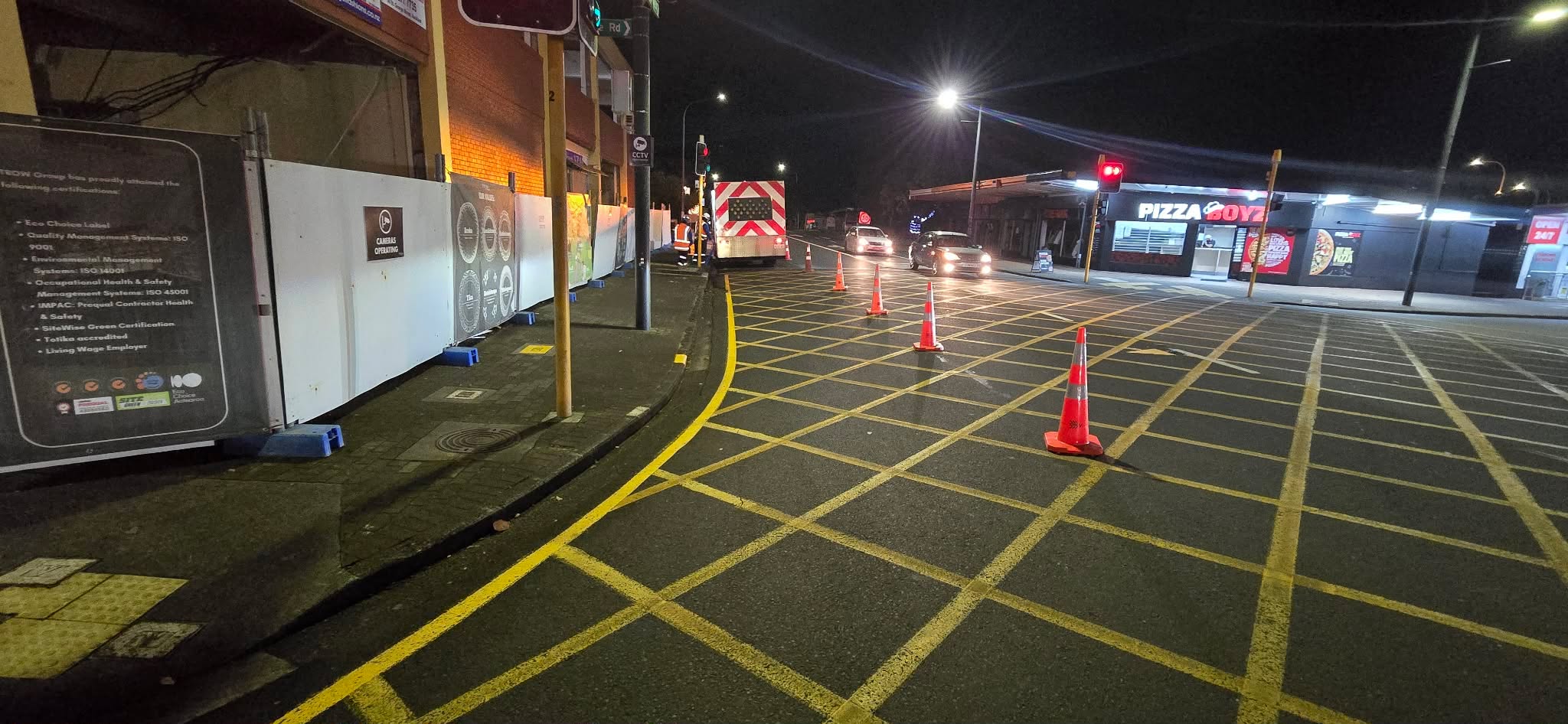
Environmental & Community Mitigation
Protecting our neighbours, the surrounding environment, and the wellbeing of our workforce remains a priority throughout every stage of the project. To minimise the impacts of this phase of work, the following measures are in place:

Dust suppression
A Dust Fighter misting unit and towable water blaster are used throughout the day to suppress dust generated during concrete breaking and loading activities.

Noise management
Temporary noise barriers have been installed around key work areas to help reduce the spread of construction noise into neighbouring properties.

Noise monitoring:
Real-time sound monitoring equipment is used to track noise levels and ensure works remain within permitted limits. Activities are adjusted where required.
Site security
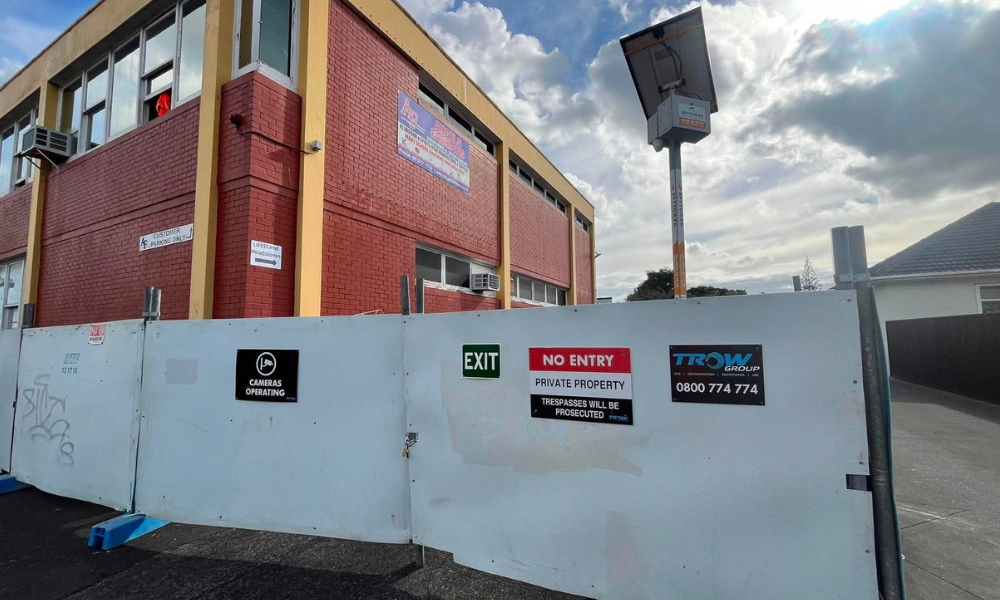
Security cameras remain operational 24 hours a day to protect the site, monitor activities, and ensure public safety.

Good housekeeping
The site is regularly cleaned, with vehicle movements managed to minimise dirt, dust, and debris leaving the work area.

Traffic management
All heavy vehicle movements are coordinated under an approved Traffic Management Plan to ensure the safe movement of trucks, workers, pedestrians, and other road users.
Journey from start to end
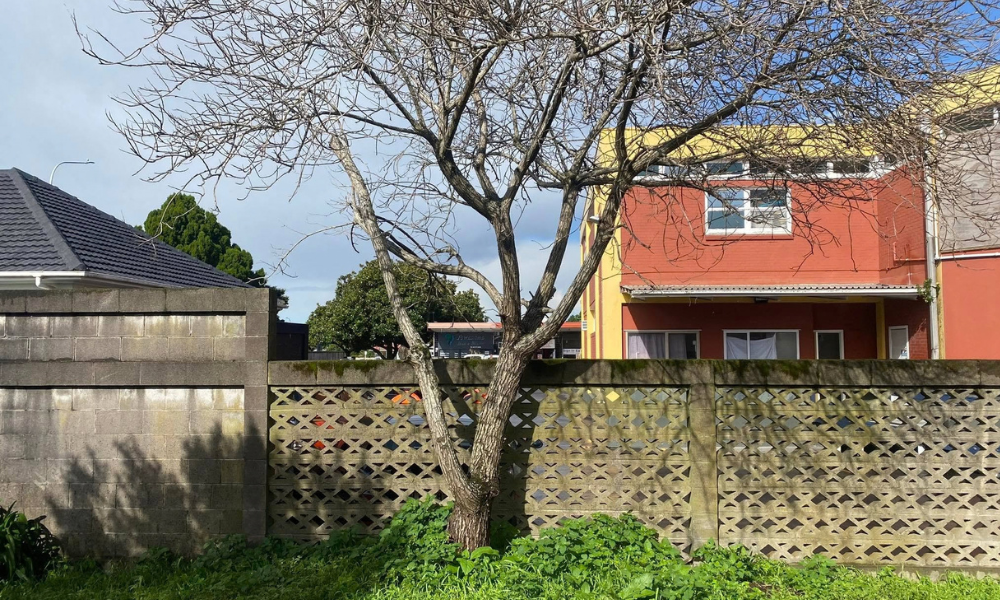
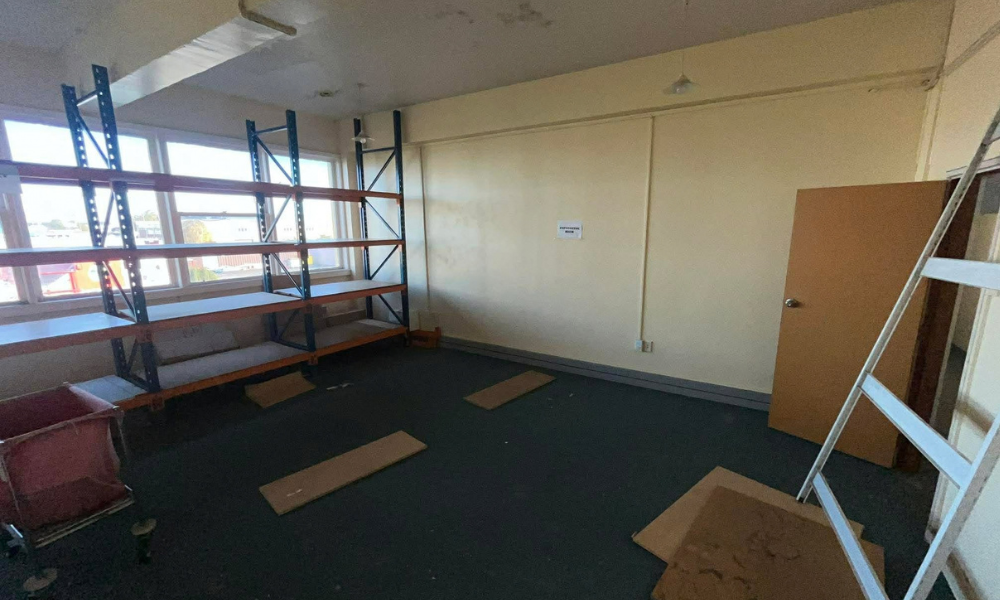
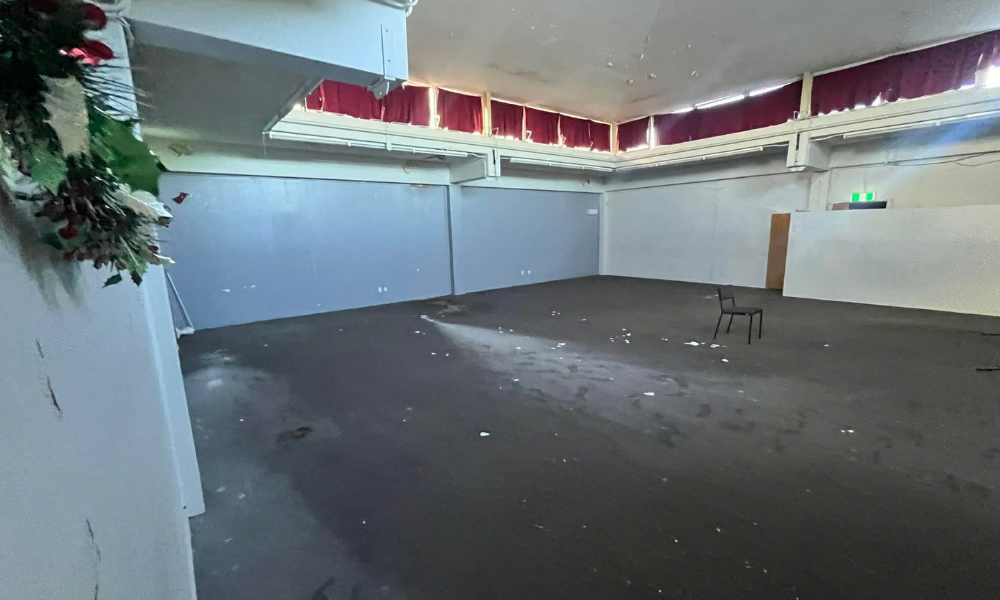
Week 1 | Site Establishment | 17 May 2026
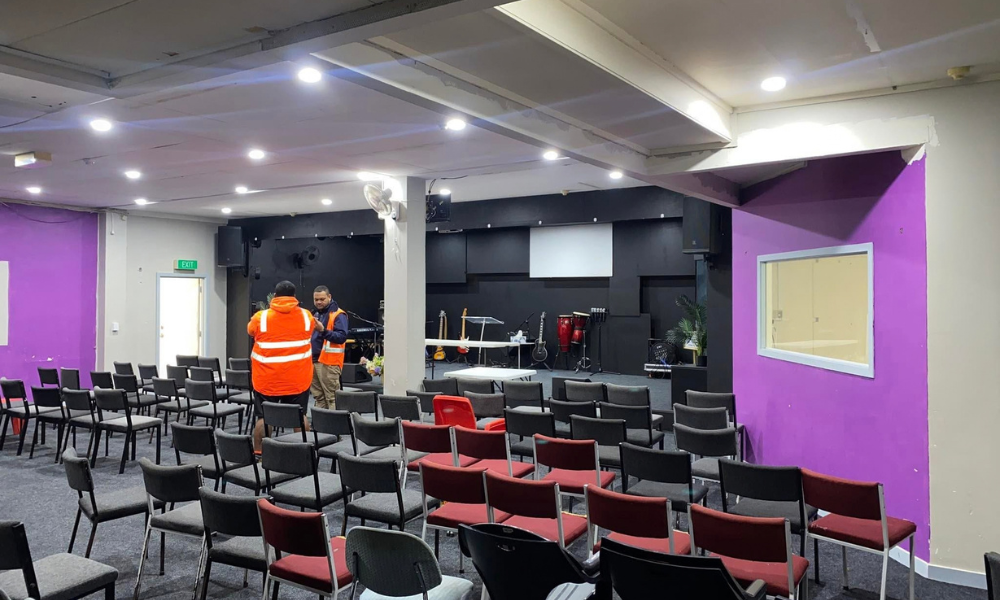
Week 6 | Mid-way | 24 June 2026
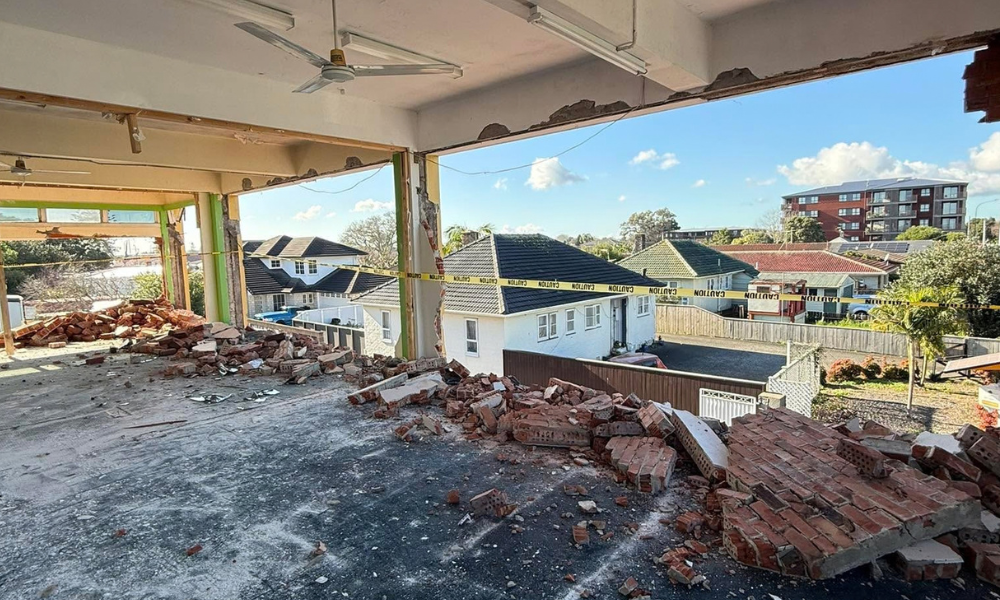
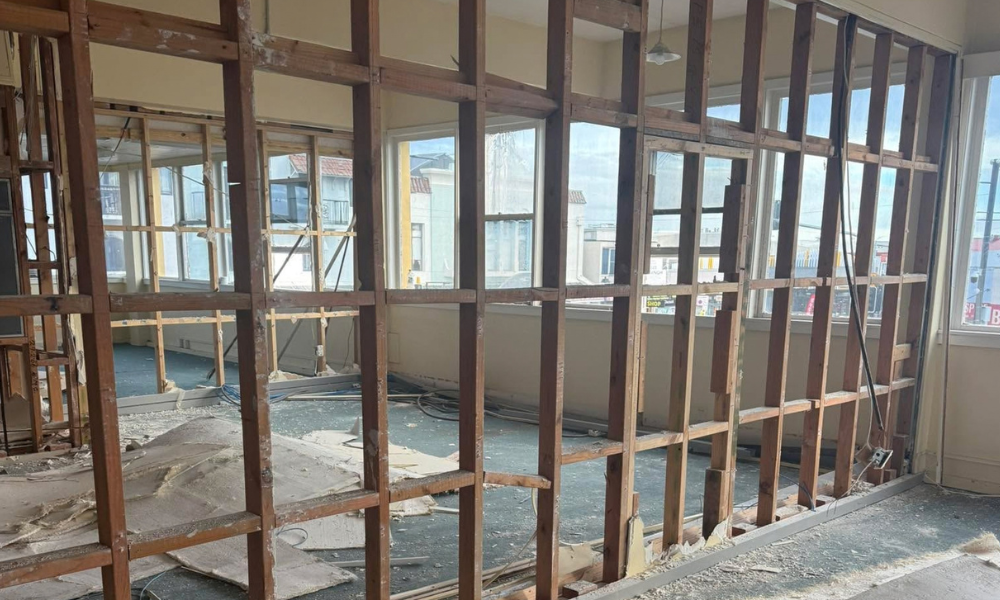
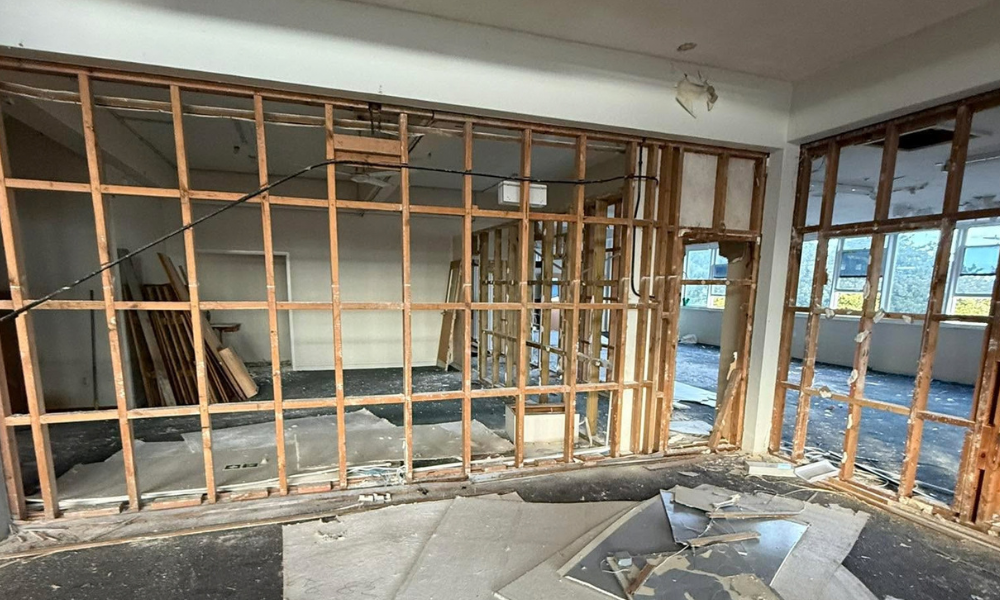
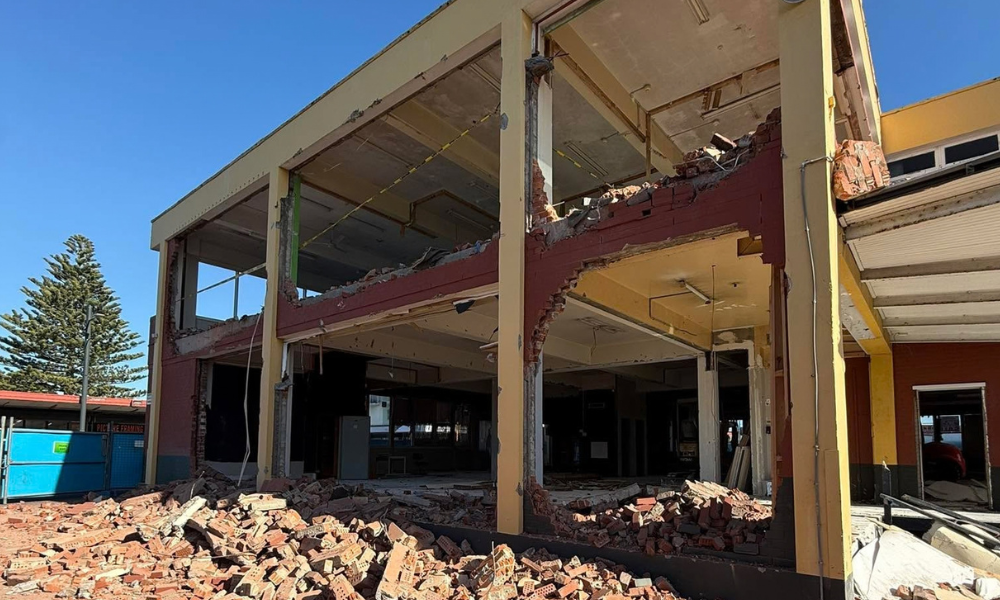
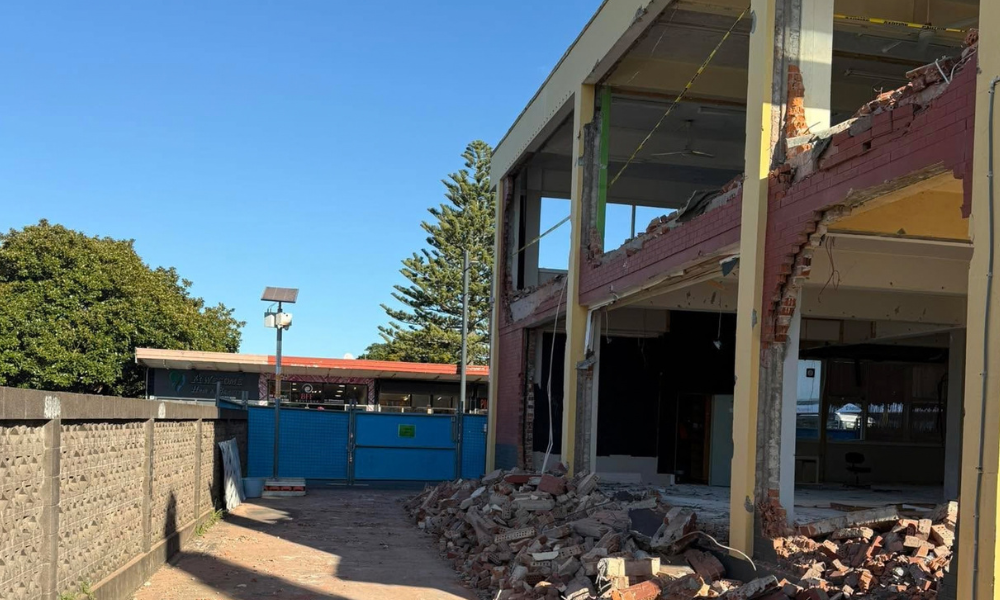
Week 14 | Complete | 19 Aug 2026
Back